
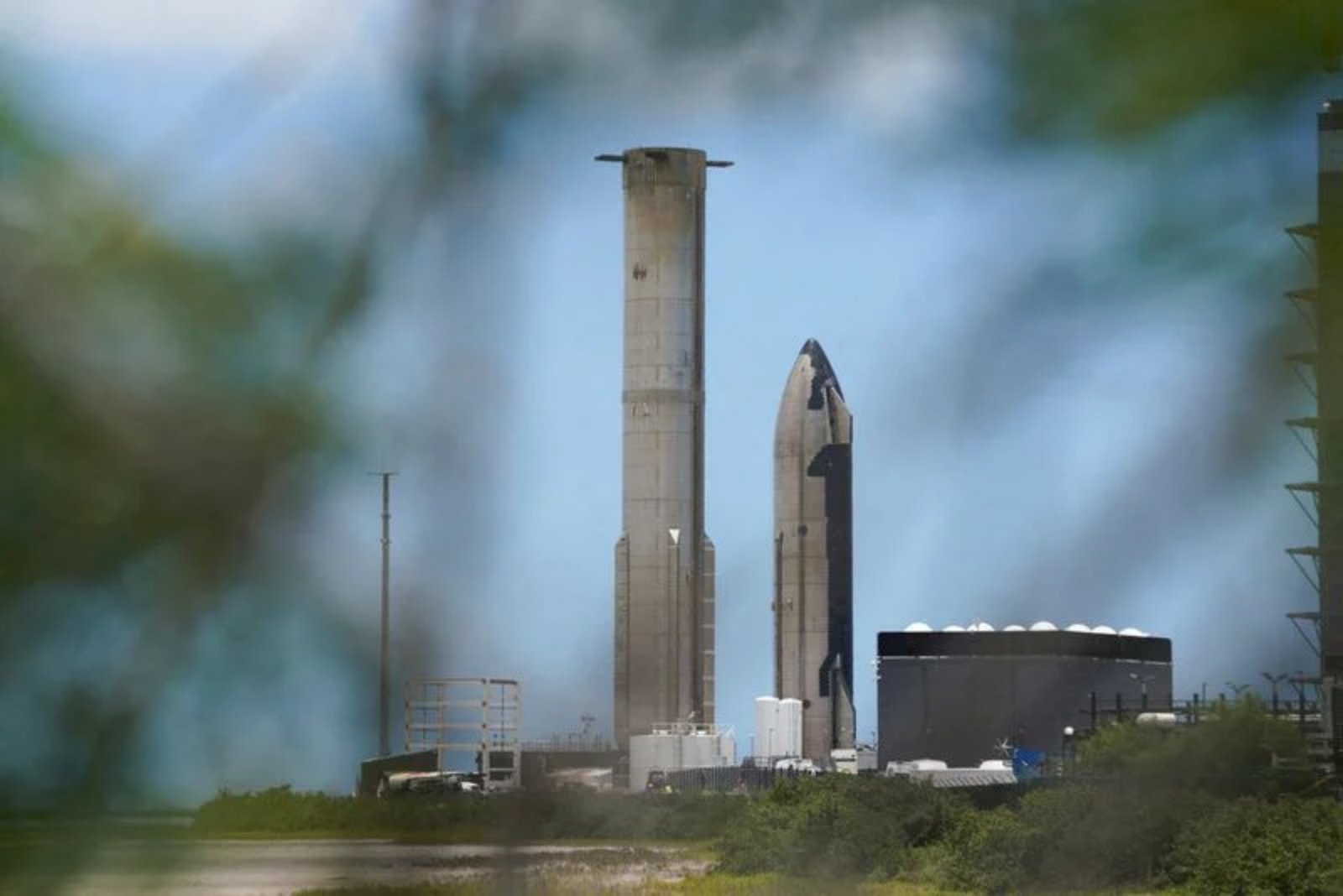
SpaceX’s headline-grabbing $75 billion IPO has become a catalyst for a wave of interest in China’s commercial space sector as private rocket and satellite companies seek capital to develop the same core technologies that have driven SpaceX’s financial and operational model: recoverable boosters and expansive broadband constellations.
Investor enthusiasm is visible across the mainland. At least seven Chinese launch and satellite companies, including LandSpace and CAS Space, are pursuing IPO or pre-IPO plans, though details of those transactions have not been disclosed. Backers of early-stage firms point to the long-term strategic value of the technology and the potential for very large returns from successful listings. Huang Yan, co-founder of Shanghai-based Lantern Capital, said his 2016 investment in LandSpace is now generating approximately 100 times his original capital as the company moves toward a public offering. Huang said he disregarded early scepticism and backed the firm on the basis of its technological moat and strategic value over the long term.
Yet the market fervor masks significant operational and financial gaps when compared with SpaceX. Chinese private firms have not demonstrated a mission-ready reusable rocket - a capability central to SpaceX’s strategy of lowering per-launch costs by returning, refurbishing and reflighting boosters. LandSpace, often cited as the closest Chinese private challenger to SpaceX, conducted the maiden test flight of its Zhuque-3 vehicle in December, but the booster failed to carry out a controlled landing and was not recovered. That inability to reliably return boosters remains a primary technological barrier to narrowing the cost gap, analysts say.
Limited commercial revenue underlines how nascent China’s sector still is. LandSpace reported 36.4 million yuan in revenue for the first half of 2025 - roughly $5.2 million using the exchange rate cited below - while SpaceX’s revenue rose by a third to nearly $19 billion in 2025, with about three-fifths of that total coming from its Starlink broadband business. The discrepancy in sales performance is stark and highlights the distance many Chinese entrants must travel to reach sustainable commercial scale.
Constellation scale is another decisive differentiator. Starlink operates on an order of magnitude larger platform, with about 10,400 satellites in orbit. By contrast, China’s two Starlink-style efforts - Guowang and Qianfan (known internationally as Spacesail) - together operate only a few hundred satellites. Executives inside the Chinese industry who asked not to be named said the most optimistic outlook would see China reach parity with Starlink’s present scale by about 2033, though they cautioned that this timeline is fluid. The planned rollout of SpaceX’s Starship - a next-generation heavy launcher that can deploy roughly three times as many satellites in a single mission as a Falcon 9 - could further amplify Starlink’s deployment advantage, the same executive said.
Structural and market differences also shape the competitive landscape. SpaceX’s vertically integrated model, where a broadband business like Starlink creates internal demand for launches, has no clear domestic parallel in China. The Chinese sector remains fragmented, and many private launch firms are dependent on orders from state-backed constellation operators. Those procurement and deployment schedules are outside the control of startups, constraining predictable revenue paths.
Consultancy Novaspace’s Gabriel Deville noted that SpaceX’s strategic pivot moved revenue generation away from pure launch services into broadband constellations, creating recurring revenue streams that support launch economics. Deville argued that Chinese startups can nonetheless make a credible demand case because they can position themselves as essential partners for deploying sovereign Chinese constellations. This suggests a domestic market that is likely to be more state-led and enterprise-focused than Starlink’s mass-market approach, with demand coming from mobility, maritime, remote industrial sites, emergency response and Belt and Road projects.
However, the prominence of state-owned operators in China could limit the emergence of a private-sector equivalent to Starlink. Blaine Curcio, founder of Orbital Gateway Consulting, observed that the telco-like dominance of state actors in China leaves little room for private companies to build the same kind of consumer-facing broadband footprint that Starlink has pursued.
Analysts say this combination of technology shortfalls, thin near-term revenues and structural market constraints will likely cap valuations for Chinese space listings relative to the premiums commanded by firms that can demonstrate durable, capital-efficient unit economics. As Ellis Scherer of the Information Technology and Innovation Foundation put it, everything SpaceX does acts as a bellwether for China’s space industry - and a successful SpaceX listing could trigger a substantial uptick in Chinese commercial-space fundraising and public offerings. At the same time, the absence of mission-ready reusable rockets remains the biggest barrier to catching up with the U.S., according to several industry observers.
Summary
SpaceX’s $75 billion IPO is driving renewed investor interest in Chinese space startups, which are seeking funds to build reusable rockets and satellite constellations. Despite growing deal flow and investor returns in early-stage bets, Chinese companies lag in reusable-rocket capability and commercial revenues, introducing valuation and execution risks. The domestic market may be more state-driven and enterprise-focused than Starlink’s consumer model, shaping demand and limiting private-sector scale.
Key points
- SpaceX’s IPO has catalyzed IPO activity among at least seven Chinese rocket and satellite startups, impacting the aerospace and capital markets sectors.
- Chinese firms lack proven reusable-rocket recovery and refurbishment, a technological gap that affects launch economics and will influence valuations in equity markets.
- Domestic demand for satellite services in China may be predominantly state-led and enterprise-oriented, shaping sales models for telecommunications, maritime, and infrastructure sectors.
Risks and uncertainties
- Technology risk: Chinese companies have not yet demonstrated mission-ready reusable boosters - a key constraint on lowering per-launch costs and achieving SpaceX-like economics. This affects aerospace and satellite launch service markets.
- Revenue and valuation risk: Many startups are pursuing public listings with limited commercial revenue, which could cap market valuations and influence investor returns in public equities.
- Market structure risk: Fragmentation and reliance on state-backed constellation procurement could restrict predictable revenue for private firms and hinder the development of a private-sector consumer broadband model.
Exchange rate used: $1 = 6.7657 Chinese yuan renminbi.