
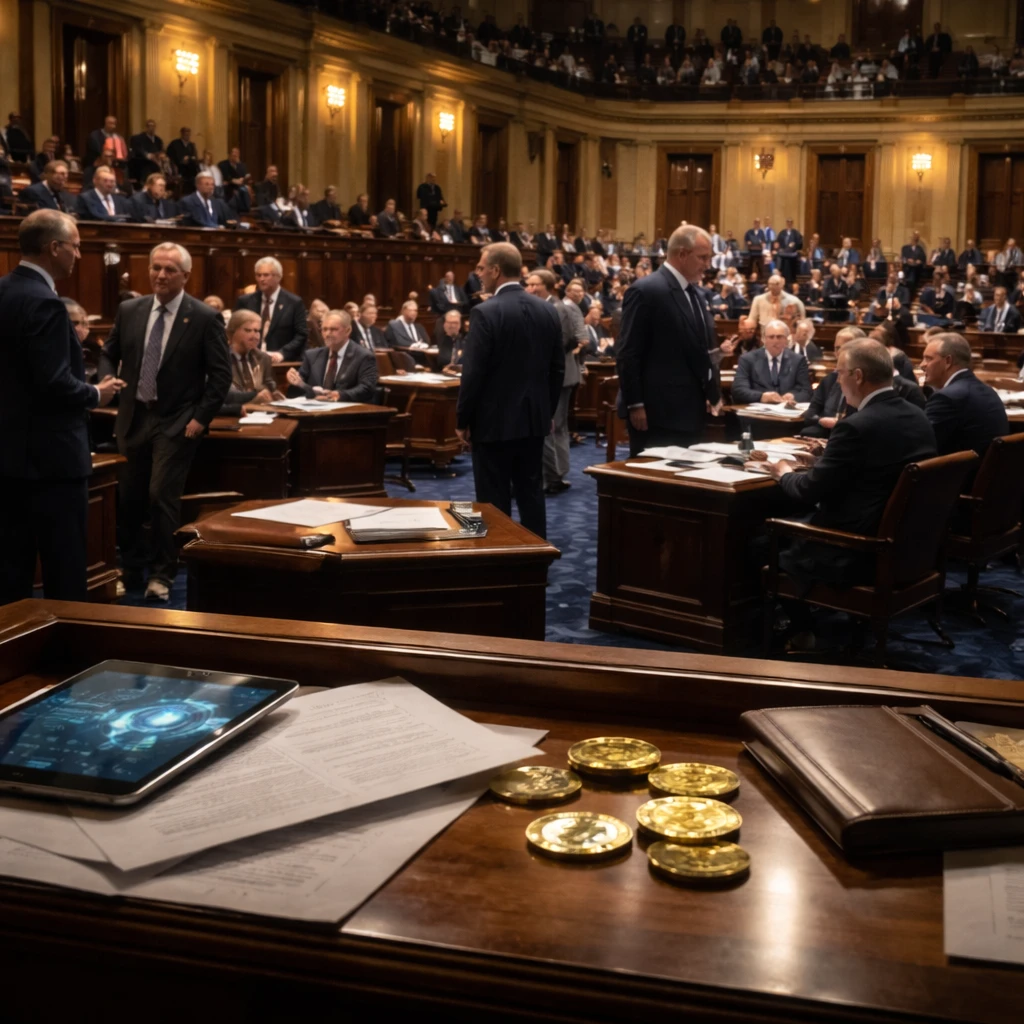
WASHINGTON, Sept 16 - The U.S. Senate on Tuesday fell one vote short of moving forward on the Clarity Act, with Senators voting 49-50 against procedural advancement of the bill. The legislation was designed to provide a statutory framework to determine which digital assets are regulated as securities and which are treated as commodities, a classification that the industry says would provide clearer legal footing for the roughly $2 trillion cryptocurrency market.
The vote represented a major setback for crypto firms and their allies in Washington. The industry has spent heavily to shape policy and political outcomes, contributing more than $300 million across the 2024 and 2026 election cycles in an effort to put friendly lawmakers into office and normalize crypto policy at the federal level. Still, the Clarity Act failed to attract sufficient bipartisan support to clear procedural hurdles, with four Republicans joining Democrats in opposing the measure.
Political dynamics and campaign spending
Industry executives, analysts and academics noted that Tuesday’s loss demonstrates the limits of crypto’s political machine. While the sector retains significant resources - an estimated remaining war chest of roughly $130 million - the defeat shows that campaign cash and advocacy cannot guarantee legislative success when multiple political and policy headwinds align.
Among the factors that reshaped the politics around the bill were heightened Democratic resistance tied to revelations about a prominent political figure’s cryptocurrency income. In June, that figure reported more than $1.4 billion in income from family crypto ventures, prompting Democrats to press for tighter restrictions on officeholders profiting from digital assets. Although the White House ultimately agreed to several restrictions, Democrats argued those concessions were insufficient and pressed to oppose the bill.
Observers said the shifting political calculations meant Democrats were less inclined to fear the crypto lobby’s influence. "The politics here changed slightly in a way that made it less difficult for the Democrats to vote against it," said one industry analyst. The improved prospects for Democrats ahead of the November midterms also reduced the deterrent effect of industry campaign money, according to market analysts who monitored the negotiations.
Banking lobby resistance and deposit competition concerns
Another decisive pressure point came from the banking sector. The banking lobby mounted a sustained campaign against a provision in the Clarity Act that it said could create competition for deposits and thereby harm lending. Using its established national network - including thousands of community bankers - the banking industry pressed lawmakers and protracted negotiations, ultimately peeling off some Republican support.
Banks have signaled they will continue to push for targeted policy changes even after Tuesday’s vote. The clash with the financial-services lobby illustrated how established industry groups can blunt the momentum of newer sectors seeking regulatory clarity.
Public opinion and electoral consequences
Despite the crypto industry’s efforts to cultivate a mass movement - including national advocacy groups attempting to mobilize voters seen as crypto supporters - polling and electoral results have been mixed indicators of public appetite for prioritizing crypto regulation. Some polls cited in recent months suggested crypto policy does not rank highly among voters’ top priorities, trailing other issues such as affordable housing.
In several Democratic primaries, candidates have successfully criticized opponents for taking crypto money, with campaign spending not guaranteeing victory for those supported by industry contributions. Prominent Democrats have used such examples to underscore a broader political theme: candidates who rely heavily on crypto industry donations have not always prevailed in contested races.
Industry response and next steps
Industry representatives pledged to continue advocacy work aimed at reviving pro-crypto legislation. Executives and public policy leads emphasized that efforts would encompass support for pro-crypto candidates across the political spectrum and ongoing engagement with lawmakers to craft acceptable safeguards.
At the same time, observers noted that while procedural defeats can be significant, the sector’s remaining financial resources and organizational capacity suggest it will remain active in the policy arena. The outcome on Tuesday, however, underscored how the interaction of partisan calculations, high-profile political disclosures and entrenched financial-industry interests can complicate efforts to pass comprehensive crypto legislation.
Implications for markets and regulators
The Clarity Act’s failure to advance leaves unresolved questions about the regulatory status of many digital assets and the proper division of oversight between securities and commodities regulators. Proponents contend that legislative clarity would protect innovation, jobs and consumers by delineating the boundaries of regulation. Opponents, including parts of the banking sector and some Democrats, worry about competitive dynamics and ethical safeguards for officeholders.
Although a previous bipartisan effort led to last year’s GENIUS Act, which facilitated greater adoption of dollar-backed tokens and had support from lawmakers across the aisle, the Clarity Act could not replicate that level of consensus. Several Democrats had supported similar measures in principle if they included strong safeguards; in this instance many concluded the compromises were insufficient.
The vote on Tuesday was procedural in nature but widely viewed as a decisive test of whether the Clarity Act could move forward. With political and industry stakeholders digging in on both sides, the legislative path for comprehensive crypto regulation in the near term remains uncertain.