
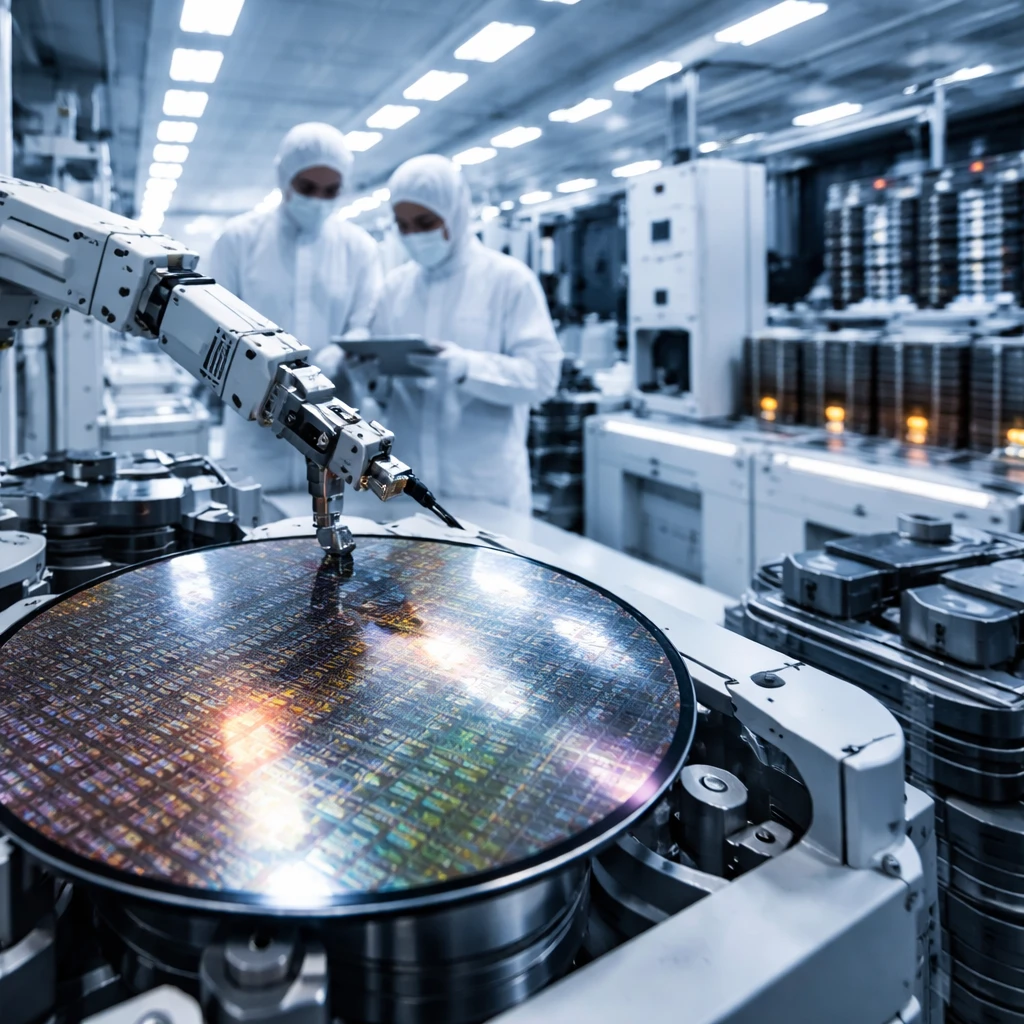
Samsung Electronics announced on Saturday that it has reached a memorandum of understanding with U.S. chip designer Broadcom to expand cooperation across memory chips, contract chip manufacturing and advanced packaging, in a partnership envisaged to surpass $200 billion through 2030.
The agreement formalises long-term production commitments from Broadcom, one of the world’s leading custom AI chip designers, aligning Broadcom's application-specific integrated circuit (ASIC) design strengths with Samsung's manufacturing capabilities. Samsung said the expanded cooperation will run across the next five years and beyond, combining Broadcom's ASIC expertise with Samsung's fabrication know-how.
"The expanded collaboration ... reflects Samsung’s focus on supporting customers with end-to-end semiconductor technologies across an increasingly diverse range of AI and high-performance computing applications," the company said in a statement.
Under terms described by Samsung, Broadcom's next-generation communications chips, intended for high-speed data transfer, are slated to be produced using Samsung's sub-2-nanometre process technology. The two companies will also work together on the development of next-generation high-bandwidth memory (HBM) products and advanced packaging solutions.
Analysts and industry observers have highlighted that securing long-term manufacturing commitments from a major custom AI chip designer could improve utilisation rates at Samsung's most advanced fabs, aiding its effort to accelerate the supply of AI chips and narrow the gap with the industry-leading foundry competitor TSMC. The partnership is positioned as a strategic move to strengthen Samsung's foundry business by attracting large technology customers seeking dedicated design-to-manufacturing relationships for specialised processors.
The pact comes amid a broader shift in which global technology firms increasingly pursue their own custom AI accelerators rather than relying solely on general-purpose graphics processors. That trend has been cited as a driver of demand for bespoke chip design and deeper manufacturing partnerships.
Samsung this year signalled expectations of securing more advanced 2-nanometre foundry orders in the near term following talks with major technology companies. Separately, last year the company won a $16.5 billion contract to manufacture logic chips for electric vehicle maker Tesla, underscoring its ongoing efforts to capture large, multi-year production deals.
In recent industry engagements, Samsung executives have also discussed next-generation foundry cooperation with key customers. Last month, co-CEO and head of the chip division Jun Young-hyun said he had discussed next-generation foundry collaboration with Nvidia chief executive Jensen Huang, including future HBM4E and HBM5 memory products.
While the memorandum sets out a framework for broad collaboration across design, memory and packaging, the companies will need to translate the agreement into concrete production schedules and fulfilled orders over the coming years to realise the envisaged financial scale.