
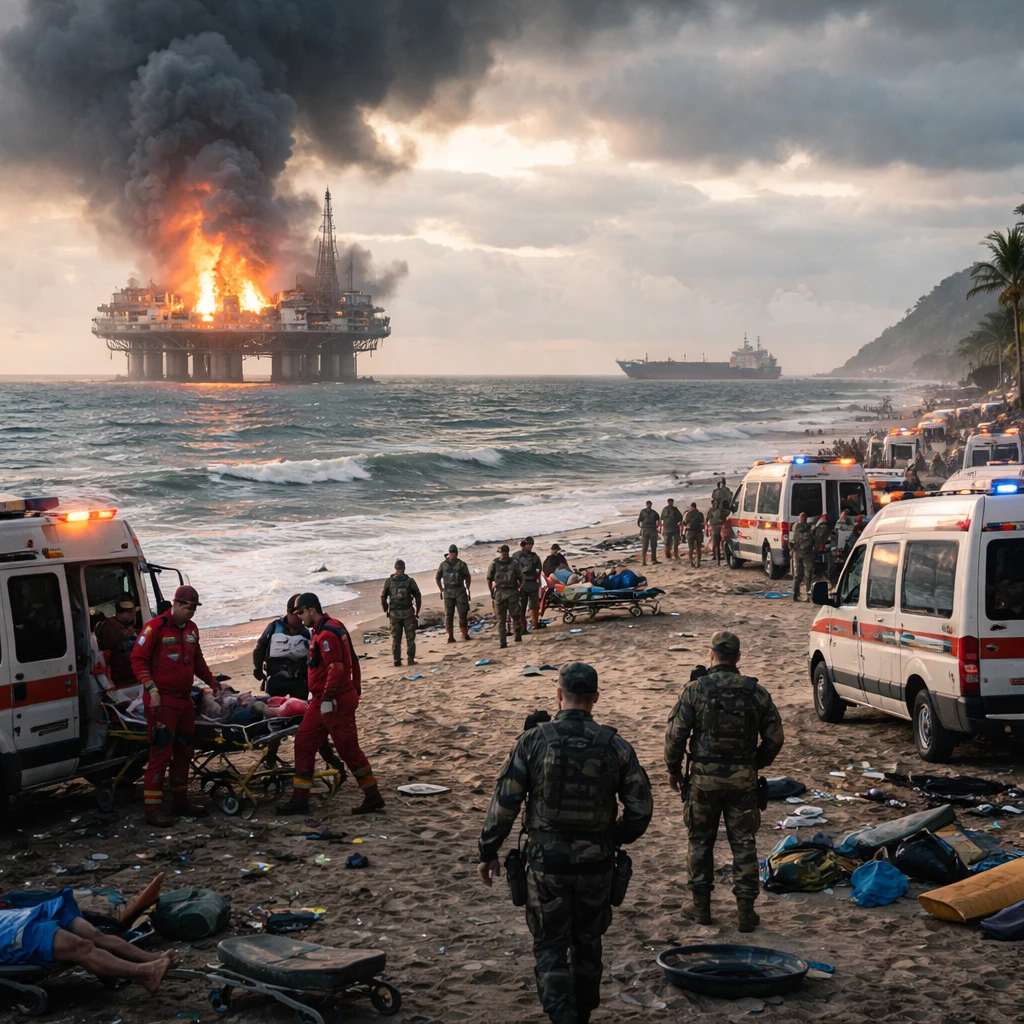
July 25 - Russian authorities reported that an overnight strike on a holiday resort in a Russian-held area of Ukraine's Zaporizhzhia region killed 11 people, including four children, and injured another 16.
The Russian-appointed governor of the occupied territory, Yevgeny Balitsky, said the attack hit the resort area of Kyrylivka on the Azov Sea coast near Melitopol and accused Ukrainian forces of deliberately targeting civilians. Writing on the Telegram messaging app, he said: "The enemy saw and understood who it was targeting." Kyiv did not immediately respond to a request for comment.
Both sides in the conflict have repeatedly denied deliberately striking civilian targets since Russia launched its full-scale invasion in February 2022, a point that remains contested by the belligerents.
Energy and shipping strikes
On the same day, Ukrainian authorities said their long-range drones had struck energy infrastructure deep inside Russian-controlled territory. Ukraine's security service, the SBU, said it hit the Filanovsky oil platform owned by Lukoil in the Caspian Sea and also attacked an oil refinery in the Siberian Tyumen region.
Local officials in Tyumen confirmed a drone had caused a fire at the regional refinery but did not specify whether production had been affected. Lukoil did not immediately provide comment on the reported strike on the Filanovsky platform, which is part of the largest Caspian oil field operated by the company.
The distances involved - the Caspian platform and the Siberian refinery lie more than 700 km and about 2,000 km respectively from Ukrainian territory - underscore Kyiv's increasing use of long-range drone systems to strike targets far from the frontline. Kyiv said the operations were aimed at undermining Russia's war effort and applying pressure on the Kremlin.
Maritime attacks and logistical pressure
Both Kyiv and Moscow also reported strikes on maritime targets. The SBU said Ukrainian drones attacked two cargo vessels in the Caspian Sea, the Port Olya 2 and the Begey, which Kyiv believes were being used for military cargo shipments between Russia and Iran. Russia's transport ministry did not respond to requests for comment on those reported strikes.
In the Black Sea, Russia's Defence Ministry said Russian drones had struck a bulk carrier it identified as delivering military cargo to Ukrainian forces. Separately, both sides reported attacks on ships allegedly carrying military equipment, reflecting an intensified effort by each to disrupt the other's logistical and supply lines at sea.
In its daily operations summary, Russia's Defence Ministry said it had targeted Ukrainian logistics centres and facilities tied to long-range drone production, as well as energy, transport and port infrastructure, but offered few further details.
What remains unclear
Several aspects of the incidents remain unresolved. Kyiv had not publicly commented by the time of reporting on the strike that Moscow said killed civilians in Kyrylivka. Local authorities in Tyumen confirmed a refinery fire but did not indicate whether refining output was disrupted. Lukoil did not immediately comment on its Caspian platform.
The competing claims over maritime strikes and attacks on logistics infrastructure further reflect an asymmetric campaign in which both sides report operations against the other's supply chains and energy assets, while details and independent verification remain limited.