
SHANGHAI - A new wave of devoted Chinese buyers is helping restore momentum for Ralph Lauren in the world’s most important luxury battleground.
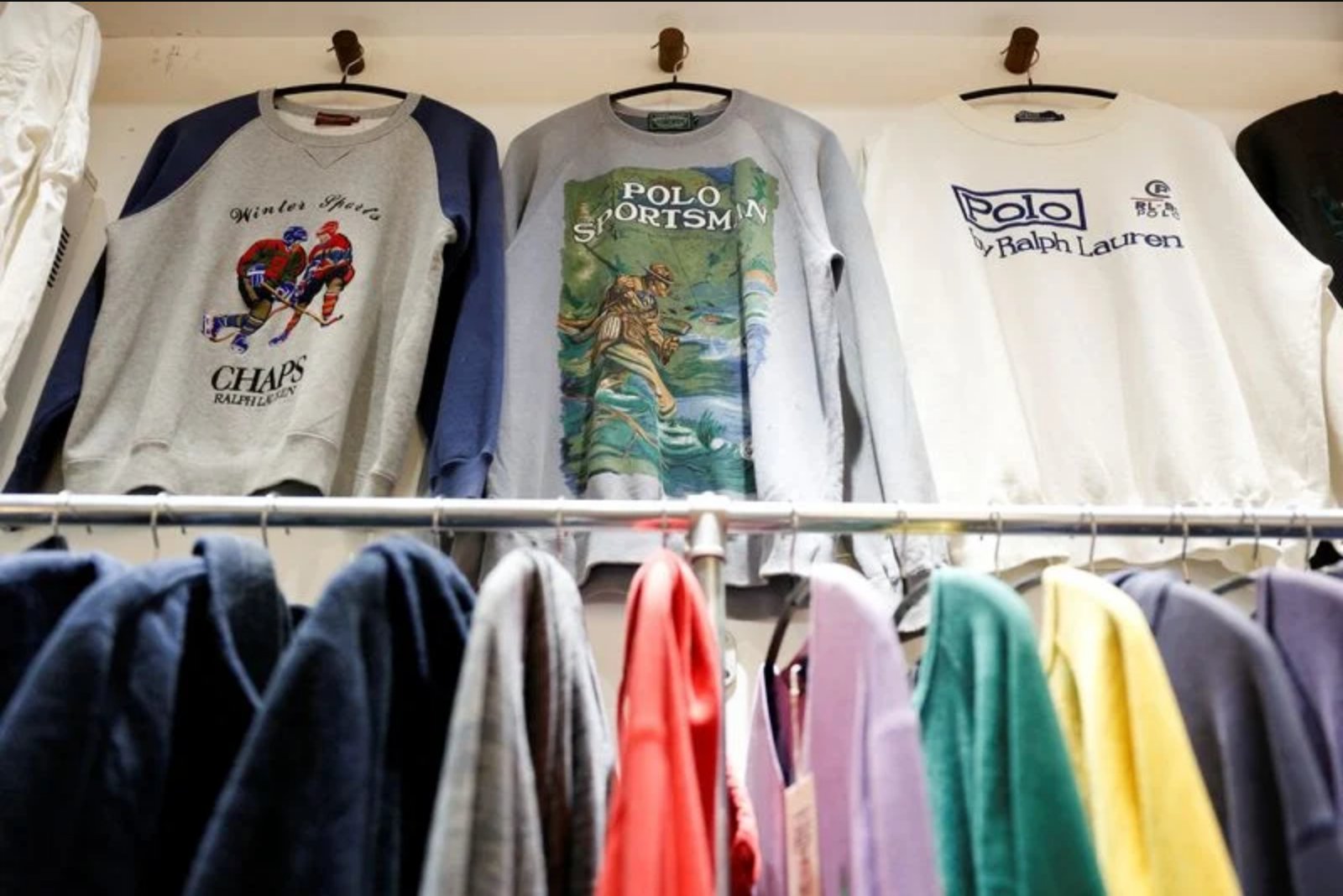
Collector Xiao Neng, 23, says he has spent at least $1 million on Ralph Lauren garments over the past four to five years, amassing a collection that is now grande enough to supply two vintage shops he operates in downtown Shanghai. For buyers like him, the brand performs a cultural role as much as a fashion one.
"Ralph Lauren, through clothing, provides people with a way to achieve this American Dream," Xiao Neng said. "What he makes is clothing with an American Dream feel to it." He emphasised that the American Dream is not limited to U.S. citizens, calling it an aspirational lifestyle that resonates with consumers in China.
The strong reception among these buyers helped propel a 50% sales jump for Ralph Lauren in China last quarter, according to the company. That advance has taken place despite persistent headwinds for the broader luxury sector in the country - including weak consumer confidence, a prolonged property downturn and concerns about jobs and income growth.
Strategic overhaul, not a one-off bounce
Ralph Lauren’s improved results in China are the product of a multiyear restructuring rather than a single-quarter rebound, company executives and outside analysts say. Chief Executive Patrice Louvet told investors on a post-earnings call last month that the gains were "not a one-off" and credited years of work to sharpen brand positioning and increase local relevance.
"We’re in China not just to win this year, but we’re in China trying to win for the next 10 and 20 years and really make sure we’re building the right foundations for the long term," Louvet said. The company declined to provide further comment for this report.
Ralph Lauren now operates around 250 stores across China. Observers point to several coordinated moves that appear to have improved the brand’s appeal: a retreat from heavy discounting, investment in store upgrades and marketing, and a strategy that concentrates resources city-by-city rather than seeking uniform national expansion.
Positioning and pricing matter
The brand’s positioning in China has aligned with a broader shift in consumer behaviour away from ultra-high-end labels toward brands viewed as offering stronger value. Whereas the top-tier European maisons have pushed steep price increases in recent years, Ralph Lauren is priced below many of those competitors, making its products more attainable for aspirational buyers.
Retail pricing at Ralph Lauren boutiques in China typically sees dresses selling for several thousand yuan and shirts often priced under 2,000 yuan (about $294.24), while brands like Dior sell dresses for more than 20,000 yuan and shirts for over 6,000 yuan in comparable outlets, the company’s pricing landscape shows. Industry data cited in the market notes that luxury brands raised prices 36% between 2020 and 2023, led by top-tier players.
"Another advantage is that they offer great value," Xiao Neng said. "The brand’s positioning and style are very high-end, meaning you’re getting a high-class item for a smaller price."
Analysts say that value perception has become a key factor as consumer confidence has softened. "She looks at Hermès and the like, and she says this is above my needs," said Jacques Roizen, co-founder of Shanghai-based Foresight Performance Partners. "The value proposition doesn’t match my current confidence in the economy. And you’ve seen brands like Coach and Ralph Lauren do very, very well as a result." Roizen added that the brand’s outperformance is attributable to deliberate strategy rather than luck. "You don’t overperform the market by 50% because you got lucky. They’ve done a lot of things right," he said.
Local execution - focused markets and targeted spend
Another thread of Ralph Lauren’s China play is tactical concentration of resources. Yann Bozec, founder of consultancy YB Stratis and a former APAC president at Tapestry, notes the company has embraced a city-by-city approach, directing media spend, in-store investment, events and targeted digital marketing to key urban centres such as Shanghai, Beijing and Chengdu.
"When it comes to media spend, stores, events, targeted digital marketing, they will do it in those cities," Bozec said. "It is a sound strategy to be very focused on some cities where they can achieve the reach and the frequency that they need in order to create impressions." That strategy aims to deepen engagement in key population and consumption hubs rather than dilute resources through simultaneous nationwide expansion.
Context and outlook
The luxury sector in China has been under pressure for a number of years, and industry trackers describe the market as "slowly recovering" in 2026 after periods of contraction and flat sales. Despite the challenging backdrop, the combination of a value-oriented price ladder, upgraded retail environments and focused local marketing appears to have given Ralph Lauren traction with a growing cohort of younger, aspirational consumers.
While the company highlights a durable play for China over the long term, uncertainties in consumer confidence and broader economic conditions remain factors to watch. ($1 = 6.7971 yuan)