
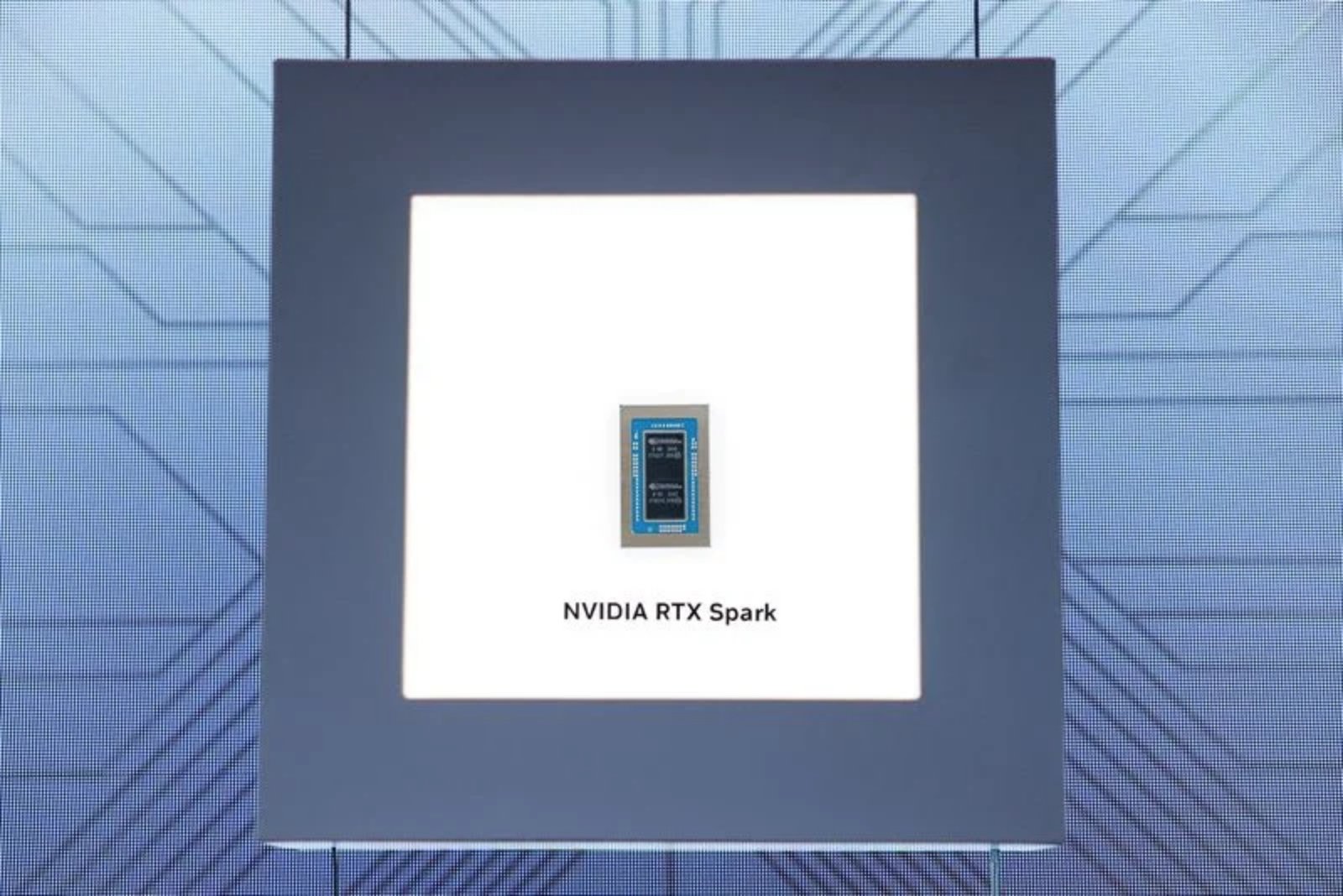
Nvidia this month introduced the RTX Spark superchip, presenting a vision of laptops that can host large artificial intelligence models on-device rather than relying on cloud connections. At the Computex trade show in Taiwan, the chipmaker outlined plans for machines that would act as personal digital agents, performing tasks locally from video generation to code debugging.
Analysts caution that the announcement represents more of a strategic bet than a clear sign that mainstream PC buyers will change their habits. While the company argues the new silicon will reshape human-computer interaction, observers note that earlier attempts to sell AI-enhanced PCs to general consumers have produced limited commercial traction.
What the chip is
The RTX Spark integrates a central processor, a graphics engine and up to 128 gigabytes of unified memory into a single package. Nvidia says that configuration enables these machines to run large AI models locally - a capability current AI PCs have struggled to provide at scale.
Six manufacturers have agreed to build systems around the new part: Microsoft, Asus, HP, Lenovo, Dell and MSI. Following Nvidia’s June 1 announcement, shares of those companies rose, reflecting investor enthusiasm for the potential of on-device AI.
Who the product targets
Rather than attempting to displace the bulk of conventional laptops, industry analysts see the RTX Spark creating a new segment somewhere between high-end workstations and data-center AI servers. "RTX Spark doesn’t make traditional PCs obsolete. It creates a new category between the workstation and the AI server," said Kevin Hein, an analyst at Tirias Research.
The positioning appears focused on developers and content creators - users who have long gravitated toward premium notebooks like Apple’s MacBook Pro. Those users demand high memory bandwidth and local compute for tasks such as large-model inferencing and media production. Nvidia asserts the Spark-based systems could make Windows machines competitive with Macs on that memory-bandwidth metric, which is a bottleneck for AI workloads that frequently move data between processor and memory.
Apple has offered bundled unified memory in its in-house chips since 2020. Nvidia said it will disclose battery life and other performance metrics closer to the fall launch of Spark-equipped laptops.
Market and cost barriers
Analysts point to a number of hurdles that could keep RTX Spark devices limited to a niche audience. A premium price tag combined with a memory-chip supply crunch that has already raised component costs are likely to constrain broader adoption, they say.
"The cost won’t deter all the big computer makers from working with Nvidia on this, but the bulk of PC sales for the next several years will still be more traditional Windows-based PCs with chips from Intel, AMD and Qualcomm," said Bob O’Donnell, president at TECHnalysis Research.
Previous waves of AI PCs, heavily marketed over the past two years, have centered on relatively modest features such as transcription or image editing. Those capabilities have not driven meaningful volume growth for device makers or their partners, including Arm and Qualcomm, according to analysts cited in industry commentary.
HP and Dell had both seen strong share-price gains earlier in the year - up 18% and 223% respectively so far this year - but those rallies were attributed more to enterprise Windows 11 upgrade cycles and surging demand for AI infrastructure than to consumer AI laptop sales. Dell in particular has benefited from rising demand for AI infrastructure.
Even so, the wider PC market outlook is weak. Research firm IDC estimates global PC shipments will fall 11.3% in 2026. In its most recent quarter, HP warned of a marked decline in the PC market in the second half of the year. HP did note strong interest in AI PCs among enterprise customers even as its overall PC business posted shrinking sales.
Competition with Macs and next steps
It remains unclear whether Spark-equipped Windows laptops will outperform Apple’s Macs in real-world use. Nvidia has committed to releasing more comprehensive metrics, including battery performance, before the products reach customers later this year.
Tom Mainelli, a group vice president at IDC, suggested some manufacturers may adopt the technology to evaluate the long-term feasibility of on-device model inferencing. "I expect some companies will take the leap to test out the long-term viability of on-device inferencing," he said.
Bottom line
Nvidia’s RTX Spark represents an attempt to create a distinct category of AI-enabled portable machines aimed at professional creators and developers. While the technical approach - combining CPU, GPU and large unified memory - targets a clear limitation of prior AI PCs, analysts warn that price, supply-chain pressure on memory and an overall sluggish PC market will likely limit the addressable audience to niche segments for the near term.