
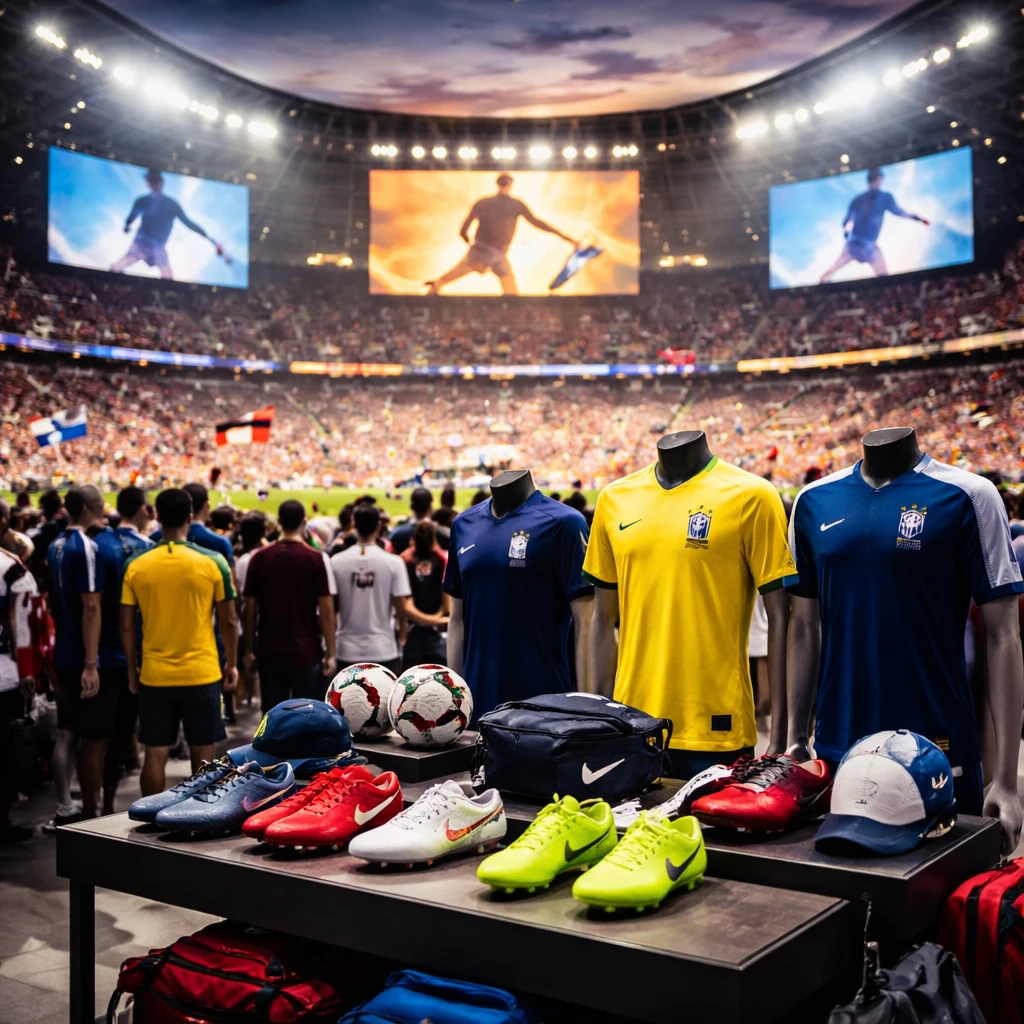
Nike Inc. shares climbed about 2.8% in mid-day trading to trade at $44.45, lifted by renewed investor interest tied to the upcoming FIFA World Cup 2026 and the company’s concentrated football strategy. The tournament, which kicks off on June 11, is being treated by Nike as a near-term commercial catalyst as the apparel and footwear giant pivots marketing and product lines toward the global event.
At the center of the push is Nike’s newly launched "Rip The Script" campaign, which spotlights a roster of high-profile global athletes including Cristiano Ronaldo, Kylian Mbappé, Erling Haaland, Vinícius Junior, LeBron James, and Travis Scott. Nike’s emphasis on football in both product and marketing underpins an effort by returning CEO Elliott Hill to accelerate an operational and brand reset, positioning football as a multi-year demand driver across footwear, apparel, and streetwear.
Institutional and sell-side responses to Nike’s World Cup-focused initiatives were mixed but slightly constructive. Goldman Sachs kept a Neutral rating on the stock and left its price target at $52 after attending Nike’s Global Football showcase, which the bank said highlighted the company’s World Cup playbook across merchandising and marketing. UBS, following a separate meeting with management, described itself as "incrementally positive" on Nike shares. Both firms signaled that the success of the strategy will depend heavily on execution in upcoming quarters, even as they edged toward a more favorable view.
Adding to the session’s buying interest, Westerkirk Capital Inc. increased its stake in Nike by 52.4% in the fourth quarter, according to the firm’s latest Form 13F filing with the SEC. That accumulation at the institutional level provided an ownership signal that appeared to filter into trading activity during the day.
Nike’s most recent quarterly results, reported on March 31, showed the company earned $0.35 per share, ahead of the $0.29 consensus estimate. Revenue for the quarter came in at $11.28 billion, a figure described as slightly ahead of analyst expectations. Those results, combined with the World Cup marketing push, appear to be part of the case investors are weighing as they reassess the timetable for Nike’s turnaround.
The stock advance was notable because it ran counter to a broadly negative U.S. market backdrop. The S&P 500 was down 1.1%, the Dow Jones Industrial Average was off about 0.5%, and the Nasdaq Composite declined roughly 1.9% in the same trading window. Nike’s move carved out an exception to the general weakness observed across major indices.
Operational and product actions timed ahead of the World Cup were also highlighted by management. Nike has rolled out AI-powered shopping tools in partnership with Google and Gemini to tailor product discovery and recommendations for customers. At the same time, the company is realigning aspects of its supply chain to lower reliance on China for footwear bound for the U.S. Both initiatives are positioned as preparatory steps for the demand surge Nike expects around the World Cup.
Despite the bullish impulses tied to the event, the company continues to face headwinds. Tariff pressures have exerted upward pressure on costs, weighing on gross margins, and sales in Greater China have been softer, in part due to marketplace actions and reduced sell-in. The stock’s recent proximity to its 52-week low of $41.35 has also made it technically appealing to investors who are willing to bet on a near-term demand inflection tied to global football.
Nike is scheduled to report its next quarterly earnings on June 30, 2026. That release will be the next material inflection point for the market to assess whether World Cup-linked merchandising, marketing and the broader football strategy are translating into measurable top-line and margin improvements. Market participants are watching for evidence that marketing and product efforts are driving sustained consumer demand rather than only episodic gains.
Views among investors remain divided. Some institutional holders have exited positions citing the risks inherent in a turnaround, while recent insider buying and the cautious reassessment from banks such as Goldman Sachs and UBS suggest there is a subset of market participants that sees the football push and sharpened focus on core sports as a potential avenue to reshape Nike’s longer-term trajectory. In today’s session, those factors - the World Cup timing, renewed analyst engagement, institutional accumulation, and the rollout of AI-enabled commerce tools - combined to lift Nike shares even as the wider market retreated.
Summary
Nike shares rose to $44.45, up about 2.8% mid-day, as investors responded to the company’s World Cup-focused marketing and product expansion, management’s operational reset, analyst commentary from Goldman Sachs and UBS, and institutional buying by Westerkirk Capital. The advance occurred amid broader U.S. market weakness and ongoing pressures from tariffs and softer sales in Greater China.
Key points
- Nike launched the "Rip The Script" campaign and is centering football in its marketing ahead of the FIFA World Cup 2026, which begins on June 11.
- Goldman Sachs kept a Neutral rating and a $52 price target after the Global Football showcase; UBS said it was "incrementally positive" after meeting management.
- Westerkirk Capital increased its Nike stake by 52.4% in Q4; Nike reported March-quarter EPS of $0.35 and revenue of $11.28 billion, both slightly ahead of expectations.
Risks and uncertainties
- Tariff-related cost pressure that can weigh on gross margins - affecting apparel and footwear manufacturing and retail margins.
- Softer demand in Greater China and marketplace-related headwinds that could limit recovery in a major regional market for Nike.
- Execution risk - the World Cup and football-focused strategy require successful implementation across product, marketing and supply chain to deliver sustained financial improvements.