
Stock Markets July 7, 2026 11:51 AM

NATO Moves to Expand ISR Fleet with Intent to Acquire Northrop Grumman Triton

Letter of Intent signed by four nations at NATO summit signals potential procurement of MQ-4C Triton to strengthen maritime surveillance alongside existing Phoenix fleet

By Jordan Park
Share
Twitter Reddit Facebook LinkedIn
NOC

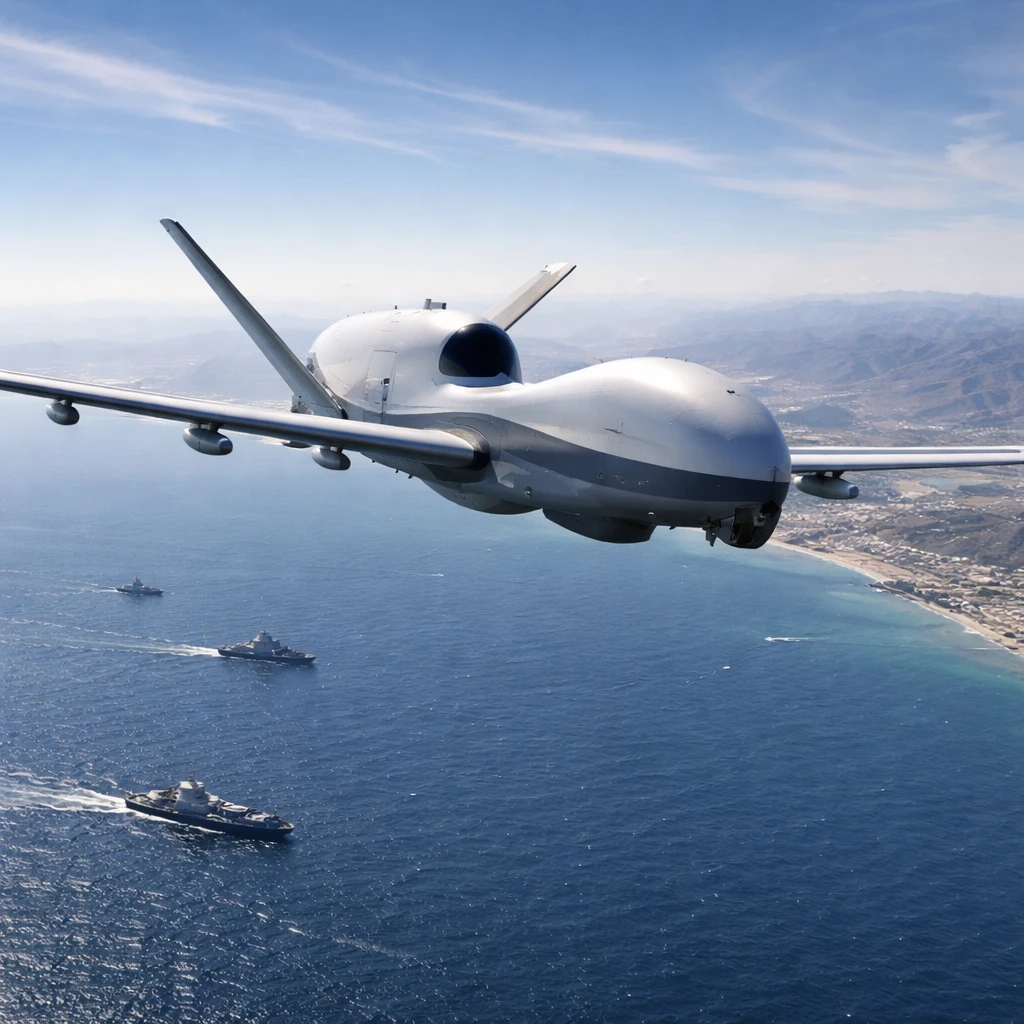
NATO has signed a Letter of Intent to pursue acquisition of Northrop Grumman’s MQ-4C Triton large‑endurance ISR aircraft. The LOI, endorsed by four nations at the NATO Summit Defense Industry Forum in Ankara, calls for Northrop Grumman to build and deliver the aircraft in partnership with the U.S. Navy and trans‑Atlantic industrial suppliers, with European firms supplying ground station components and data infrastructure. The Triton would complement NATO’s current RQ-4D Phoenix operations by adding maritime surveillance and interoperable data exchange with crewed platforms.

NATO Moves to Expand ISR Fleet with Intent to Acquire Northrop Grumman Triton
NOC
Summarize with
ChatGPT Perplexity Claude Grok Gemini

Key Points

  • NATO signed a Letter of Intent at the Ankara summit to pursue acquisition of Northrop Grumman’s MQ-4C Triton aircraft.
  • Northrop Grumman would work with the U.S. Navy and trans-Atlantic industrial partners; European firms would supply ground station components and data processing infrastructure.
  • The Triton is intended to complement NATO’s RQ-4D Phoenix fleet by adding maritime surveillance and interoperable data exchange with crewed platforms.

NATO has taken a formal step toward expanding its Intelligence, Surveillance, and Reconnaissance (ISR) capabilities by signing a Letter of Intent to pursue purchases of Northrop Grumman’s MQ-4C Triton aircraft. The LOI was signed by representatives of four NATO nations at the NATO Summit Defense Industry Forum in Ankara, Türkiye.

Under the framework described in the LOI, Northrop Grumman would produce and deliver MQ-4C Triton aircraft in collaboration with the U.S. Navy and a set of trans-Atlantic industrial partners. The announcement specifies that key European industry participants would be responsible for supplying parts of the ground station and the supporting data processing infrastructure necessary to operate the system.

NATO already operates Northrop Grumman’s RQ-4D Phoenix, a Global Hawk variant, from Sigonella, Italy, which provides ISR data to alliance commanders. The MQ-4C Triton is presented as a complementary platform that adds dedicated maritime surveillance capabilities and is designed to operate in cooperation with crewed platforms through data exchanges.

The Triton is described as expanding NATO’s organic ISR assets, enhancing surveillance coverage across the alliance’s northern, eastern, and southern flanks. The company highlights cost-savings potential, noting operational, maintenance and training synergies with the existing Phoenix fleet due to the Triton’s lineage in the Global Hawk family.

Built for the U.S. Navy and the Royal Australian Air Force, the MQ-4C Triton is a multi-intelligence platform that supports missions including maritime patrol, signals intelligence and search and rescue. Jane Bishop, vice president and general manager of Northrop Grumman’s global surveillance division, said the aircraft "conducts ISR at higher altitude and with longer endurance than medium-altitude systems."


This development is framed as an intent to pursue acquisition rather than a final procurement contract. Implementation would involve cross-border industrial collaboration and integration with NATO’s existing ISR posture.

Risks

  • The arrangement is a Letter of Intent, not a finalized procurement contract - the acquisition is a pursued intent rather than a guaranteed purchase. - Impacts defense procurement and aerospace sectors.
  • Delivery and operational deployment require coordination between Northrop Grumman, the U.S. Navy and multiple trans-Atlantic industrial partners, posing integration and program risk. - Impacts defense contractors and European aerospace suppliers.
  • Realization of projected cost-saving synergies with the Phoenix fleet depends on successful integration and commonality across operations, maintenance and training, which is not assured. - Impacts defense operations budgets and maintenance contractors.

More from Stock Markets

Amrize Shares Drop After Truist Lowers Rating, Flags Roofing Margin Pressure and Limited Cement Pricing Upside Jul 7, 2026 Netherlands Seeks Reset with China as Nexperia Governance Dispute Remains Unresolved Jul 7, 2026 Microsoft Shares Tick Up as Company Moves AI Workloads Onto Internal Models Jul 7, 2026 Fiat Introduces U.S. Topolino Mini EV at $13,995, Initially Limited to Private Sites Jul 7, 2026 London Stocks Close Higher as United Kingdom 100 Rises 0.16% Jul 7, 2026