
Stock Markets June 10, 2026 05:18 PM

Mujin Secures Extension to Series D as Factory AI Demand Accelerates, Eyes 2030 IPO

Japanese robot-software developer raises follow-on capital to its $233 million round, citing surging adoption of automation across factories and warehouses

By Marcus Reed
Share
Twitter Reddit Facebook LinkedIn

Mujin is raising an extension to the $233 million Series D round it closed in December, valuing the company at over $1 billion, CEO Issei Takino said in an interview with Bloomberg. The additional funding is intended to carry the business through to an initial public offering targeted by 2030 as demand for artificial intelligence-driven automation increases across factory floors and distribution centers.

Mujin Secures Extension to Series D as Factory AI Demand Accelerates, Eyes 2030 IPO
Summarize with
ChatGPT Perplexity Claude Grok Gemini

Key Points

  • Mujin is raising an extension to the $233 million Series D round, valuing the company at over $1 billion, with funds intended to last until a planned IPO by 2030.
  • The company, backed by the Qatar Investment Authority, supplies robot operating systems to major customers including Toyota Motor Corp. and Fast Retailing Co., and reported sales doubling last fiscal year with management expecting revenue to double again this year.
  • Mujin automates loading and unloading tasks and coordinates fleets of robots; it is open to listing in New York if valuation exceeds $3 billion, otherwise Tokyo is an option, and management expects to reach break-even before the IPO.

Funding and outlook

Mujin has opened an extension to the $233 million Series D financing it completed in December, according to co-founder and Chief Executive Officer Issei Takino, who discussed the move in an interview with Bloomberg. The round values the company at more than $1 billion, and the proceeds are expected to provide enough capital to reach an initial public offering planned by 2030.

Customer base and backing

Backed by the Qatar Investment Authority, Mujin builds robot operating systems deployed by major manufacturers and retailers. The company supplies software used by Toyota Motor Corp. and Fast Retailing Co., the owner of Uniqlo, and says it is seeing heightened interest from companies seeking to automate and optimize operations.

Revenue trajectory

Mujin reported that rising factory-robot adoption led to sales doubling in the last fiscal year, signaling a shift from experimentation to practical deployment of AI in industrial settings. While the company did not disclose precise revenue figures, it said management expects revenue to double again this year.

Product focus

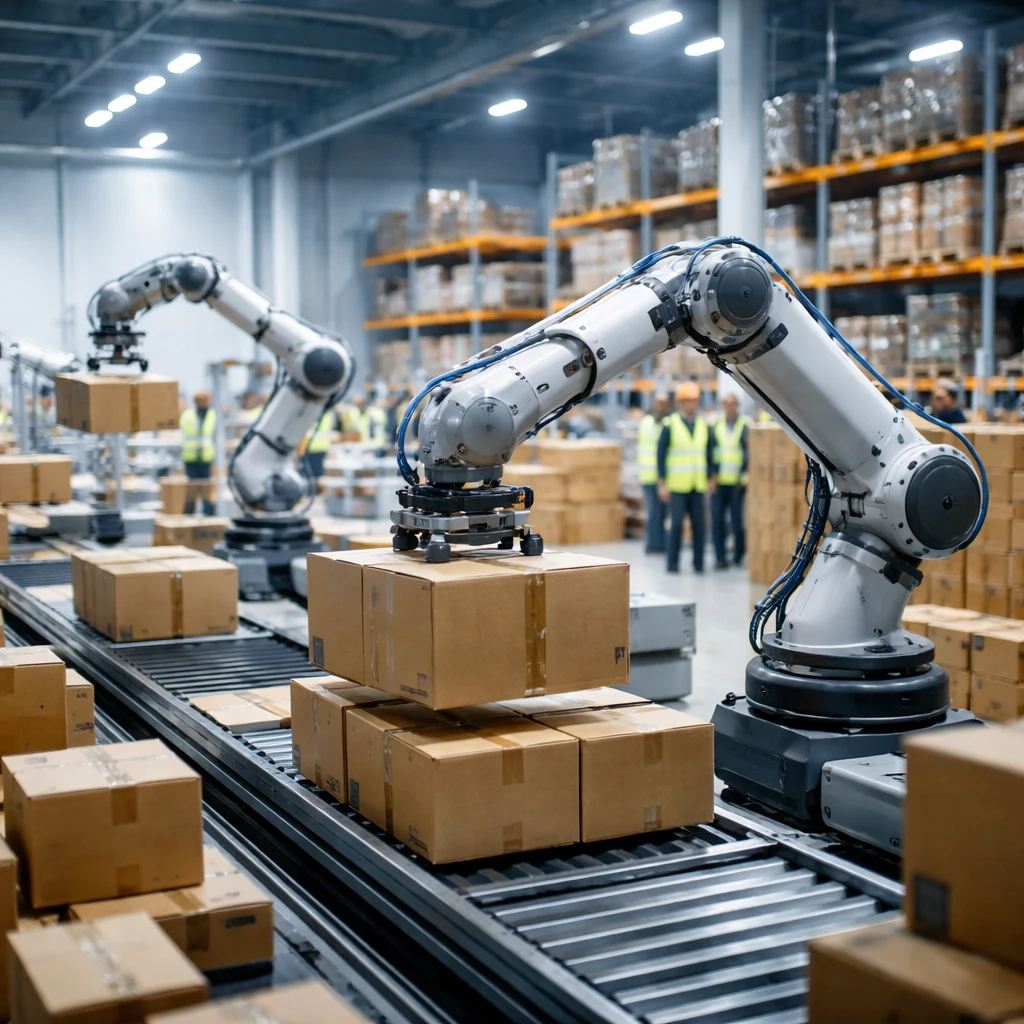
Founded in 2011 by Takino and Rosen Diankov, Mujin specializes in automating the loading and unloading of goods and materials. Its software handles tasks such as filling and stacking boxes, arranging warehouse carts, cages and pallets, and coordinating fleets of robots under a unified control system.

IPO plans and profitability

The startup is open to listing in New York if its valuation surpasses $3 billion, otherwise it may pursue a Tokyo listing. Takino expects the business to reach break-even status before it goes public.


Context and market implications

The company positions itself amid a broader push by firms to introduce AI and automation across manufacturing and logistics operations to improve throughput and reduce manual handling. Mujin's trajectory reflects demand pressures in the industrial automation sector, particularly from large manufacturing and retail customers.

Risks

  • The company did not disclose exact revenue figures, which leaves some uncertainty about the scale and sustainability of recent sales growth - this affects investors and market participants watching industrial automation and robotics suppliers.
  • Plans to list in New York depend on achieving a valuation above $3 billion, creating uncertainty around the choice of market for the IPO and potential impacts on investor demand in both U.S. and Japanese equity markets.
  • While management expects to break even prior to an IPO, achieving that target is not guaranteed and could affect timing and valuation of any public offering - this is relevant to stakeholders across manufacturing, retail, and logistics sectors.

More from Stock Markets

Frasers Group Proposes €2 Billion Cash Offer to Buy Remaining Hugo Boss Shares Jun 10, 2026 Chanos Calls $1.75 Trillion SpaceX Valuation Unjustified Ahead of IPO Jun 10, 2026 PureCycle unveils $395 million debt and equity package; shares slide 13% in after-hours trade Jun 10, 2026 Chanos Calls SpaceX Valuation Unsustainable, Warns IPO Relies on 'Hopes and Dreams' Jun 10, 2026 Xbox to Undertake Major Workforce Reductions and Budget Cuts, Senior Executive Signals Jun 10, 2026