
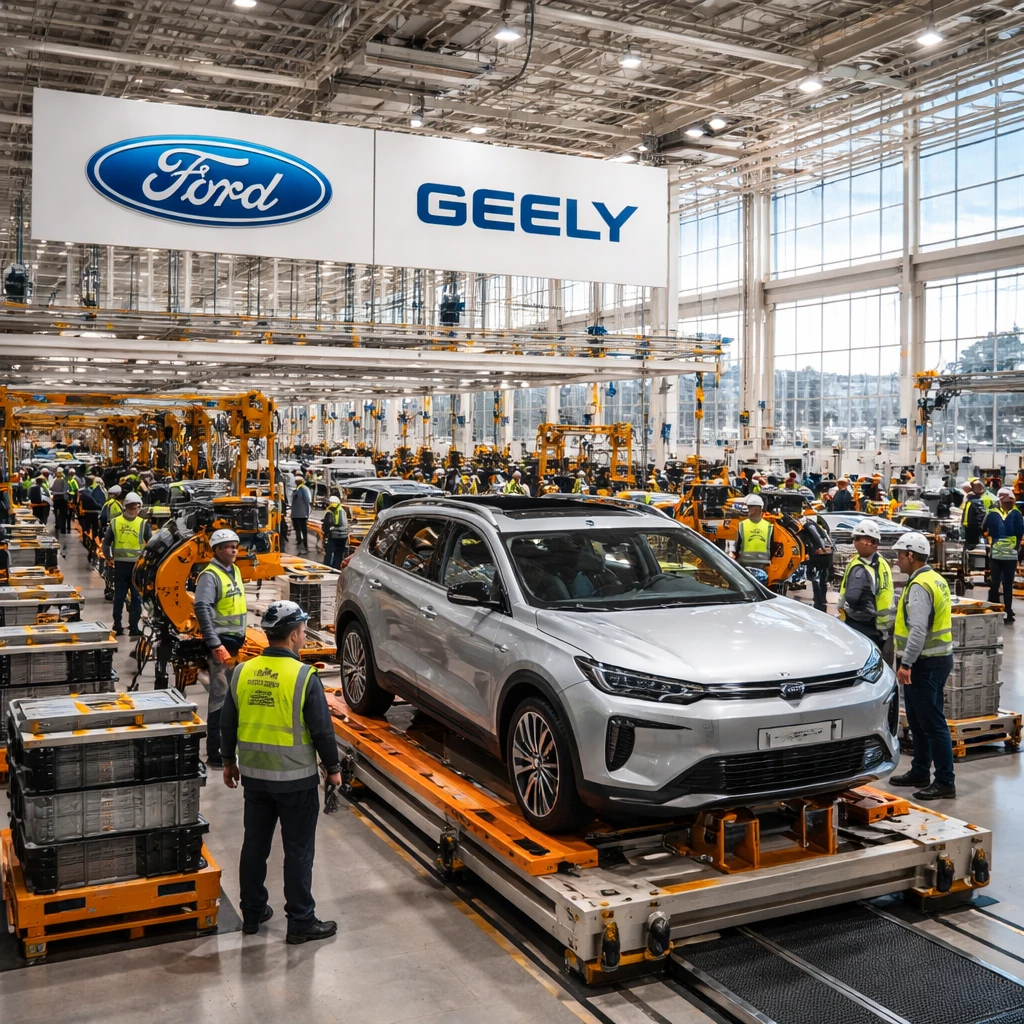
Geely Automobile shares climbed 3.0% on Friday following an announcement of a manufacturing joint venture with Ford Motor centered on the Valencia, Spain facility.
Under the agreement, Geely SPV, a fully owned subsidiary of Geely Automobile, will buy a 34% interest in Ford España, S.L. for €221 million. Ford will retain a 66% majority holding in the venture. The companies disclosed the terms in the evening of July 23 and expect plant operations under the new arrangement to start in the first half of 2027, subject to regulatory approvals. Geely has signaled that the first Geely-branded electric SUV planned for the factory is the EX5 model, with initial production targeted for 2028.
Investors responded positively to the strategic implications. By establishing a manufacturing footprint inside the European Union, Geely reduces its reliance on exporting vehicles into Europe and the import tariffs that have been a headwind for Chinese automakers selling EVs in the region. The Valencia partnership also targets sizeable output: the plan aims to reach an approximate annual capacity of 500,000 units at the plant, offering Geely scale to expand its presence across European markets.
The timing of the announcement was notable. It came one day after U.S. lawmakers advanced proposals to tighten restrictions on Chinese automakers, underscoring the growing importance of local production in major overseas markets.
Geely's share performance stood out against a softer Hong Kong market backdrop, with the Hang Seng index down more than 1% on the same trading day.
Context and implications
- Geely secures EU-based production capacity and tariff mitigation through a 34% stake acquisition for €221 million.
- Ford remains the majority owner in the joint venture, with a 66% share at the Valencia plant.
- The venture aims for operations in H1 2027, with the Geely EX5 electric SUV slated to roll off the line in 2028 and a target plant capacity of roughly 500,000 units per year.
The announcement yielded a clear market reaction for Geely while broader Hong Kong equities fell, reflecting differentiated investor responses across stocks and sectors.