
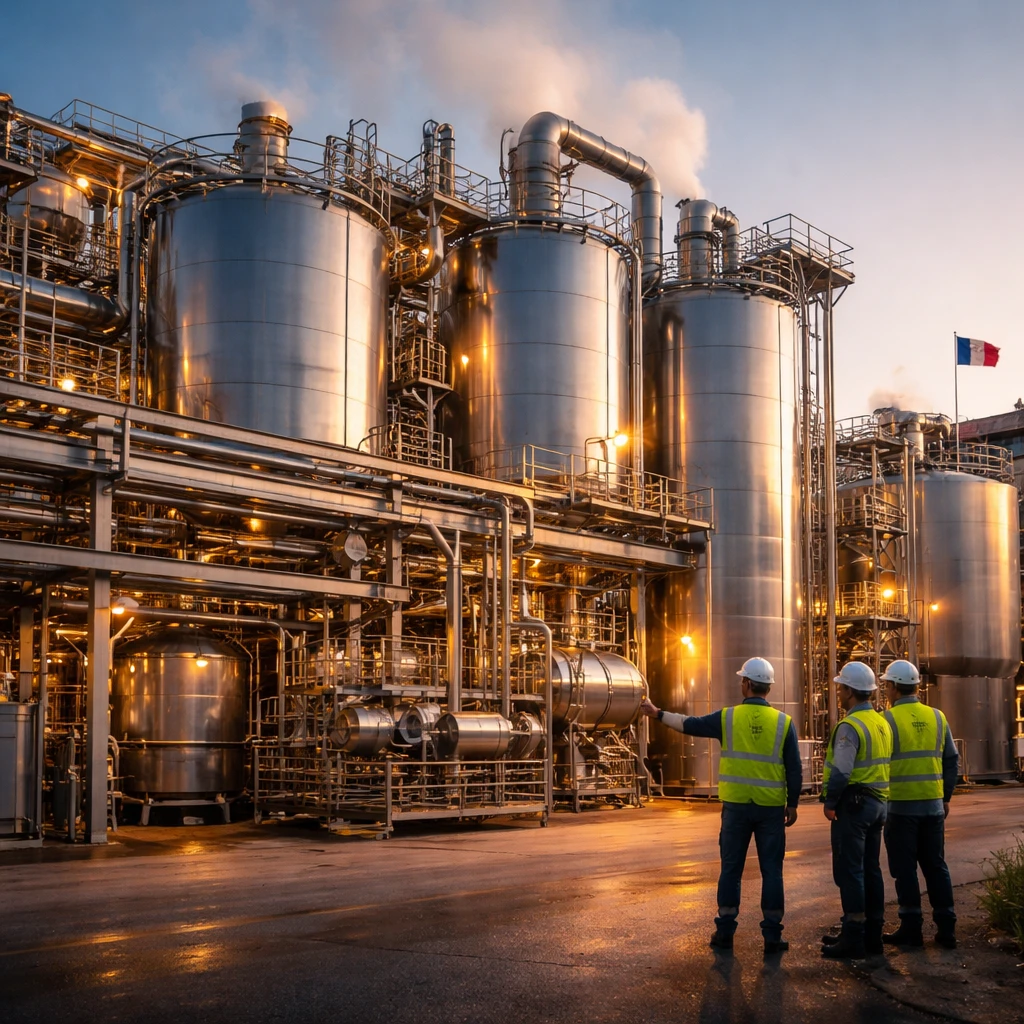
French authorities and the edible-oil processor Avril announced a combined financing package of €70 million ($81 million) to support Eurolysine, the continent’s last amino acid fermentation facility, citing concerns about unfair competition from Chinese producers.
Eurolysine is jointly owned by Avril and public investment bank Bpifrance. The company said on Friday that since 2024 its output has risen to 100,000 tonnes of amino acids annually. These amino acids are used as building blocks for proteins incorporated into animal feed.
Earlier this year Eurolysine formally asked the European Commission to investigate whether Chinese producers are engaging in dumping. The company and French officials say the alleged practices threaten domestic production. The Commission’s review of those complaints is expected to run between six and nine months.
France’s minister delegate for industry, Sébastien Martin, urged the European Commission to use its trade defense mechanisms to restore a level playing field, saying: "The European Commission must make full use of the trade defense instruments at its disposal to ensure a level playing field." He added that when strategic interests are at stake, Europe should be capable of safeguarding production and jobs.
Avril Chairman Arnaud Rousseau highlighted the industrial and supply implications for livestock producers, stating that Eurolysine "enables French and European livestock farmers to source locally produced amino acids and reduces reliance on imported soybean meal."
The rescue package is framed as a response to competitive pressures and as a measure to preserve local industrial capacity and related employment. The outcome of the European Commission review will determine whether trade remedies are applied; until that process concludes, the support aims to sustain Eurolysine’s operations.
Context limitations: The details above reflect the publicly stated figures and timetable provided by the company and officials. No additional dates, figures, or outcomes have been announced beyond the €70 million support, the stated production level of 100,000 tonnes, and the expected six-to-nine-month review period by the European Commission.