
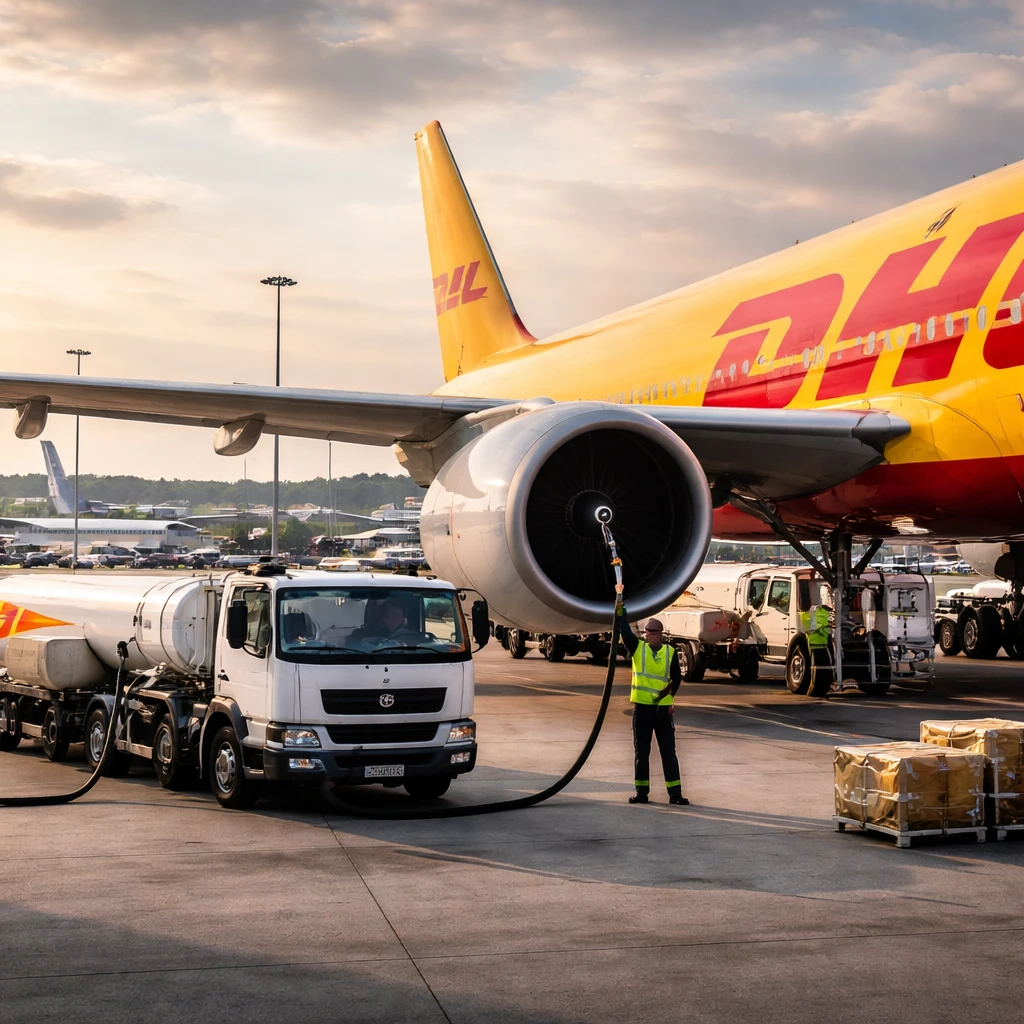
DHL Express Europe has confirmed that its aviation fuel requirements for the coming summer months are secured even as geopolitical uncertainty related to the Iran war persists. CEO Mike Parra said the company does not currently face supply risk at its principal hubs, gateways and cities, and it does not expect disruption to its operations.
Parra told Reuters that recent developments in jet fuel markets have helped ease pressure on supplies. He noted that demand has softened in recent weeks and that Europe has seen increased imports of jet fuel from the United States, Nigeria and South Korea — a dynamic that has loosened market conditions.
On the practical side, Parra said the company has not observed shortages so far: "All in all, there have not been any shortages yet," he said. He emphasized that DHL Express operates a global network supported by contingency planning designed to cope with potential localized supply constraints.
Those contingency measures, as described by Parra, include the ability to refuel aircraft at alternative locations and to adjust flight routings where necessary. The company can also reassign cargo to road transport or reroute shipments through different hubs to maintain service continuity if localized fuel availability becomes constrained.
Parra added that in an extreme scenario the company’s aviation network and planning systems are sufficiently dynamic to respond: "If things started to get really ugly and beyond normal, we have a very dynamic aviation network and network planning," he said. He also noted that the firm is actively monitoring the situation.
While Parra’s comments convey confidence in the firm’s operational resilience and supply arrangements, they reflect ongoing monitoring rather than a categorical guarantee of future conditions. The company’s stated flexibility across modes of transport and route planning underpins its current assessment that no immediate disruptions are expected at major nodes in its network.
Key Points
- DHL Express Europe reports secured jet fuel supplies for the summer months and expects no current disruptions at major hubs.
- Jet fuel markets have loosened recently as demand softened and imports into Europe increased from the United States, Nigeria and South Korea.
- The company can adapt by refueling at alternative locations, adjusting flight routes, shifting cargo to road transport or rerouting via different hubs.
Risks and Uncertainties
- Localized fuel shortages could occur despite current market easing; aviation and logistics services are the primary sectors at risk.
- Escalation of geopolitical tensions could change market dynamics quickly; monitoring and contingency plans are in place but future conditions remain uncertain.