
Generac, best known for household standby generators, has aggressively pivoted into the market for larger, data-center-grade backup power units as artificial intelligence workloads spur a wave of new construction. The Waukesha, Wisconsin-based manufacturer is committing to a $250 million investment by the end of next year to outfit several factories to produce beefed-up generators for data centers. The company already has an order backlog of $1.6 billion for those machines and expects to add roughly 1,000 workers, a roughly 10% increase in its workforce.
"The question on everybody's mind is how long this build-out will go," Generac CEO Aaron Jagdfeld said in an interview.
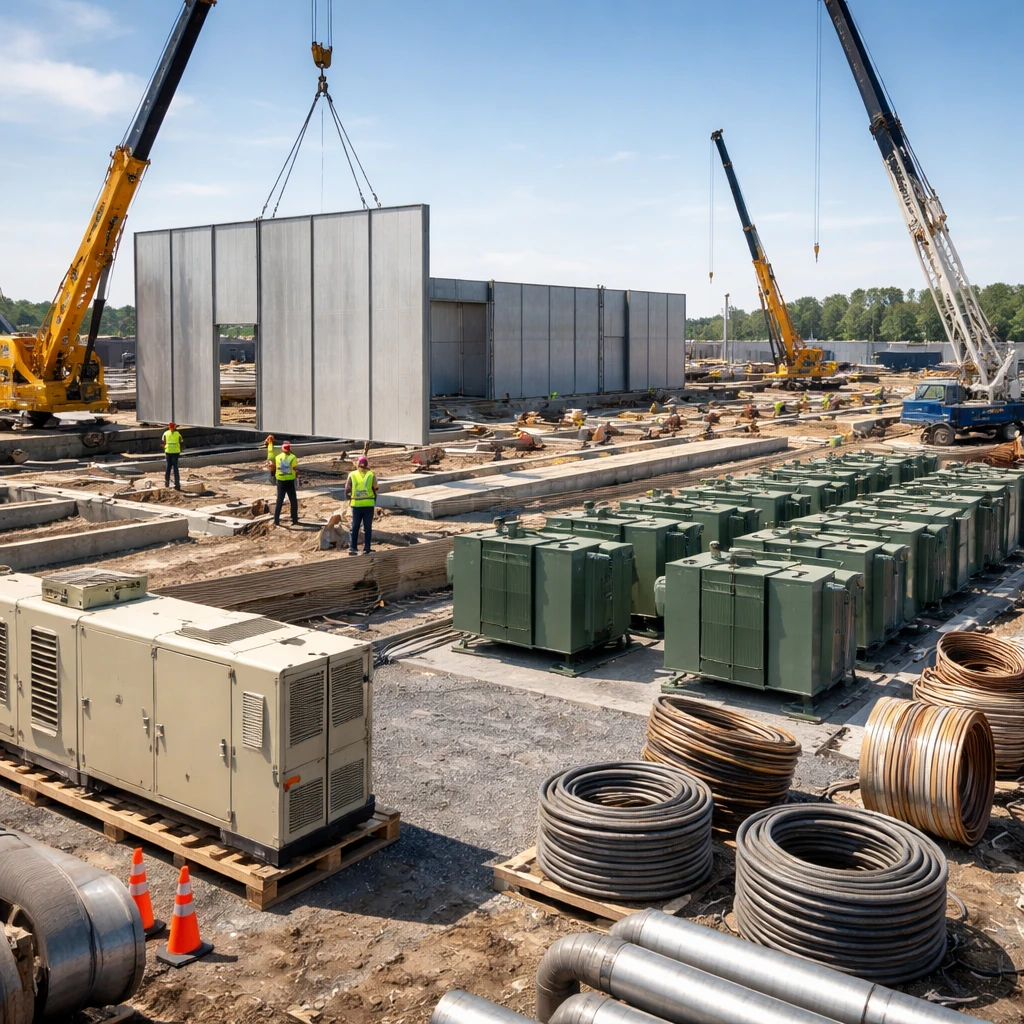
Generac's move illustrates how demand for facilities to house the compute and cooling requirements of AI clusters is filtering outward through long, complex manufacturing supply chains. Beyond generators, winners include makers of cooling systems, electrical transformers and construction machinery. The ripple effects extend to suppliers of wire and cable, pipe, cement and the enormous prefabricated metal wall panels that can make up parts of modern data-center shells.
Lucian Boldea, CEO of Timken, an Ohio-based producer of engineered steel bearings, said data centers represent an additional source of orders on top of existing demand from sectors such as defense and aerospace. "Those data centers need massive buildings, roads, gas turbines - that all requires some of our products," he said.
There are signs the data-center-related spending is helping lift the broader manufacturing picture. U.S. factories added 5,000 jobs in July, according to the Labor Department, bringing factory employment gains for the year to 31,000. That marks a reversal from the prior year, when factories cut 113,000 jobs.
Separate measures of activity also point toward strength in manufacturing. A gauge from the Institute for Supply Management showed U.S. manufacturing activity hit its highest level in more than four years in July, and the Federal Reserve reported its manufacturing output index also rose in July to its strongest level in more than four years.
Yet the headline statistics mask a split inside the factory sector. The ISM survey flagged a generally gloomy mood among many producers, underscoring that booming niches connected to data centers coexist with other parts of manufacturing that remain soft. The division can even be found within single companies: while demand for Generac's data-center generators is surging, its conventional home-generator business remains weak as housing-market headwinds and consumer price pressures damp purchases of high-ticket items.
Jagdfeld described a feedback loop in which increasing adoption of AI across industries fuels demand for more data centers, which in turn drives ongoing purchases of the heavy electrical and mechanical kit those facilities require.
Sizing the opportunity - and the risk
Consultancy Wood Mackenzie projects the U.S. electrical equipment market tied to data centers will expand sharply, from $33 billion in 2025 to $66 billion by 2030. Analysts at the firm say data-center power and distribution loads are unlike typical end uses the electrical equipment industry has supported before.
Ben Boucher, a senior analyst at Wood Mackenzie, said the scale and specific requirements of data centers make them fundamentally different from previous industrial loads. He also described behavior by some manufacturers to preserve delivery schedules: returning to customers with year-old purchase orders and seeking 20% price increases to keep delivery commitments intact.
That combination of rapid demand growth and pressure on delivery leads some suppliers to be cautious about committing to long-term capacity expansions for fear they might be left with excess production capability if the market softens.
Siemens, for example, is among the electrical-equipment makers that is expanding capacity. The German conglomerate announced earlier in the month that it would invest more than $200 million in two new plants in Georgia and Texas to produce equipment for data centers and other industrial customers. Barry Powell, North American president of Siemens Electrical Products, said the company reduces its exposure to a potential downturn by negotiating multi-year agreements with customers that include steep penalties if targets are not met. "If the targets aren't met, there is a very large multi-million (dollar) penalty that helps us share the risk," he said.
Smaller suppliers report dramatic changes
The data-center wave is not limited to large multinational firms. Southeastern Hose, a family-run manufacturer based in Bremen, Georgia, traditionally made corrugated metal hoses for steel and petrochemical customers. Vice president of operations Trey Travis said demand from data-center projects has exploded in recent years, enabling the company to triple revenue over five years. Southeastern Hose has hired 60 workers during that stretch and now employs 150 people.
Still, even at smaller firms there is unease about the possibility of a sharp reversal. "If this industry goes kaboom - if it's a bubble - there's always that fear that it'll domino the other way," Travis said. He worries that a downturn in data-center spending could spill back onto the company's long-standing customers, such as steel mills, and has emphasized the need to manage new and legacy customer relationships. "So, we try to manage it," he said. "We take care of the people who have been loyal to us for 60 years," along with the new business.
Political and policy context
Administration officials have framed recent manufacturing investments as part of a broader resurgence in U.S. industrial activity. White House spokesman Kush Desai said the administration's policies are helping produce "trillions in manufacturing investments to growing industrial output across key industries and sectors, including pharmaceuticals, steel, aluminum, and semiconductors." At the same time, shifting tariffs and trade policy changes have been criticized for complicating factory expansion plans that often require imported machinery.
Within the industry, some manufacturers are opting to temper expansion plans because of uncertainty over how long data-center demand will remain elevated. That caution reflects hesitancy to build capacity that could become idle if the market slows.
Where the effects are most visible
- Electrical equipment - transformers, switchgear and specialty power-distribution components tied to data-center loads.
- Mechanical systems - industrial cooling and HVAC gear capable of supporting high-density compute installations.
- Construction and materials - prefab metal walls, cement, piping, and heavy construction machinery required to build large-scale facilities and supporting infrastructure.
- Component suppliers - wire and cable makers, bearings, hoses and other specialized parts suppliers seeing order growth.
Outlook
Manufacturers that have products serving the data-center build-out are benefiting from a clear increase in orders and investment. Hiring gains in factories and rising manufacturing output measures signal a broader uplift that in part reflects spending on data centers and semiconductor plants. Nevertheless, both large and small suppliers are weighing the upside against the possibility of a slowdown, and some are structuring deals or staging investments to reduce their exposure if demand softens.