
Incident in Hefei highlights shifting supplier dynamics
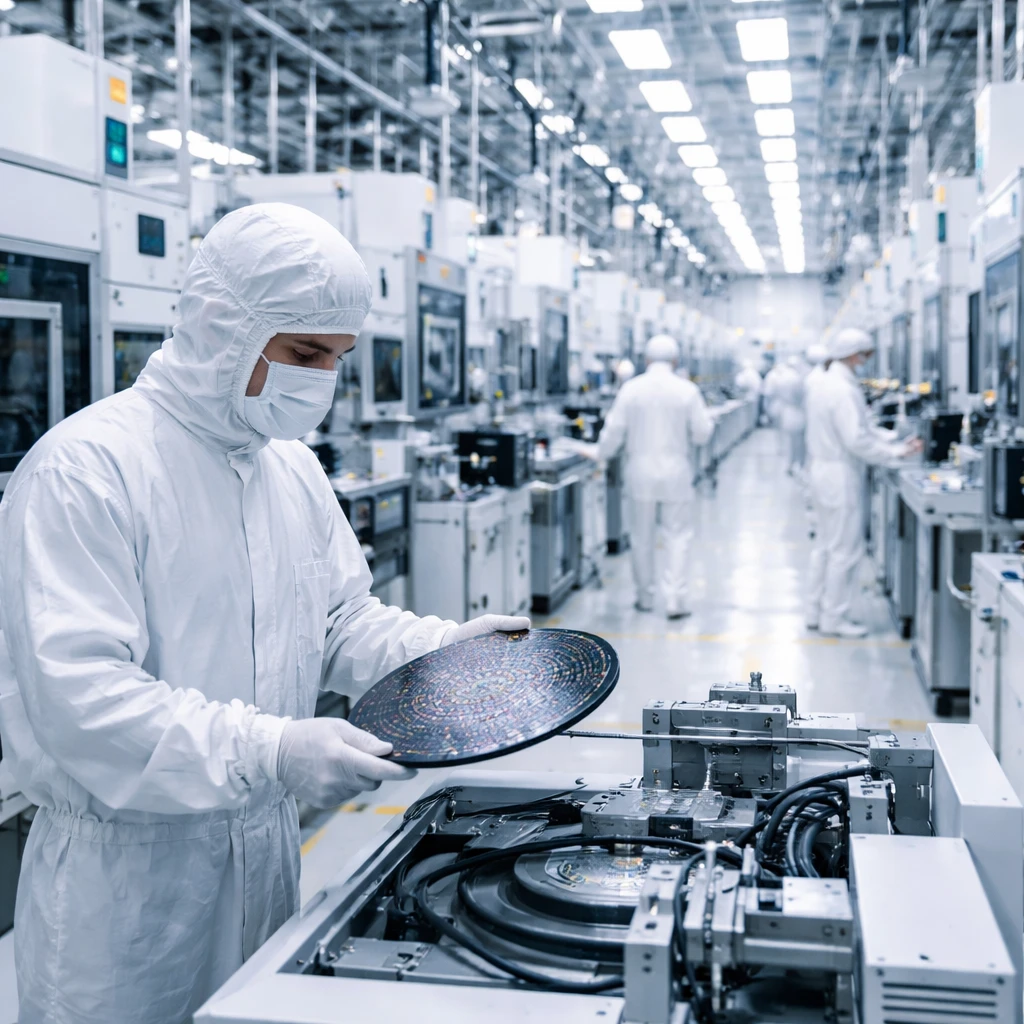
An abrupt confrontation in June at ChangXin Memory Technologies’ research-and-development area in Hefei, Anhui province, underscored how supplier-client relationships in China’s semiconductor industry have been upended. Engineers from SiCarrier, a chipmaking-equipment vendor with close ties to Huawei, were ordered out of CXMT’s cleanrooms while performing maintenance work, according to two people familiar with the episode. Executives at SiCarrier interpreted the move as a manifestation of a broader power struggle between CXMT and Huawei. The companies continue to transact business, but the engineers have not been permitted to return to the core R&D zone, the two sources said. CXMT, Huawei and SiCarrier did not provide comment on the incident.
From state-backed losses to a market-moving force
That clash is emblematic of how the commercial balance has shifted. CXMT has risen to become the world’s fourth-largest memory-chip manufacturer, producing DRAM used across smartphones, laptops and servers. Alongside YMTC, its counterpart in flash memory, CXMT spent years operating with substantial government funding and running at a loss. But the global rollout of AI data centers has surged demand for memory components, transforming them into highly sought-after products. That demand has allowed the Chinese memory producers to move from price takers to price setters, with the ability to favor customers and command premiums, four people familiar with the situation told Reuters.
Large supply deals and selective selling
Recent commercial arrangements reflect that newfound leverage. CXMT has signed a five-year supply pact with ByteDance, the owner of TikTok in China, valued at more than $7 billion, according to three people familiar with the agreement. That deal had not been previously disclosed, and ByteDance did not reply to requests for comment. Earlier, CXMT agreed terms with Tencent worth over $3 billion in June, the sources said.
The companies’ evolution and market behavior are drawn from interviews with more than a dozen executives, engineers, suppliers and U.S. officials, as well as a review of 50 Chinese government policy documents and company disclosures. Reuters has reported these details; neither CXMT nor YMTC responded to requests for comment on pricing, corporate strategy or intensifying U.S. scrutiny of their market positions.
U.S. government designations and export controls
The Chinese memory makers’ expanding role in global supply chains has put them at odds with U.S. security concerns. The Pentagon has designated both firms as Chinese military companies, citing alleged roles in China’s military-civil fusion strategy - a charge the companies deny. YMTC has already been placed on the U.S. Entity List, limiting its access to U.S.-origin suppliers, software and tools required for memory-chip production. CXMT was approved by a U.S. interagency committee last year for addition to the broader trade blacklist that the Commerce Department oversees, but officials have delayed any formal action, Reuters reported last month.
Congress is considering measures that could further restrict both firms’ access to advanced chipmaking equipment, though the Trump administration has internal divisions over the extent of such measures, according to four people familiar with those discussions. In private discussions, Apple reportedly has sought assurances that CXMT will not be added to the Entity List, arguing Apple needs Chinese memory supplies. Micron, the primary Western competitor to the Chinese firms, has urged U.S. lawmakers to enact tighter equipment restrictions on CXMT and YMTC. Apple and Micron did not reply to requests for comment for this report. The White House and the departments of Commerce, Defense and State also did not respond to requests for comment.
IPO plans proceed despite geopolitical strain
Geopolitical scrutiny has not slowed the two companies’ push toward public markets. CXMT is set to launch an $8.6 billion initial public offering in Shanghai on Monday, and the company recorded a dramatic profit turnaround: it booked $7.5 billion in revenue for the first quarter, a 719% increase from a year earlier, wiping out a decade of losses in roughly six months. As YMTC prepares its own IPO, some executives are internally advocating for a valuation target of 1 trillion yuan, according to two people. Both firms have benefited from backing by the Big Fund - a state-backed semiconductor investment vehicle - as well as support from local and provincial governments, including Anhui province for CXMT and Hubei province for YMTC. The provincial authorities and the investment fund did not provide comment.
State policy and industrial priorities
Chinese policy documents and corporate filings show the companies are viewed by Beijing as strategic infrastructure central to efforts to enhance technological self-reliance. Officials have asked the memory producers to prioritize domestic buyers, three people told Reuters. State-owned firms in China are also reportedly restricted from purchasing memory from foreign manufacturers, according to two sources. At the same time, authorities have signaled they will act against market behavior such as hoarding designed to push prices up; the Ministry of Industry and Information Technology said in April it would target hoarding aimed at inflating memory prices.
Expansion plans and capacity targets
Both CXMT and YMTC are pursuing capacity growth to meet surging domestic demand and to prepare for potential overseas expansion. CXMT is building two new fabrication plants in Shanghai and Hefei and is in discussions with other local authorities about a third site, according to three sources. Those projects would more than double CXMT’s production capacity to exceed 600,000 wafers per month. If those plans are executed as expected, one person said CXMT’s capacity would surpass Micron’s by 2030.
YMTC likewise has plans to add factories: Reuters previously reported YMTC intends to build two more plants in addition to one scheduled for completion this year. The additional capacity would allow the Chinese memory makers to serve domestic customers while potentially addressing export markets beginning as early as 2027, when new fabs could come online.
Technical bottlenecks and equipment dependencies
Despite commercial momentum, the two firms are constrained by reliance on critical lithography equipment supplied by ASML, the Dutch vendor that produces deep ultraviolet and extreme ultraviolet (EUV) lithography machines. The most advanced DRAM producers outside China use ASML’s EUV machines; the Dutch government, under U.S. pressure, has restricted sales of EUV systems to China since 2019. Those machines contain U.S. technology and are central to manufacturing the most advanced chips, which have potential military applications according to U.S. officials. Sources said CXMT has developed high-bandwidth memory - an ultrafast format important for AI workloads - but remains approximately two generations behind competitors that use EUV tools, a gap equivalent to several years.
Analysts have warned that further restrictions on lithography exports would pose the largest risk to the Chinese memory makers’ technical progress. One supply-chain analyst described China as lagging in that portion of the toolset compared with other equipment segments. ASML did not comment on the possible effects of further export controls.
YMTC has, to some degree, insulated itself from abrupt equipment sanctions. Following its addition to the Entity List in 2022, YMTC reportedly replaced roughly half of its equipment with domestically made machinery and developed novel production techniques that stack memory layers using less-advanced tools, according to two people. Those adaptations have helped YMTC continue to produce while under export restrictions.
Price dynamics and customer complaints
Memory chips produced by the Chinese firms were once widely perceived as lower-cost alternatives to South Korean and Western products. That perception has changed as demand surged. Several people told Reuters that CXMT has recently been charging higher prices than larger South Korean rivals for comparable parts. In recent weeks, CXMT billed more than Samsung’s approximate $1,240-per-unit price for comparable 64-gigabyte DDR5 server memory modules, according to two people; those sources declined to disclose the exact CXMT price. Six people said Chinese memory is no longer consistently cheaper.
Higher prices have prompted complaints from Chinese electronics and technology companies. Several firms filed grievances with the Ministry of Industry and Information Technology earlier in the year, blaming price increases from CXMT and YMTC for delaying their own product launches, according to two people. The ministry did not respond to requests for comment for this story. The government has also encouraged domestic purchasing and announced steps to curb hoarding and price manipulation.
Market entry and international ambitions
The Chinese memory makers are also probing markets beyond China. YMTC entered the South Korean consumer market in June, launching a consumer memory storage brand and targeting a segment vacated by Samsung, SK Hynix and Micron as those rivals shifted toward more advanced chips. CXMT has signaled long-term ambitions to enter the U.S. market, according to three sources, but its near-term capacity is heavily consumed by domestic demand.
Leadership outlook and industry timing
YMTC’s chairman, Chen Nanxiang, had anticipated the surge in demand. In 2024 he told Chinese state media the industry had not yet reached explosive growth but that the moment would arrive within three to five years. By early this year, sources said, YMTC began selecting customers selectively, a milestone Chen and his leadership celebrated internally. The burst of demand he forecast has, by several accounts in this reporting, come to pass.
Implications for markets and supply chains
The ascendance of CXMT and YMTC has implications across technology supply chains: it affects hyperscalers and cloud providers that need vast amounts of memory for AI workloads, smartphone and consumer-electronics manufacturers reliant on DRAM and flash supplies, and equipment vendors that face potential export controls. The companies’ selection of clients and ability to raise prices shift bargaining power within China’s domestic tech ecosystem and add pressure to international competitors and policymakers weighing trade and national-security responses.
Currency note: $1 = 6.7697 Chinese yuan renminbi.