
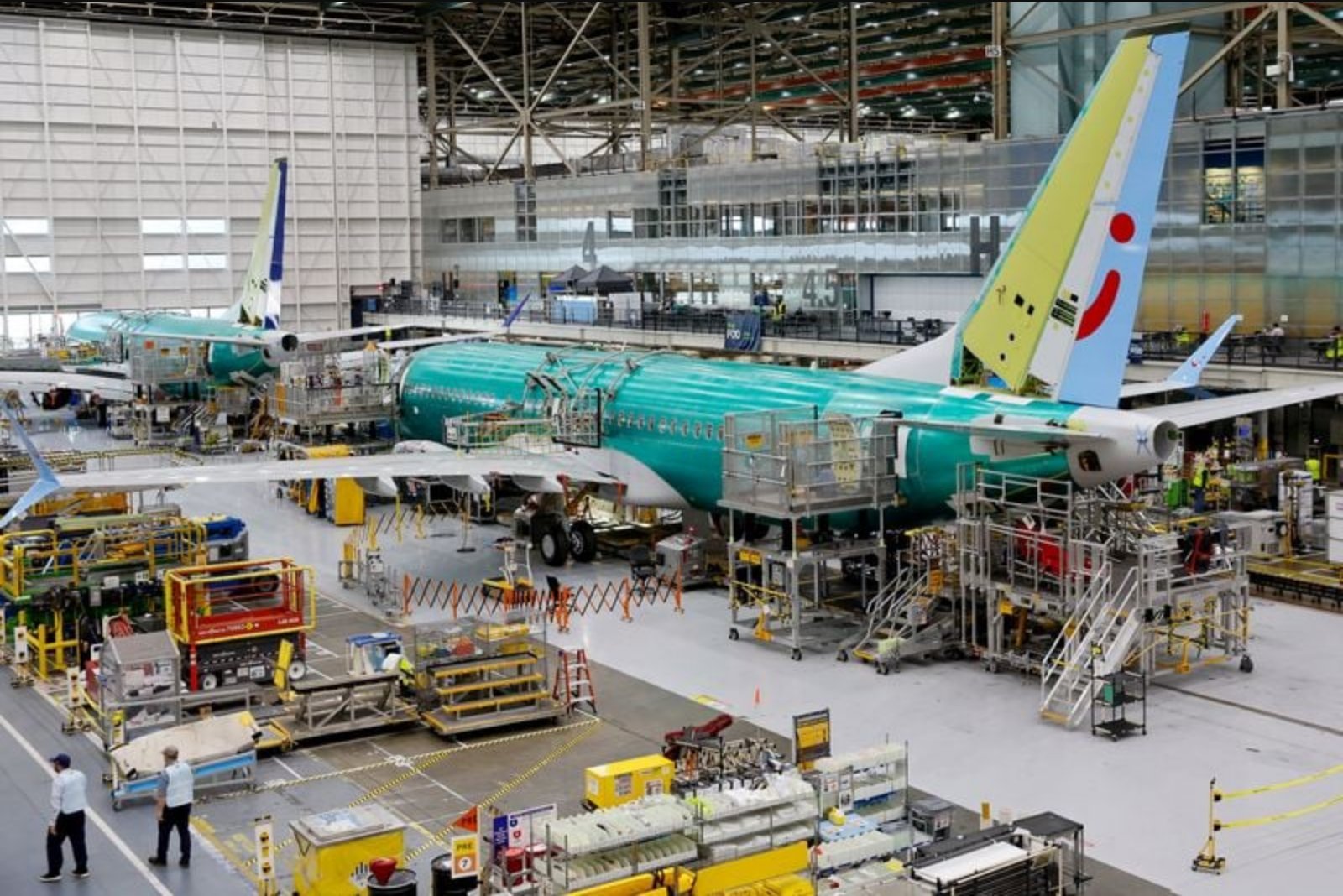
Boeing said Tuesday it delivered 64 aircraft in June, up from 60 in May and matching 60 in June of last year. Through the first six months of the year the company recorded 314 deliveries, a 12% increase versus the same period a year earlier and the strongest first-half result for the jet maker since 2018.
Despite the sequential and year-over-year improvement, Boeing remains behind its European rival Airbus, which recorded 89 deliveries in June and 351 deliveries in the first half of the year.
Production and model breakdown
Boeing reported that its June deliveries included 42 of the best-selling 737 MAX series and 13 787 widebodies. The 787 tally incorporated five jets that had previously been delayed because of seat certification issues affecting startup carrier Riyadh Air.
The company also delivered three 777 freighters and five 767s in June. Of the 767s, three are slated for conversion into KC-46 aerial refueling tankers by Boeing's defense division.
Boeing said it expects deliveries to increase in the second half of the year as it raises output of the 737 MAX. The company is incrementally increasing monthly 737 production from 42 jets to 47 jets.
Orders and cancellations
In June Boeing booked 121 new orders and recorded eight cancellations, yielding a net total of 113 new orders for the month. Through the end of June the manufacturer had booked 408 orders after accounting for cancellations and conversions.
On the 737 MAX backlog, Boeing reported cumulative orders of 7,206 for the type, surpassing the previous total for the 737 Next Generation, which received 7,159 orders.
Among customer moves noted by Boeing, Canadian airline WestJet canceled orders for six 737s. Aviation Capital Group placed an order for six 737s that it will lease to WestJet.
Implications and context
The delivery and order figures reflect a continued ramp in single-aisle output and a recovery in widebody shipments affected earlier by certification and component issues. Boeing's planned step-up in 737 production is a central element of its path to higher deliveries in the back half of the year.