
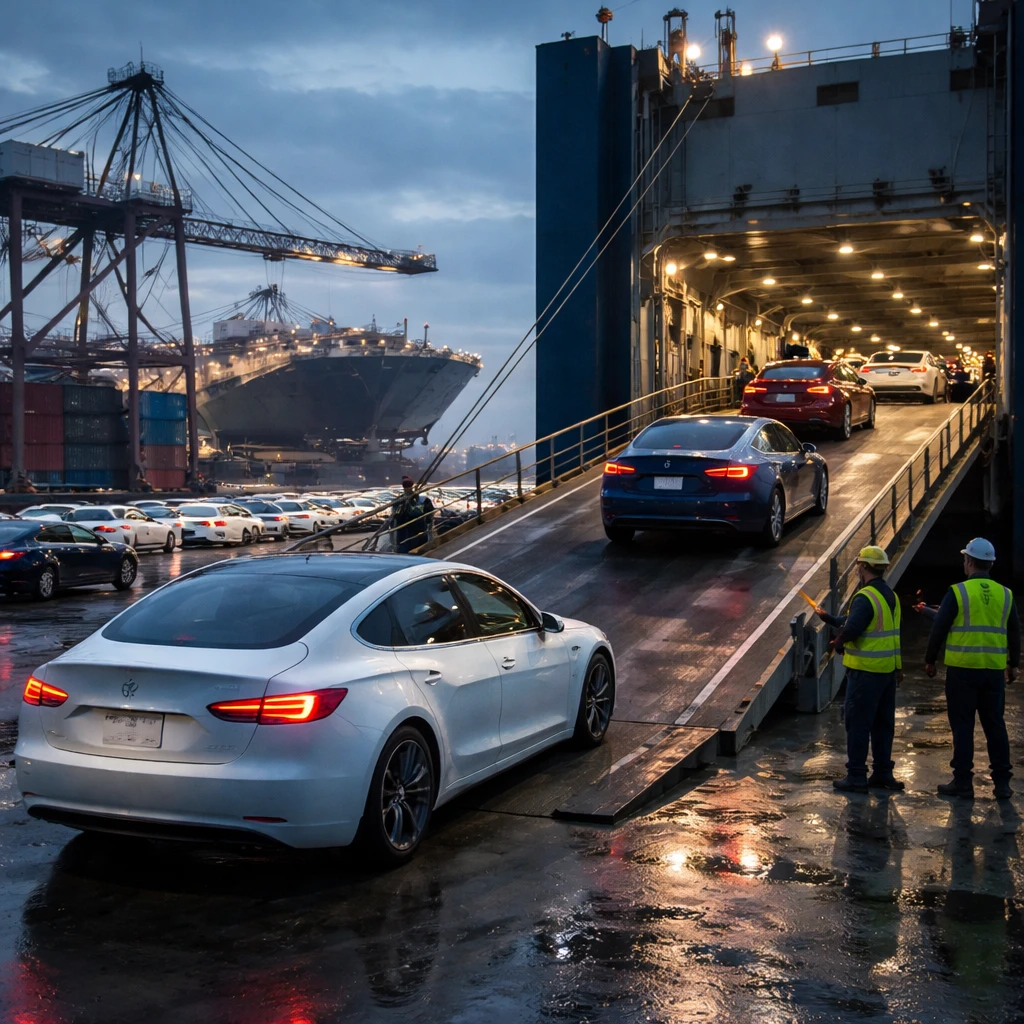
Barclays has revised up its estimate for Tesla's second-quarter deliveries, now forecasting about 418,000 vehicles for the period. That projection sits above the Bloomberg consensus of roughly 397,000 units and implies volume growth of approximately 17% sequentially and about 9% year over year.
"Tesla deliveries have seen a number of positive datapoints this quarter, as sales continue to recover in Europe and the Chinese EV market recovers from 1Q weakness," analyst Dan Levy wrote in a note outlining the updated view.
Regional performance
Barclays highlighted Europe as a particular bright spot. Combined April and May European sales totaled roughly 39,000 units, which the bank notes is more than 50% higher than the January-February pace of about 26,000 units. Based on that trend, Barclays is forecasting full second-quarter deliveries in Europe of roughly 90,000 units - a level that would mark Tesla's strongest quarter in the region since 2023.
China has also contributed to the more optimistic outlook. Retail sales in China rose to 47,000 units in May, up 23% year over year, while wholesales increased 39% over the same period. Barclays points out that Tesla appears to have leaned on exports in April to balance demand, with exports rising 80% year over year in that month.
U.S. volumes are expected to be around 105,000 units in the quarter. Barclays describes U.S. deliveries as roughly flat sequentially but notes they are down by about 40,000 units compared with the prior year, when sales were bolstered by the EV tax credit ahead of its expiration.
Market context and penetration rates
Beyond Tesla-specific figures, Barclays commented on broader EV penetration trends. The bank estimates that China's new energy vehicle (NEV) penetration reached approximately 63% in May, a record level, although absolute volumes remain below year-ago levels due to subsidy tightening in 2026. By contrast, EV penetration in the U.S. was estimated at 6.9% in May.
Barclays also noted shifts in the global share of EV sales so far in 2026: China accounts for half of global EV sales, though that represents a drop of 14 percentage points versus 2025. Europe has increased its share to 28% of global EV volume, while the U.S. sits at 6%. The bank attributes some of the apparent declines for China and the U.S. to seasonally weak early-year data.
Implications for volumes and supply flows
From a volume and logistics perspective, the revised forecast implies continued reallocation of vehicle flows across regions. Barclays' view points to a strengthening sales cadence in Europe and a rebound in China, while U.S. deliveries appear to be stabilizing at a lower annualized level compared with the year-ago quarter that benefited from tax-credit-driven pull-forward demand.
These regional divergences have implications for production planning, export activity, and freight patterns as manufacturers and distributors respond to changing demand mixes across Europe, China, and the U.S.