
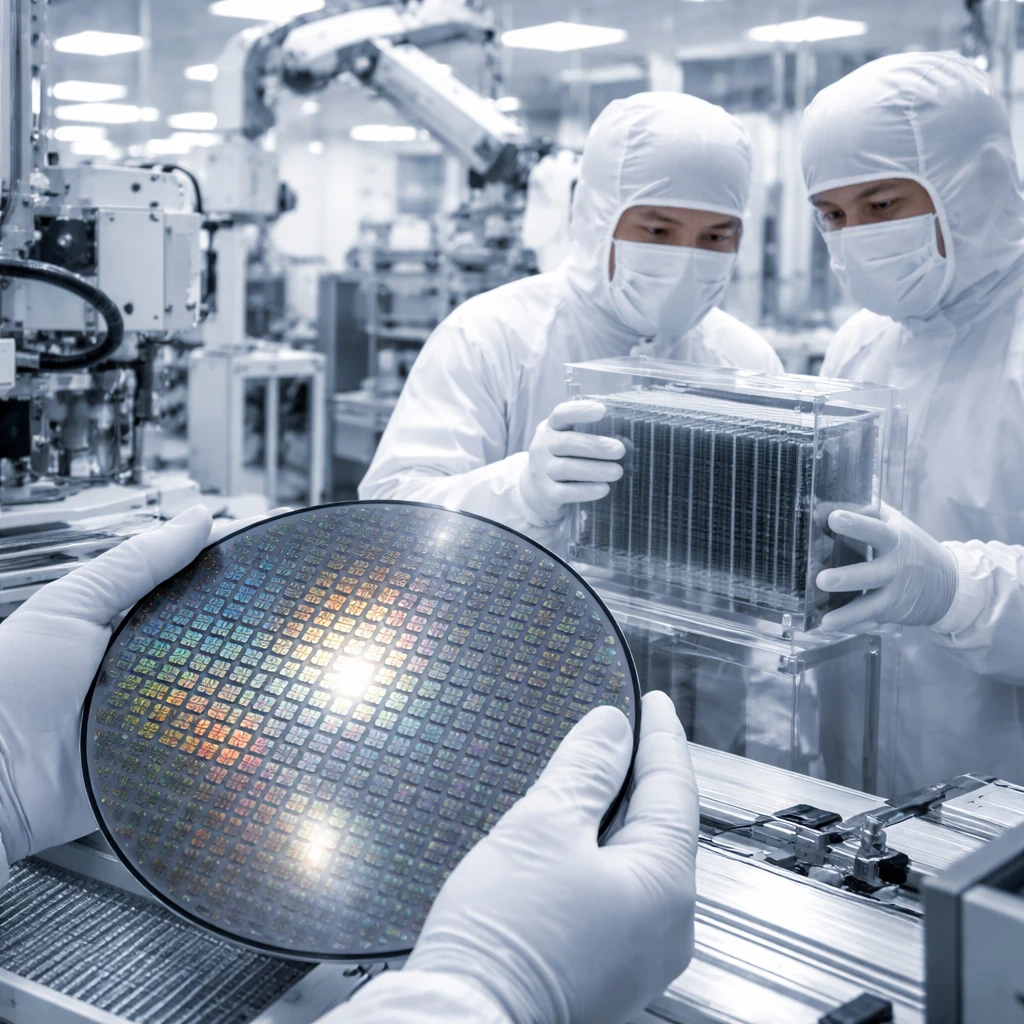
Anthropic has kicked off exploratory efforts to develop a custom artificial intelligence processor and has held discussions with Samsung Electronics Co Ltd (KS:005930) over using Samsung's manufacturing capabilities, according to recent reporting. The project is described as nascent - no detailed chip design or fabrication work has started and the company may ultimately decide not to proceed - but the talks mark a potential shift in the AI infrastructure landscape that today is heavily influenced by Nvidia Corporation (NASDAQ:NVDA).
Said discussions reportedly include consideration of Samsung's 2-nanometer process and advanced packaging operations. Anthropic has also expanded its engineering ranks as part of the push; the company recently hired Clive Chan, an early member of OpenAI's custom-chip team, signaling a deliberate effort to build internal design capability even as the work remains preliminary.
The potential Anthropic-Samsung engagement follows a playbook already used by several AI labs and cloud operators. OpenAI partnered with Broadcom Inc (NASDAQ:AVGO) to design custom silicon and launched an inference chip product from that collaboration last month. Other big technology companies - including Google, Amazon, Meta and Microsoft - have likewise pursued proprietary processor development to better tailor compute for large models and to diversify supplier relationships.
Despite this broader industry movement toward in-house chips, Nvidia's position in the AI accelerator market remains substantial. Recent estimates place Nvidia's AI chip market share at roughly 74 percent, a figure that the reporting indicates is higher than prior to the recent surge in inference-chip development. Market reactions on the day of the news reflected modest movements: Nvidia shares traded slightly higher intraday, Broadcom ticked up as investors considered the company's role in custom-chip design, and Taiwan Semiconductor Manufacturing Co Ltd (NYSE:TSM) also moved amid commentary on foundry competition.
For chip makers and foundries, Anthropic's exploratory work has several implications. Broadcom already has direct revenue ties to custom silicon through its OpenAI design partnership, making it a visible beneficiary of the trend toward bespoke inference accelerators. By contrast, TSMC's position as the industry benchmark for cutting-edge node performance could face added pressure if Samsung secures marquee AI clients and proves capable of matching yields and production scale.
Industry observers frequently question Samsung's historical ability to ramp leading-edge nodes as smoothly as TSMC. The reporting highlights that Samsung would need to demonstrate credible yield performance on its N2-level technology to be a long-term alternative for high-volume AI chip manufacturing. If Samsung's 2nm yields fall short, the report notes, that would reinforce TSMC's competitive moat; conversely, production wins for Samsung would materially boost its foundry revenue outlook and intensify competition.
The report also flagged other relationships that could bolster Samsung's foundry prospects. Google is said to be weighing the use of Samsung's manufacturing for parts of a future tensor processing unit, which, if realized, would represent a significant contract-manufacturing opportunity. The commercial backdrop includes joint financial commitments inside South Korea's memory and semiconductor ecosystem: parent companies Samsung Group and SK Group announced a combined, decade-long investment of $518 billion to build multiple memory-chip facilities, an outlay that underlines the scale of capital being directed at the Korean supply chain.
Financial ties between chipmakers and AI labs were also noted. Samsung, SK Hynix and Micron participated in Anthropic's recent fundraising round, which the reporting said was valued at $65 billion in May. Those investments connect chip manufacturers and memory suppliers more closely to AI compute customers, but they do not necessarily signal exclusive manufacturing agreements.
Anthropic itself emphasized that any nascent chip program is not intended to replace its existing compute partnerships. In a statement provided to the reporting, the company said: "Amazon Web Services's Trainium chip, Google tensor processing units and Nvidia graphic processors will remain central to how the company scales its compute strategy." The company also reportedly is in talks to use chips from Microsoft and from U.K.-based startup Fractile, underscoring a multi-vendor approach rather than a single-vendor pivot.
For investors and market participants focused on semiconductor equities, the central question going forward is whether early-stage conversations translate into signed foundry deals and into chips in production. A confirmed manufacturing agreement between Anthropic and Samsung for a leading-edge AI chip would be a notable positive for Samsung's foundry aspirations and would increase direct competition with TSMC. If Samsung is unable to achieve competitive yields at the 2-nanometer node, the narrative shifts in favor of TSMC's established lead.
Market movements cited in the reporting included modest intraday gains for Nvidia and Broadcom, and a rise in TSMC shares during the same session. Specific intraday percentage moves were reported for a range of companies, reflecting how the prospect of another major AI client for Samsung influenced trading on the day of the coverage.