
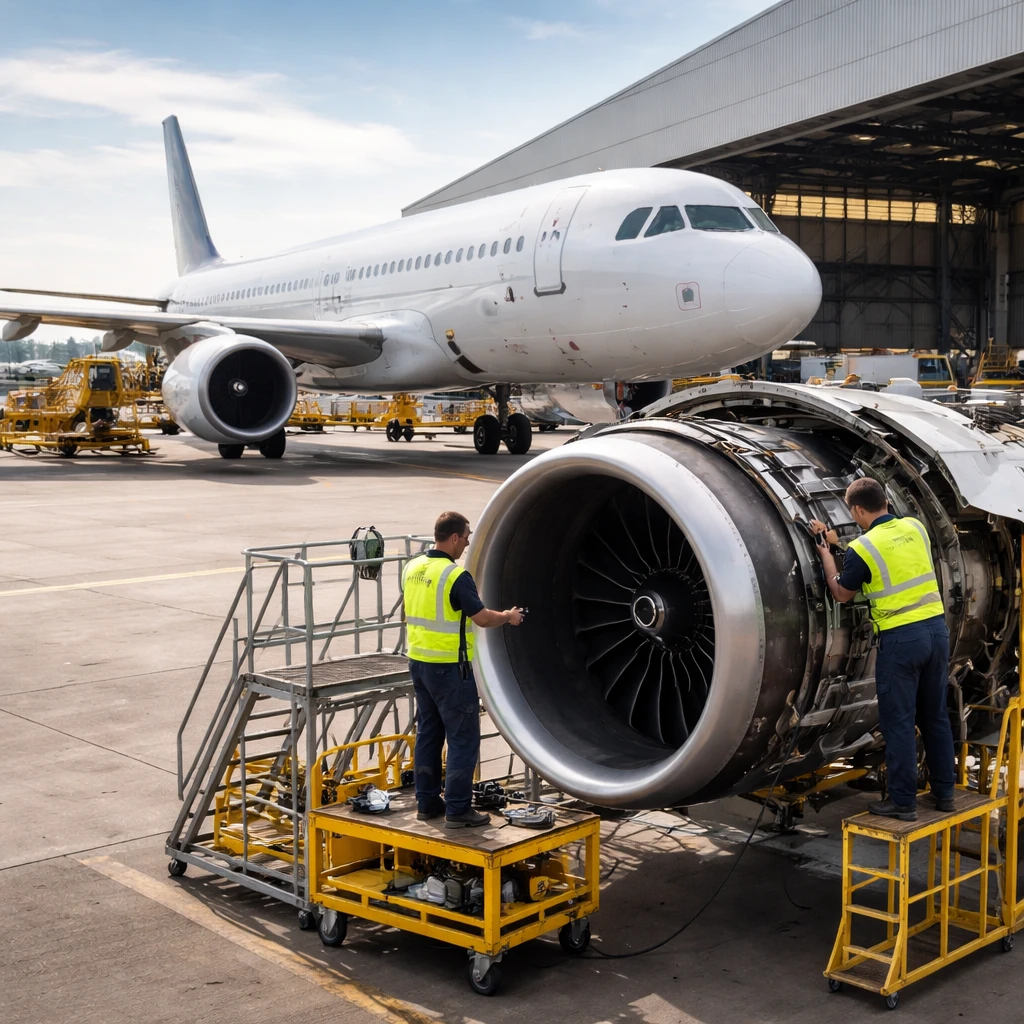
Airbus SE said it is unsure it can achieve its planned production cadence for the A320 family because of potential shortfalls in engine supply from Pratt & Whitney, the aircraft maker's chief executive said at an industry summit.
The company has maintained a target of reaching 75 A320-family jets per month, but the deadline for that output level has been postponed several times as parts and engine availability have constrained assembly. That production-rate goal could now be at risk depending on how many engines the Pratt & Whitney unit of RTX is ultimately able to deliver.
Chief Executive Officer Guillaume Faury described his frustration at the Berlin Aviation Summit: "I am frustrated with this because we had a good plan to go to rate 75 by the end of next year, and now we see that, depending on how much we'll finally manage to get from our friends at Pratt, we might fail on this objective and fall short of the 75."
Airbus has publicly said the shortfall is tied to Pratt & Whitney's inability to meet its original delivery commitments for A320 engines, a situation the engine maker attributes to necessary maintenance on engines already in service.
As a result of the dispute over engine deliveries, Airbus now expects to hand over roughly 870 jets to customers this year, a figure that sits below the manufacturer’s initial expectations.
Pratt & Whitney's chief executive, Christopher Calio, said in April that the engine maker will "ultimately get there to where we need to be on volumes going forward." That statement indicates the supplier is targeting improved output, but Airbus' timeline for achieving rate 75 remains uncertain.
Context and implications
The uncertainty centers on whether Pratt & Whitney can accelerate deliveries enough to support Airbus' planned production ramp. Airbus has repeatedly delayed the schedule for reaching the 75-per-month pace as parts and engines have limited its ability to increase output.
For now, Airbus is signalling that its previously stated target for reaching the higher monthly production rate may not be met within the expected timeframe, with the shortfall driven specifically by engine availability from Pratt & Whitney.