
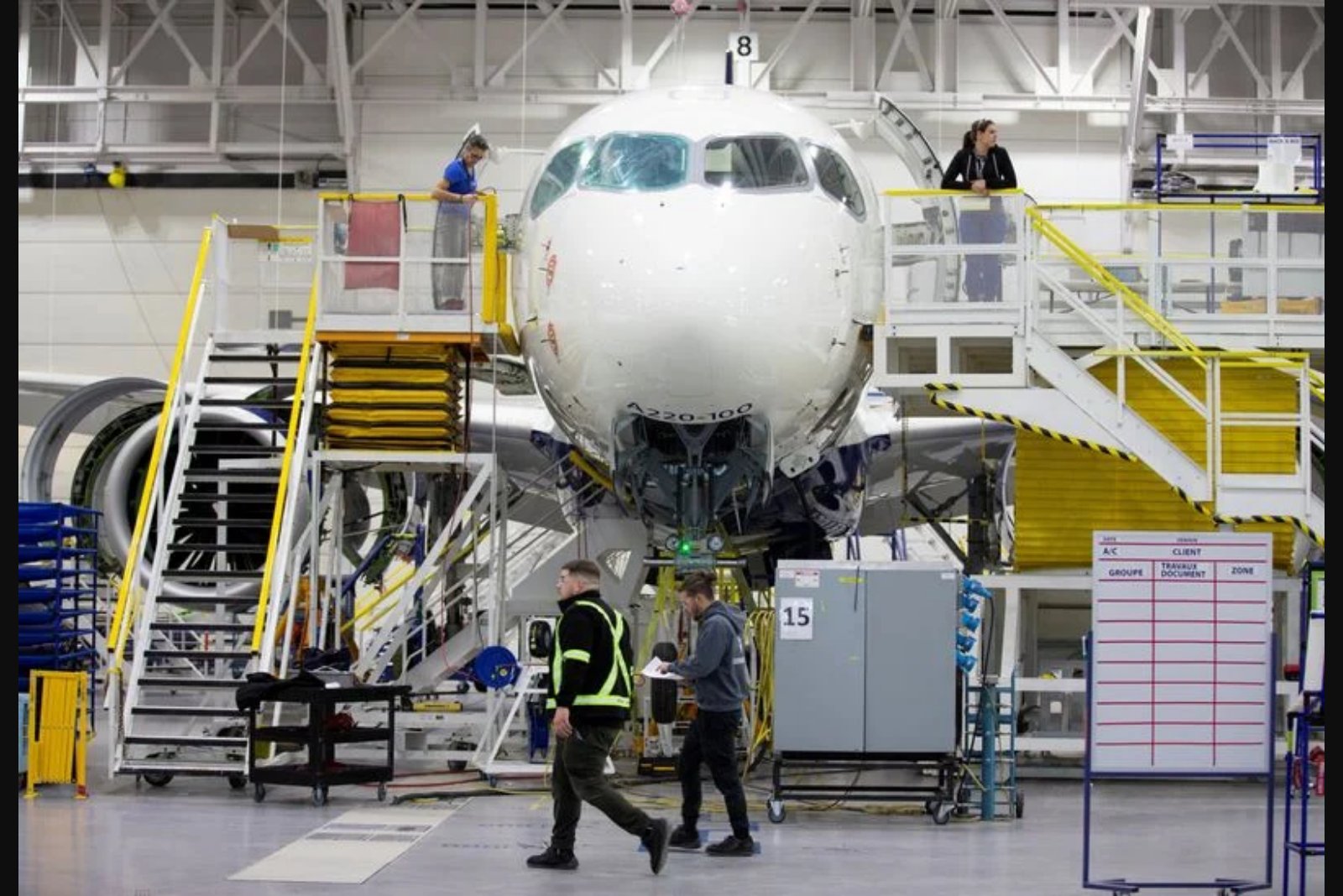
Airbus is pausing on a firm commitment to introduce a larger version of its A220 family after receiving a muted reaction from influential aircraft lessors and facing unresolved questions about the proposed plane's range and performance, according to six industry sources. The planemaker had previously signaled the possibility of a launch as early as this summer - timed with the Farnborough Airshow - but those expectations have since been scaled back.
A senior Airbus executive characterized a Farnborough launch, scheduled for late July, as "not probable," though Airbus has left open the possibility that a launch could still occur later in the year. "We are studying all the options; no decisions have been made," an Airbus spokesperson said.
One reason Airbus is exploring a larger A220 is to renegotiate supplier contracts and to reduce production costs, measures that could help improve the economics of a programme that has been loss-making since Airbus acquired it in 2018 for a nominal price. The A220 programme continues to run in the red and, according to the sources, has been ceding orders to Brazilian rival Embraer.
Within Airbus the preferred technical path being promoted to buyers and partners is a relatively limited modification described internally as a "simple stretch." That design would not increase maximum takeoff weight nor require an expensive re-engining with Pratt & Whitney units, the sources said. The stretched variant would boost typical seating from about 160 to roughly 180 passengers and is expected to cut costs per seat by around 10 percent, while delivering less range than the current model, two people familiar with the plans told Reuters.
Not all prospective customers view the reduced range as acceptable. "One of the questions we’ll have to examine is the range of the aircraft," Air Canada’s chief operations officer Mark Nasr told Reuters this week, underscoring the importance of reach for some carriers. Airlines gathering in Brazil for an IATA summit this weekend, the sources said, remain sensitive to recent durability problems reported on existing Pratt & Whitney engines, adding another factor shaping buyer appetite. Pratt & Whitney’s parent company RTX declined to comment.
Industry observers note a split between those focused on the economics and those prioritizing performance. Aviation analyst Rob Morris summarized the divide by saying, "Airlines are possibly sold on the economics, but not necessarily the performance."
Earlier in the year Airbus had presented a more optimistic timeline. At the Airlines Economics conference in Dublin in January, the company told financiers that 2026 would be a "big year" for the A220, according to sources. Yet five months later, potential customers say they still lack the detailed specifications that would typically be provided ahead of a near-term launch.
Pressure to push forward on a new variant eased somewhat after AirAsia placed an order for 150 of the existing A220 model, reducing urgency for an immediate replacement. Airbus CEO Guillaume Faury told reporters in April that a larger A220 remained inevitable in his view, saying, "It remains a matter of when ... rather than if, but it’s not now."
Airbus is also weighing how an enlarged A220 would affect sales of its incumbent A320neo narrow-body family, which occupies the market segment directly above the proposed A220-500 in size. Two people close to Airbus’s deliberations said the company was studying the potential sales impact on the A320neo line.
Lessors, who hold substantial exposure to the A320 family, have expressed caution. One senior industry source warned that lessors "are so exposed to the A320 that the last thing they need is a new anything; the less disruption the better off they all are." That view reflects concern that introducing a larger A220 could depress A320neo residual values.
Morris, the aviation analyst, argued that while lessors are cautious, this should not indefinitely stall the project. "The A320 lessors should be okay: the market for the plane has sufficient liquidity and a strong customer base," he said.
What this means
The A220 programme remains under review inside Airbus. Management and potential customers are balancing cost improvements from a stretch against performance trade-offs, concerns about engine durability, and the strategic implications for Airbus’s broader narrow-body family. For now, Airbus continues to study options without committing to a launch timetable.