
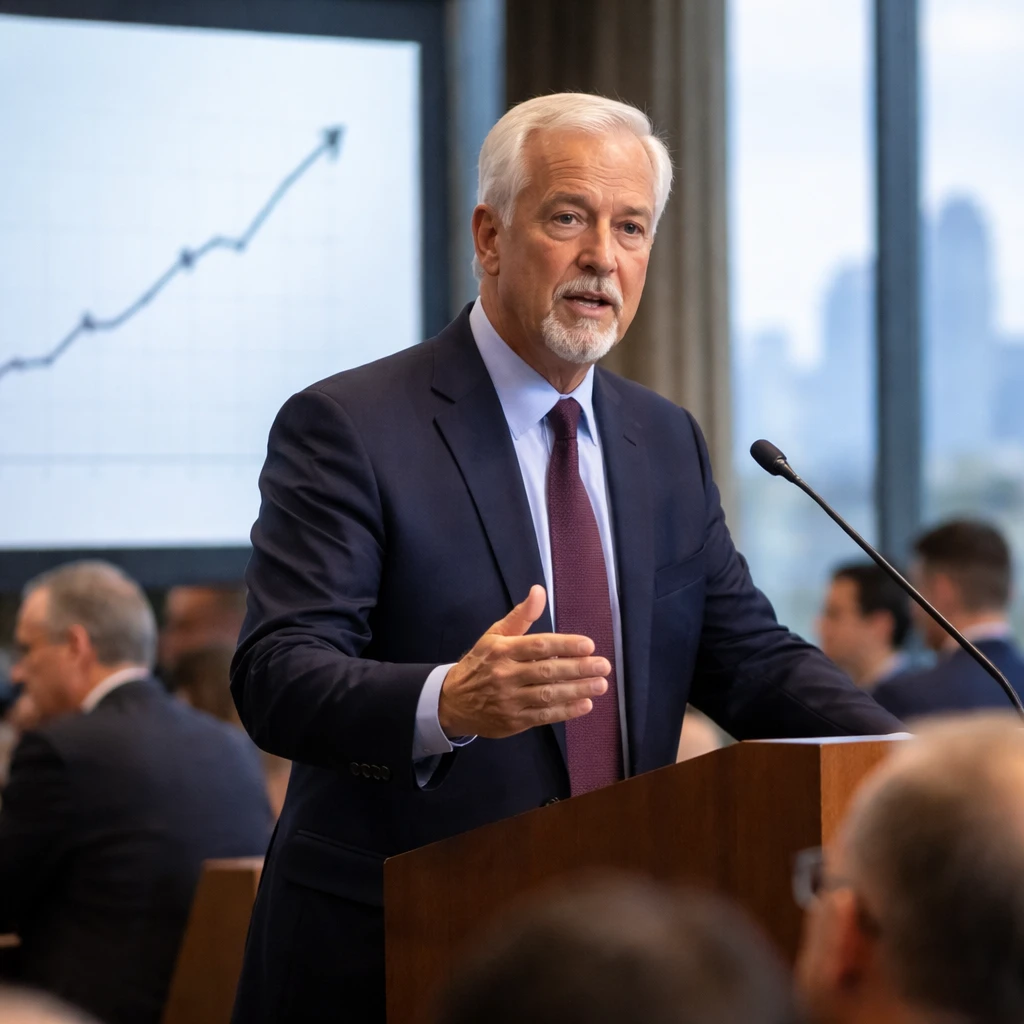
Federal Reserve Governor Christopher Waller said Monday that the Fed may have to adopt tighter monetary policy in the near term if the upward trajectory in core inflation persists. He made the comments while speaking at the New York Association for Business Economics.
Waller pointed to the 12-month core personal consumption expenditures (PCE) measure, which climbed from 3.0% in December 2025 to 3.4% in May. He said the increase began in January and accelerated after a Middle East conflict disrupted petroleum production and transportation, adding pressure to underlying price trends.
Core PCE excludes direct consumer energy price effects, and Waller said he remains concerned about the recent rise. He stressed that the economy has now moved beyond a phase where large price gains could be pinned mainly on earlier tariff increases.
"If this upward trend continues, it will be hard to push inflation back toward the Committee’s 2 percent goal with monetary policy at its current setting," Waller said.
Waller described consumer spending as having held up despite higher goods prices resulting from tariffs and energy costs. He noted the labor market has stayed relatively stable, with employment close to the Federal Open Market Committee’s maximum-employment objective. Over the past three months, job creation averaged 111,000 positions per month, he said.
The governor identified three primary sources of inflationary pressure: tariffs, elevated energy prices, and demand spillovers related to investment in artificial intelligence. He said AI-related demand has contributed to price increases for semiconductors, computer chips, servers and related peripherals.
Waller also drew contrasts between current conditions and the inflation episode of 2021-2022. He noted the labor market is less tight now, citing a ratio of job vacancies to unemployed persons that is nearly one-to-one, compared with about two-to-one when the Fed began raising rates in 2022. He added that inflation expectations appear well anchored, pointing to market-based measures that show expected inflation of 2.1% over two years.
Looking ahead, Waller said he will closely review June consumer price index data, due Tuesday, and producer price figures to be released the following day. He emphasized that he would want to see several months of lower core inflation readings before feeling confident that inflation is moving consistently toward the Committee's 2% objective.
Key points
- Core PCE rose from 3.0% in December 2025 to 3.4% in May, with the rise accelerating after disruptions to petroleum production and transport linked to a Middle East conflict.
- Waller cited tariffs, energy prices and AI-related demand as the main drivers of current inflationary pressure, noting specific price increases for semiconductors, chips, servers and peripherals.
- The labor market is less tight than during the 2021-2022 inflation period, and market-based inflation expectations are around 2.1% over two years.
Risks and uncertainties
- Continued upward momentum in core inflation could prompt the Fed to raise policy rates sooner than currently priced - a development that would affect interest-rate sensitive sectors.
- Ongoing disruptions to petroleum production and transport tied to the Middle East conflict could sustain energy-driven price pressure, affecting the energy sector and consumer prices.
- Persistent price increases tied to AI-related investment demand for semiconductors and computing hardware could prolong supply-side inflationary pressures in technology-related supply chains.