
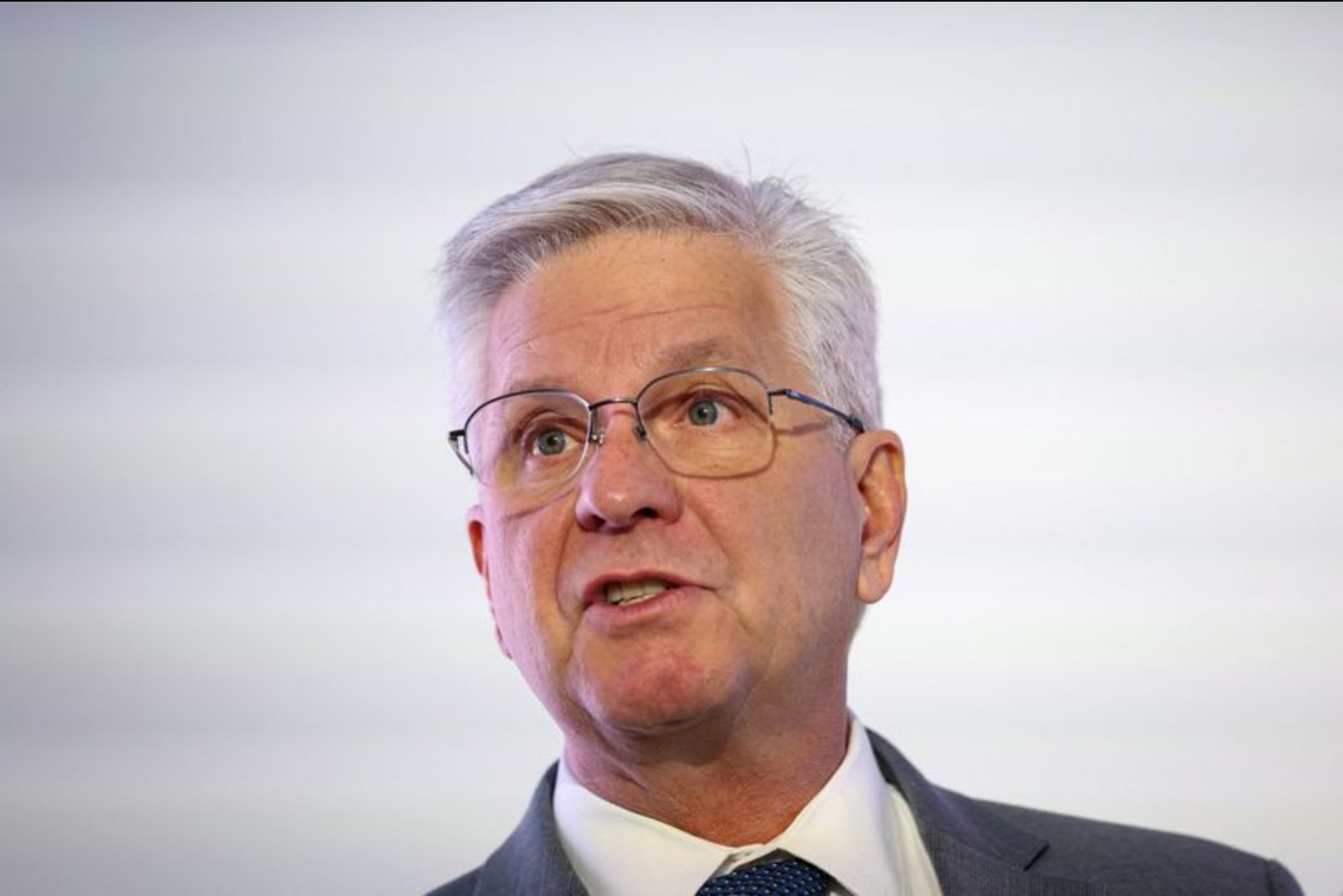
Federal Reserve Governor Christopher Waller said the central bank should eliminate the "easing bias" from its policy statement, a move he argued would leave open the possibility of a rate increase. He was explicit that he was not calling for a hike at this time, but said the Fed should keep the current policy rate in place until inflation - which he worries is broadening and becoming more persistent - shows convincing signs of moving back to the Fed's 2% target.
"Inflation is not headed in the right direction," Waller said in remarks prepared for delivery to an economic forum in Germany. With the Fed's preferred inflation measure at 3.8% in April and spreading across both goods and services, he said a change to the statement is warranted. "I would support removing the 'easing bias' language in our policy statement to make it clear that a rate cut is no more likely in the future than a rate increase," he added.
Markets reacted swiftly. Pricing in contracts tied to the Fed's policy rate moved to reflect roughly a two-in-three chance of a quarter-point increase by the Fed's October meeting, with nearly even odds that a first rise could come at the September meeting. Before Waller's comments, traders had been placing the likeliest timing of an initial hike in December.
Waller stressed that future moves should be data-dependent. "The next move, whether it is a hike or cut, will depend on the data. Removing the language about the extent and timing of additional adjustments would make this point clear," he said. He framed his readiness to press for the change on two main developments: inflation that remains too high and a labor market that appears to be stabilizing after a period of strength that had earlier supported expectations of cuts.
On the labor market, Waller said he no longer views a prospective weakening in employment conditions as the dominant consideration for monetary policy in the near term. "I don't see the prospect of a weakening labor market as the dominant force that should be guiding monetary policy in the months ahead," he said, indicating that labor-market resilience reduces the immediate case for shifting policy toward easing.
The timing of Waller's remarks injects an added layer of complexity into leadership changes at the Fed. His comments were posted on the Fed's website roughly an hour before the scheduled swearing-in of incoming Fed Chair Kevin Warsh. Waller had been among the candidates considered to succeed the outgoing chair, Jerome Powell.
Those remarks could influence how Warsh's early stewardship is perceived and how his colleagues frame the Fed's next policy statement. Analysts who had expected the new chair initially to preside over a period heading toward rate cuts may now see stronger internal support for a more hawkish tone at the June 16-17 meeting, when policymakers will meet for the first time under the new chair.
At the April meeting, the Fed left rates unchanged, and three officials dissented in favor of removing the easing-bias language at that time. Minutes from that session showed a growing number of officials arguing that additional rate hikes may be necessary to rein in inflation that appeared to be spreading beyond narrow channels such as high oil prices or the effect of import taxes imposed by President Donald Trump.
The Fed is expected to hold rates steady again at the June meeting, but Waller's comments underscore that internal debate has shifted toward openness to tightening as inflation broadens. He positioned the proposed language change as a mechanism to make the Fed's data-dependence more explicit and to avoid signaling a predisposition toward cuts when inflation remains elevated.
Context and implications
Waller's public push to remove the easing bias does not constitute a call for an immediate rate hike, but it does alter the optics around the Fed's policy path. By arguing that cuts are no more probable than hikes, he aims to recalibrate expectations in markets and among policymakers about the central bank's tolerance for persistent inflation. Market pricing adjusted quickly, shortening the implied timeline for the first potential rate increase.
His emphasis on the data - both inflation readings and labor-market signals - aligns with the Fed's stated approach to policymaking, but also signals readiness among some officials to change the tone of forward guidance if underlying indicators do not move decisively toward the 2% target.
Waller's stance adds to the decision set facing the Fed as it prepares its next policy statement under new leadership. The coming weeks and data releases will be key to whether the committee acts on his recommendation and whether market-implied odds for a near-term rate increase firm further.