
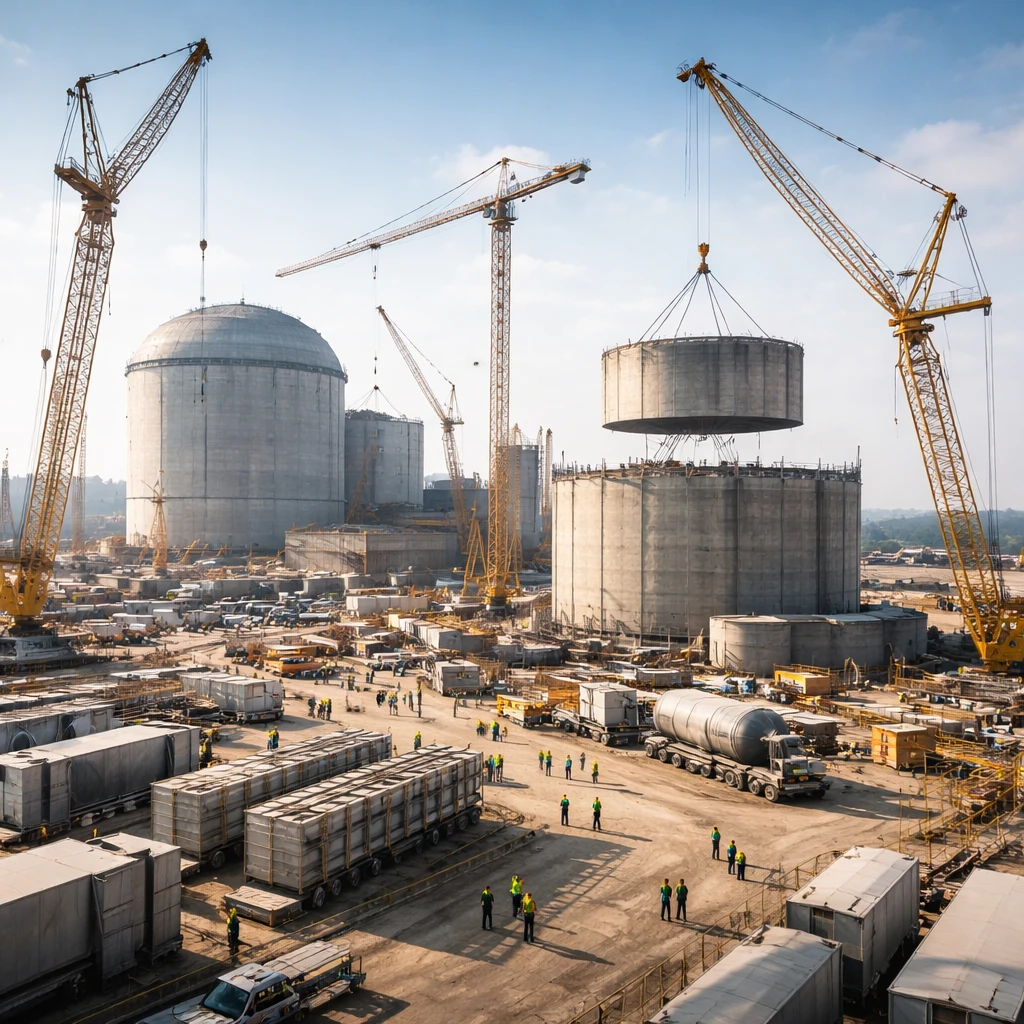
The U.S. Department of Energy is prepared to extend $17.5 billion in financing to support equipment purchases for large-scale nuclear reactors built by Westinghouse Electric Co., according to a report published Tuesday. The funds are intended to flow to seven utilities that have signed letters of intent with the department, though those companies have not been named.
Officials say the financing is part of a broader effort to advance the construction of conventional large nuclear power plants across the country. The initiative aligns with the president's stated aim to see 10 large reactors under construction by 2030, a goal established in an executive order issued last year.
The administration has framed expanded nuclear capacity as important to keeping electricity supplies reliable for energy-intensive uses such as data centers and to underpin economic growth. The planned loans target conventional, gigawatt-scale units rather than smaller, modular designs being pursued separately by other firms.
In recent decades the development of traditional large nuclear facilities in the United States has been limited. Since 2000, only three such plants have reached completion, and there are currently no large reactors under construction in the country. That history of limited recent build-out is part of the backdrop for the department's financing move.
Westinghouse manufactures the AP1000 reactor, a gigawatt-scale design that fits the conventional reactor category the administration is seeking to promote. Westinghouse is owned by Brookfield Asset Management and Cameco Corp., the latter identified as a Canadian uranium producer.
The loans are being offered after the utilities signed letters of intent, a step that signals preliminary commitment but does not disclose the identities of the companies involved or the specific projects that could receive equipment financing. Separately, several firms continue to develop small modular reactor technologies, which the department's current financing push does not target because those designs differ from the conventional plants the administration is emphasizing.
Where this stands
The financing package represents a targeted federal push to revive large-scale nuclear construction by backing equipment purchases for Westinghouse-built reactors and by supporting utilities that have expressed preliminary interest via letters of intent. The effort reiterates a policy focus on conventional reactor expansion rather than small modular reactor deployment.