
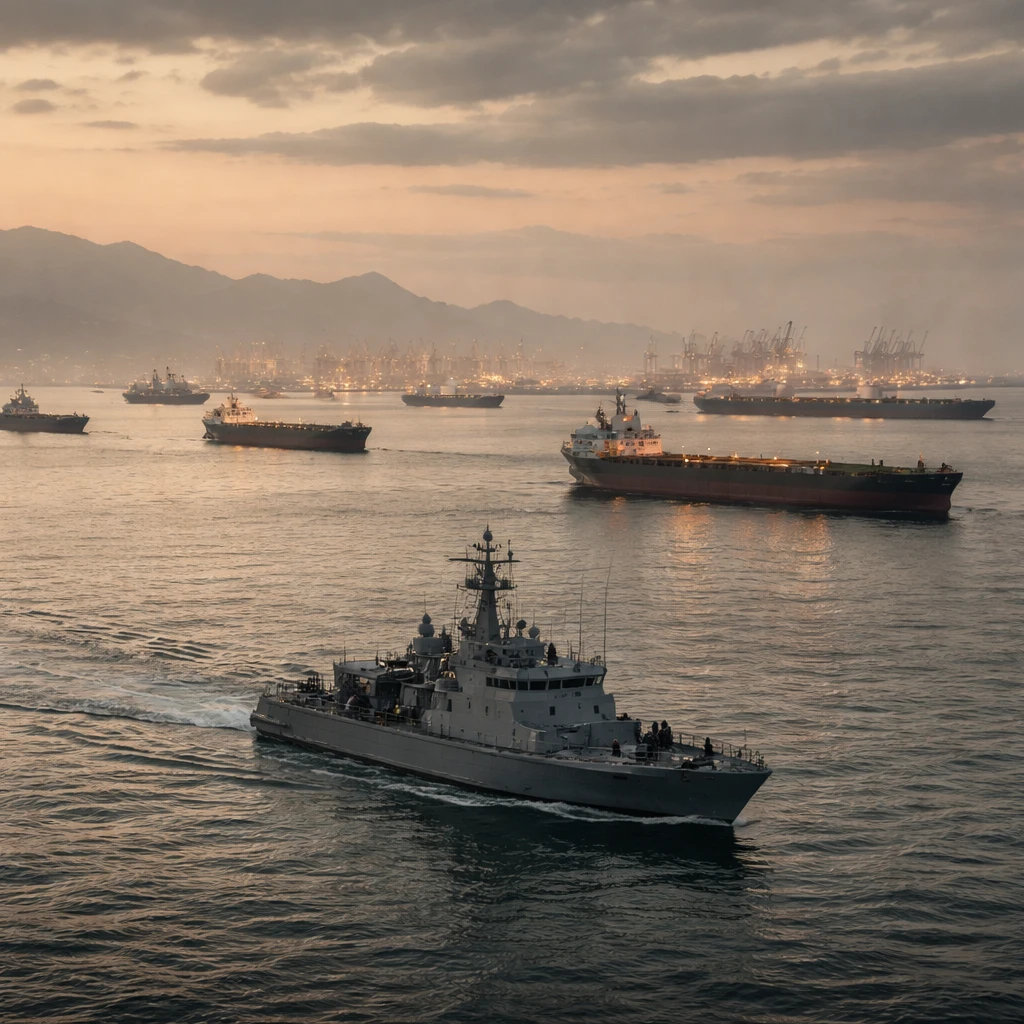
Senior officials from the United Arab Emirates have stepped up diplomatic pressure on U.S. President Donald Trump to push for negotiations with Iran, joining similar appeals from Saudi Arabia and Qatar, according to people familiar with the exchanges. The conversations reflect growing concern among Gulf partners that a return to open conflict would impose heavy costs across regional economies.
Officials said the outreach to the White House was driven by fears that any Iranian retaliation could unravel commerce and energy flows in the Gulf. In telephone conversations with President Trump, leaders of the three U.S. partners reportedly argued that military measures alone will not accomplish Washington's enduring objectives with Tehran.
Abu Dhabi's more vocal urging for diplomacy marks a notable turn for a country that absorbed much of Iran's previous attacks and had been relatively hawkish compared with neighboring capitals. While the three Gulf states differ on the precise shape of a diplomatic settlement and on how forceful the U.S. should be in pressing Iran, their coordinated appeals highlight mutual unease about a recurrence of the sharp fighting that erupted late in February and ended with a ceasefire in early April.
That bout of hostilities saw Israel and the U.S. mount military action against Iran, followed by widespread retaliation from Iran and Tehran-backed militant groups in Iraq. Those reprisal strikes involved thousands of drones and missiles across the Gulf, resulted in scores of fatalities and inflicted billions of dollars in damage to ports and energy infrastructure.
At the time, the UAE expressed frustration when Saudi Arabia and other Gulf states declined to mount a collective military response to deter further Iranian attacks. Abu Dhabi carried out limited strikes on Iran in coordination with the U.S. and Israel, while Saudi Arabia reportedly took separate action.
Following the ceasefire on April 8, Iran and the U.S. have engaged in a process of message exchanges via Pakistan about a potential peace agreement. Both Tehran and Washington have publicly said they remain prepared to resume hostilities, and observers note limited signs of concessions so far.
Trump's secretary of state, Marco Rubio, said on Friday there had been "slight progress" toward a deal, comments that Iranian media also echoed.
Despite the Gulf leaders' appeals, some express doubt that their entreaties will influence U.S. policy, and they worry Israel could persuade President Trump to resume military action. Prime Minister Benjamin Netanyahu has indicated further strikes may be needed to continue degrading Iran's military capabilities.
Anwar Gargash, a senior advisor to the UAE's president, commented on Friday that "there's a 50-50 chance that we will reach an agreement" with Iran. He added that his concern is Iran's historical tendency to over-negotiate and expressed hope that the republic will not repeat that pattern, saying the region requires a political solution and that another round of military confrontation would only complicate matters.
Saudi Arabia supports mediation led by Pakistan and views dialogue as the path to persuading Iran to curb its nuclear and ballistic-missile programs. Both the kingdom and the UAE also favor immediate U.S. focus on getting Iran to reopen the Strait of Hormuz and on keeping a naval blockade of Iranian ports in place to pressure Tehran toward concessions.
Qatar has consistently called for de-escalation to protect the region and its people, and it continues to back the Pakistan-led mediation effort, officials said.
Analysis
The coordinated diplomatic push from three Gulf states underscores a common recognition that renewed military confrontation would pose acute risks to trade, energy shipments and regional economic stability. While differences remain over tactics and leverage, the public and private appeals to the U.S. president emphasize a preference for a negotiated political solution over renewed combat.