
Officials from Washington and Tehran said on Monday that the two countries have reached a preliminary memorandum of understanding aimed at stopping nearly four months of military hostilities that have unsettled global trade and financial markets.
According to statements from leaders and officials on both sides, the MoU establishes an immediate halt to military operations. The document itself has not been released publicly. U.S. Vice President JD Vance told CNBC on Monday that he hopes "to release text this week."
What the agreement says so far
Officials have disclosed several central elements they say are contained in the memorandum:
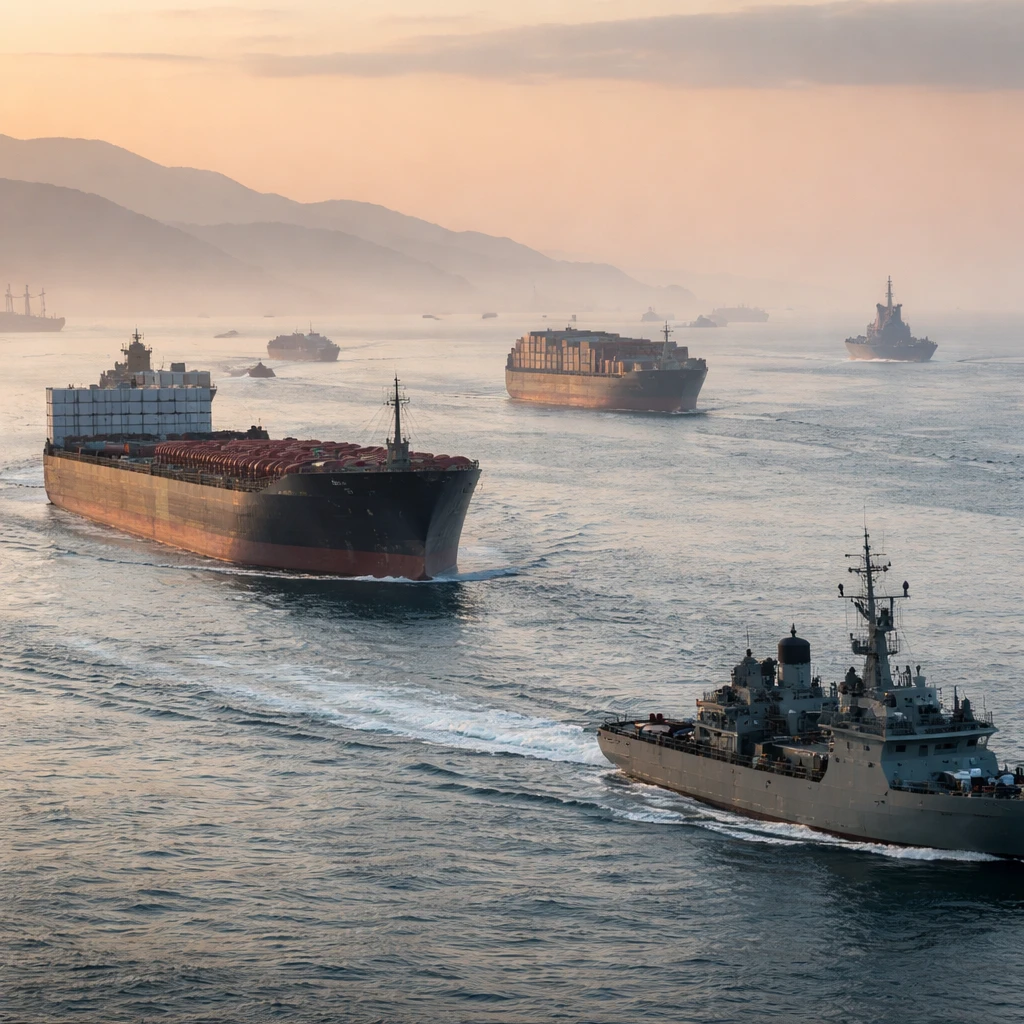
- Reopening the Strait of Hormuz and ending the blockade - Both U.S. President Trump and Iran's Deputy Foreign Minister Kazem Gharibabadi have said the Strait of Hormuz will be reopened without tolls once the deal is signed on Friday. President Trump also announced the removal of the U.S. naval blockade on Iran, which had included U.S. Navy actions turning around vessels bound to or from Iran. On his social media platform, Trump wrote: "I hereby fully authorize the toll free opening of the Strait of Hormuz, and, simultaneously herewith, authorize the immediate removal of the United States Naval blockade. Ships of the World, start your engines. Let the oil flow!"
- Operational caveat from Iran - Iranian state news agency Mehr said the reopening would be subject to Iranian arrangements, underscoring that aspects of the implementation remain to be defined by Tehran.
- Nuclear talks and a 60-day ceasefire - The agreement reportedly institutes a 60-day ceasefire designed to create space for negotiations on Iran's nuclear program, sanctions relief, and regional security. Deputy Foreign Minister Gharibabadi said nuclear negotiations could only begin if the United States releases billions of dollars in frozen Iranian funds; U.S. officials rejected that assertion.
- Security assurances and the possibility of renewed action - President Trump told the New York Times that if negotiations fail to resolve concerns about Iran's nuclear program, the U.S. could resume military action. He reiterated his position that "Iran will never have a nuclear weapon."
Other regional actors and territorial security
Israel is not a party to the accord. Israeli Defense Minister Israel Katz said the Israel Defense Force would remain positioned in security zones in Lebanon, Gaza, and Syria, and that Israel would respond if Iran were to attack the country in connection with events in Lebanon.
Vice President Vance said he believes "there are elements in Israel that like the deal," and added that "Israel will have a seat at the table in the new Middle East." Those remarks reflect a U.S. view that Israel will be included in future regional deliberations, even though it is not a signatory to the current memorandum.
Signing plans and outstanding questions
Iran's Gharibabadi said the text will be signed on Friday in Geneva, and President Trump restated that date in a Sunday post. At this stage, no official U.S. delegation has been confirmed for the Geneva ceremony. Vice President Vance has been reported as a potential participant. White House envoy Steve Witkoff, who led much of the U.S. negotiating track with Iran, is also likely to attend.
Vance told CNBC he expects "to have a full spectrum of Iranian representatives at Friday signing" including "Speaker of the House and Foreign Minister." He added: "We will see where Tehran is willing to make concessions," noting that "lots of details" are yet to be sorted out. Those comments underscore that, while a framework has been announced, significant implementation issues and participant lists remain unresolved.
Implications for markets and trade
Officials framed the memorandum as a step toward restoring maritime traffic through the Strait of Hormuz and ending the U.S. naval interdiction operations that had affected shipments to and from Iran. The precise operational arrangements for reopening the waterway and the mechanics of ending the blockade were described differently by U.S. and Iranian statements, and both sides indicated additional negotiations and clarifications will be required before full implementation.
For now, the agreement is a provisional political step that pauses hostilities, sets a narrow timeframe for initial talks on nuclear and sanctions issues, and signals a possible return to freer movement of maritime commerce pending finalization of the text and signatures.