
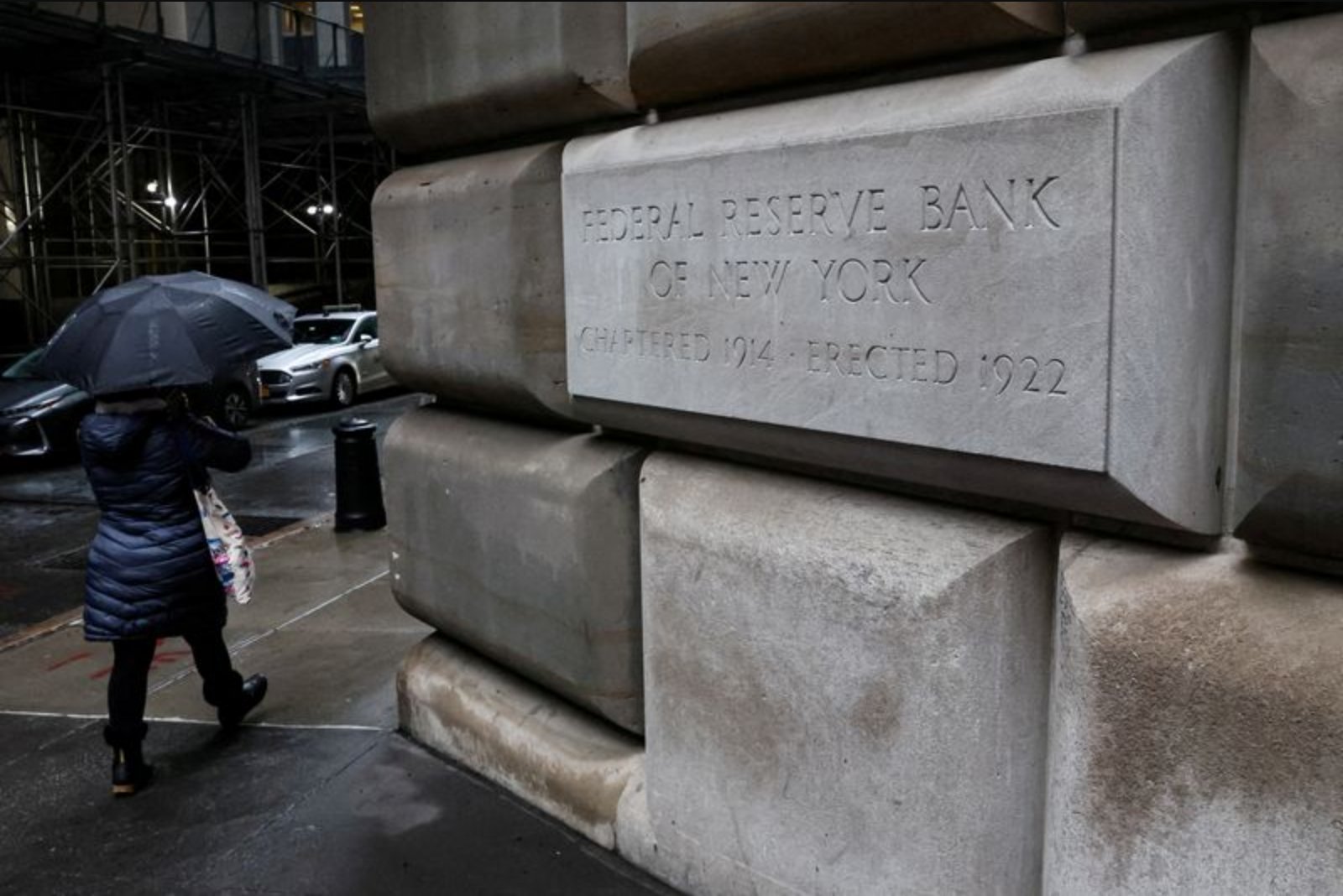
The New York Federal Reserve's Multivariate Core Trend inflation gauge registered an uptick in December, underscoring persistent underlying price pressures that could hinder the Federal Reserve's efforts to bring inflation back to its 2% objective.
The regional Fed bank reported that its Multivariate Core Trend reading rose to 2.8% in December from 2.4% in November. The bank attributed the upward move to stronger-than-expected pressure in prices for services outside of housing along with a contribution from goods costs.
Officials at the Federal Reserve anticipate that price pressures will ease over the course of the year, a view that rests in part on the expectation that the large-scale system of import tariffs instituted by President Donald Trump will have a diminishing impact on inflation. Much of the central bank's overshoot of its 2% target has been linked to those tariff measures, and concerns about sustained price pressures contributed to a number of Fed officials resisting the interest rate cuts implemented last year even as the job market has softened.
Last year the Fed reduced its benchmark overnight interest rate by three-quarters of a percentage point to a range of 3.5% to 3.75%, a level it left unchanged at its January 27-28 meeting. Financial markets currently expect the central bank to implement further rate reductions this year, though Fed officials have offered little direct guidance about the likelihood or timing of additional easing.
Federal Reserve commentary and alternate inflation gauges
In a New York appearance on Friday, Dallas Fed President Lorie Logan - who had been skeptical of the rate cuts made last year given lingering inflation above the target - said she was "cautiously optimistic" that, with policy now positioned where it is, "we're on a path for inflation to come back down toward our target."
"My expectation is that some of the tariff effects, particularly in goods inflation, will start to fade," Logan said, adding that a "roughly balanced" labor market should help other components of inflation cool.
Logan noted the Dallas Fed's Trimmed Mean Personal Consumption Expenditures (PCE) measure is moving in a more favorable direction. That gauge, designed to better capture the underlying trend by removing the largest positive and negative price changes each month, has shown a year-over-year cooling to 2.4% in December from 2.8% in August. However, on a month-over-month basis the Trimmed Mean PCE increased to 2.2% in December versus 1.7% in November.
Tariffs, court action and new policy steps
The central role of the tariff program in driving higher inflation became less clear after the U.S. Supreme Court struck down many of those tariffs on Friday. The president responded by announcing major new tax increases and potential fees on imports. The administration has repeatedly asserted that its tax increases are supporting the economy.
Separately, a New York Fed report cited in the discussion found that the tariffs have been, contrary to the administration's claims, almost entirely borne by U.S. importers and consumers.
What this means for policymakers and markets
The December uptick in the Multivariate Core Trend reading, together with mixed signals from other trimmed inflation measures, complicates deliberations among policymakers weighing how quickly to remove policy accommodation. Some Fed officials who viewed last year’s cuts skeptically have maintained opposition to further easing while inflation remains above target, even as labor market indicators have softened.
Markets continue to price in the prospect of additional Federal Reserve rate cuts this year, but officials have provided limited clarity on whether and when further easing will occur. The trajectory of tariffs, related legal developments, and the impact of newly announced tax and import fee measures add layers of uncertainty to the inflation outlook.