
Lead
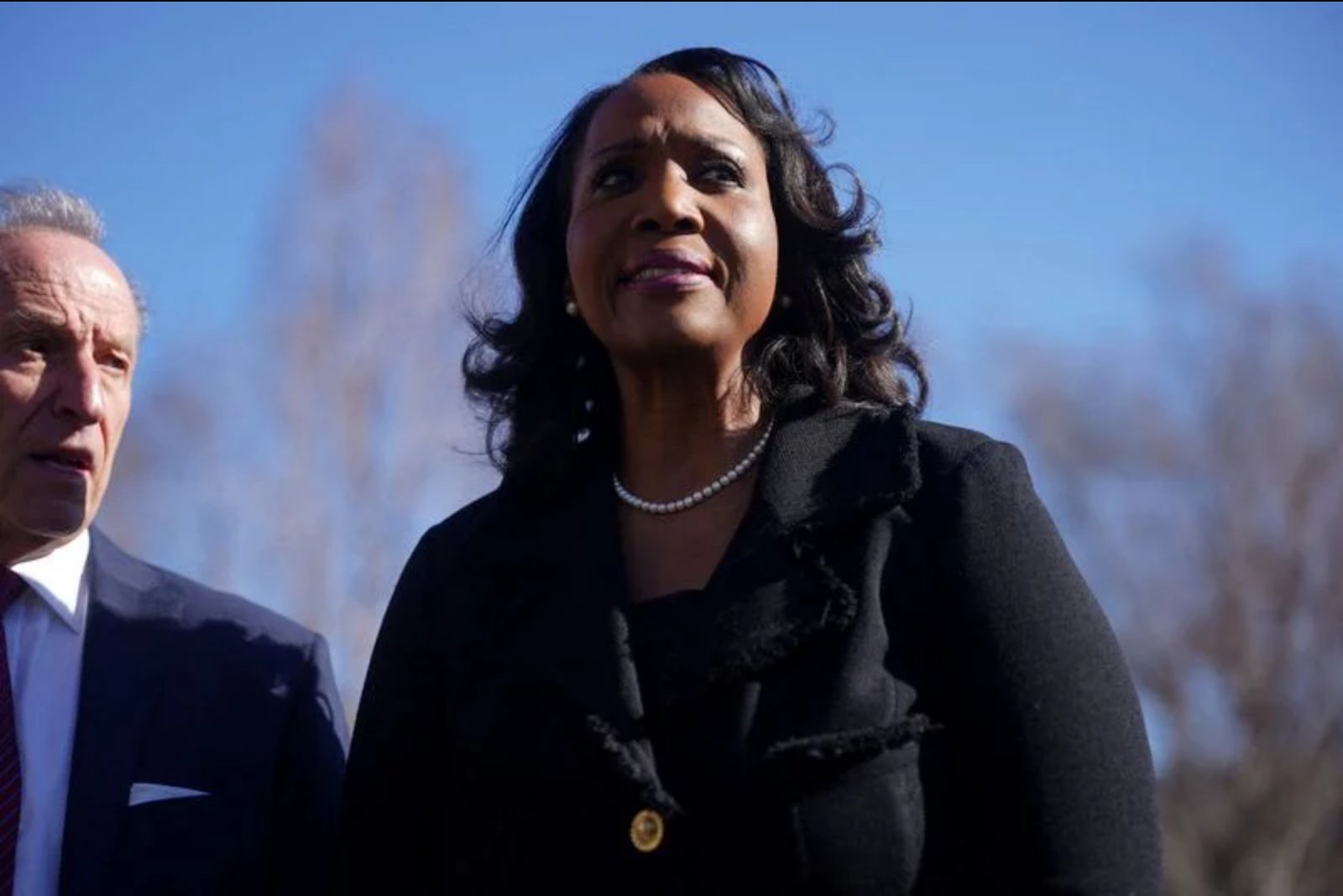
Lisa Cook, a Federal Reserve governor whose personal and professional life has been marked by a string of firsts, has become the central figure in an extraordinary confrontation over the limits of presidential power and the independence of the U.S. central bank. Her nomination and confirmation to the Fed, her emergence as an influential voice on inflation risks, and the subsequent attempt by a president to remove her from office have combined to make her case a focal point for legal, economic and political debate.
Early life and formative experiences
Cook grew up the daughter of a nursing professor and a hospital chaplain in rural Milledgeville, Georgia. With her sisters, she was among the first Black students to desegregate the schools they attended in that community. She has recounted enduring physical assaults during that period and still carries scars above her right eye and on her leg from those beatings.
She matriculated at Spelman College, where she studied philosophy and physics. She then became the first graduate of that historically Black women’s institution to receive a Marshall Scholarship, which financed a year of study at the University of Oxford.
Her decision to move into economics was influenced by experiences overseas. While in Senegal she came to question why commonplace items such as ballpoint pens could cost so much more than in the United States. A hike up Mount Kilimanjaro with a British economist helped persuade her to change fields and pursue economics professionally.
Trailblazer at the Fed
President Joe Biden nominated Cook in 2022 to serve on the Board of Governors of the Federal Reserve, making her the first Black woman to hold that post. That nomination was framed by the White House at the time as addressing long-overdue diversity at the central bank. Her confirmation required a tie-breaking vote in the U.S. Senate from Vice President Kamala Harris, who cast the 51st vote after a contentious process in which some Republican senators characterized Cook as unqualified and suggested she might be lenient on inflation.
An unprecedented removal attempt and legal response
In August 2025, President Donald Trump moved to remove Cook from her Fed position—a step that was historically unprecedented, as she became the first U.S. central banker to be targeted for firing by any president. The institution that oversees monetary policy was intentionally structured by Congress to be insulated from day-to-day political interference, and Cook challenged the removal in court. The Supreme Court on Monday refused to permit the president to fire her, a decision that was widely seen as upholding the Fed’s independence.
Cook’s lawsuit and the Supreme Court’s action placed her at the center of an unusual test of presidential authority over an independent agency. Critics of the president argued the effort to remove Cook could be part of a broader pattern of seeking to displace high-profile Black officials from positions appointed by the prior administration, an argument that Cook and others have advanced in public discourse.
Policy stance and emerging hawkishness
Beyond the legal battle, Cook has become an increasingly prominent voice within the Fed on the need to address inflation. In recent months she has aligned with a growing hawkish contingent at the central bank. New Fed Chairman Kevin Warsh, a Trump appointee, had been expected by some to press for rate cuts; at the first Federal Open Market Committee meeting under his chairmanship, he oversaw a decision announced on June 17 to keep interest rates unchanged and repeatedly emphasized the need to lower inflation.
In May, speaking at an event in Stanford, California, Cook said she was concerned that artificial intelligence could trigger a new inflationary shock. She said she would support a rate increase if price pressures failed to ease soon. That event took place near the Hoover Institution, where she had served as a research fellow and where Warsh had recently described AI as a disinflationary force.
Public appearances and institutional support
Cook has appeared publicly alongside other prominent central bank figures. She was among those present in Boston when former Fed Chair Jerome Powell received the John F. Kennedy Library’s "Profile in Courage" award for resisting pressure from the Trump administration. Powell also attended the January 22 Supreme Court arguments about Cook’s suit and described the legal proceedings as, in his view, the most important legal case for the Fed since its founding in 1913.
When he testified during his Senate confirmation hearing, Warsh declined to defend Cook, saying it would be inappropriate for him to comment on a case in which he might be a party.
Allegations, referrals and political maneuvering
The confrontation over Cook’s role also involved allegations unrelated to monetary policy. Bill Pulte, a Trump-appointed director at the Federal Housing Finance Agency, asked the Justice Department last year to open criminal investigations - issuing criminal referrals - into Cook and others for alleged mortgage-related crimes. Pulte made those accusations while bypassing his agency’s inspector general, a step that observers said skipped internal safeguards intended to prevent partisan misuse of investigatory tools.
President Trump on June 2 named Pulte acting director of national intelligence, despite Pulte having no apparent background in national security. Soon after the referrals, the president posted on social media that he was firing Cook for what he said were false statements on her mortgage applications.
Cook has described the allegations as baseless and as a pretext to remove her because of disagreements over monetary policy. The property tax authority in Ann Arbor, Michigan, which reviewed aspects of Cook’s claims related to a home there, told investigators that she had not violated rules governing tax breaks, contrary to Pulte’s public assertions.
Professional record and scholarly work
Before joining the Fed, Cook was a professor of economics at Michigan State University. Her academic work includes research on racial disparities and analyses of how anti-Black violence and gender inequality can suppress innovation and restrain economic growth. She also served as an adviser to presidential transition teams for both Joe Biden and Barack Obama, and she was a senior economist at the White House Council of Economic Advisers from 2011 to 2012 during the Obama administration.
She earned her Ph.D. in economics from the University of California, Berkeley. One of her dissertation advisers there was Barry Eichengreen, who has written on the risks when political leaders attempt to direct central bank policy. Eichengreen told fellow economist Paul Krugman in an interview in August 2025, "I know Lisa to be careful and ethical. She’s also one of the strongest people I know." That endorsement has been cited in discussions of Cook’s professional reputation and conduct.
What remains at stake
Cook’s case sits at the intersection of legal doctrine on agency independence, partisan politics, and debates within the Fed over how to respond to current inflationary pressures, including those that some policymakers attribute to rapid adoption of AI technologies. The episode has also highlighted the potential for administrative tools and investigatory referrals to be used in partisan disputes, and it has underscored questions about the protections designed to keep monetary policy decisions insulated from direct political removal or coercion.
As the immediate legal barrier to her dismissal has been upheld by the Supreme Court, the broader political and institutional contest that surrounded her removal attempt continues to reverberate across Washington and in financial markets sensitive to signs about the Fed’s independence and likely policy path.