
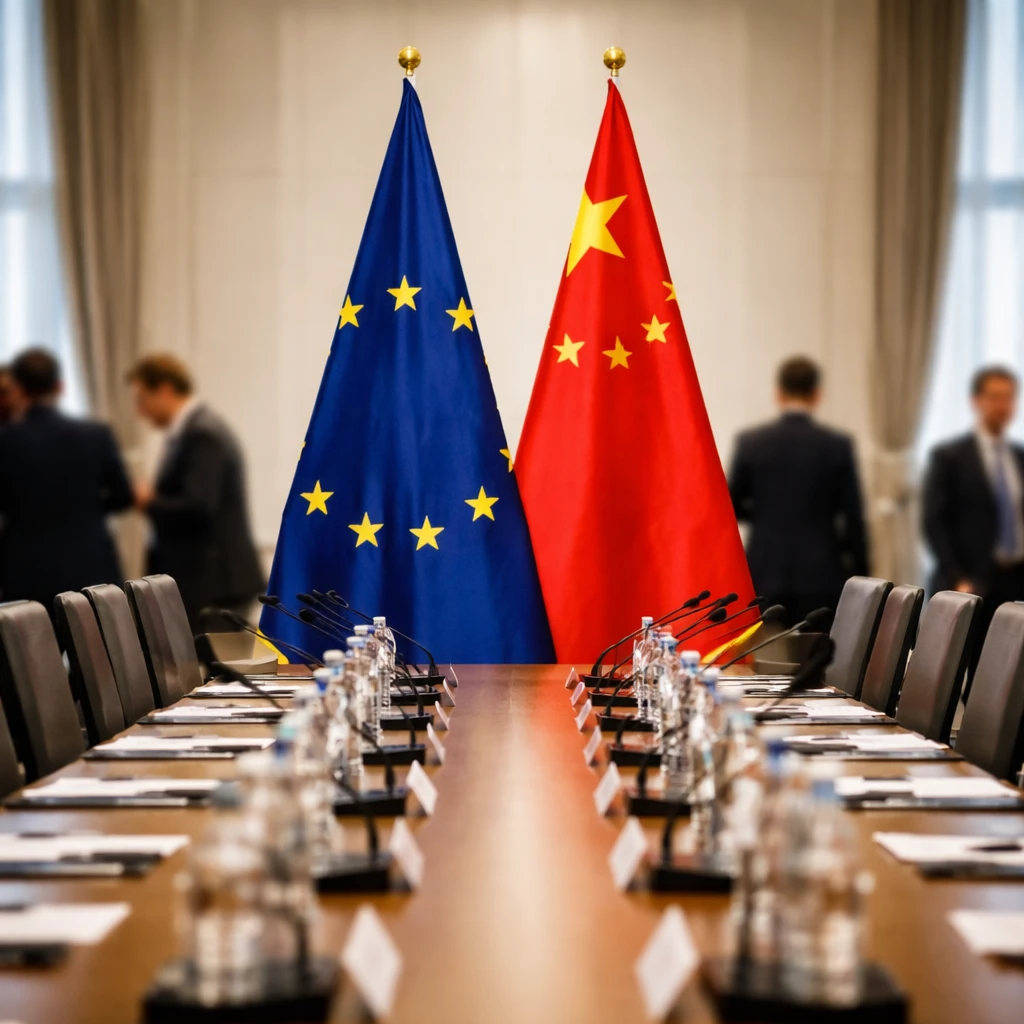
European Union and Chinese trade officials on Monday committed to a timetable targeting October for concrete progress on several contentious trade matters, marking a renewed push to manage strains in their economic relationship.
Speaking in Brussels after talks with Chinese Commerce Minister Wang Wentao, EU trade chief Maros Sefcovic said: "Not everything will be solved, not everything will be fixed, but we think that between now and October, our teams have sufficient time to deliver the tangible results."
The two sides agreed to concentrate on a set of issues that EU officials say are affecting economic ties. Those include a widening EU trade deficit driven in part by subsidized Chinese goods entering European markets, Chinese export controls that have restricted Europe's access to key supplies, intellectual property rights, and reforms at the World Trade Organization.
As part of the plan, Brussels and Beijing will set up a joint platform to keep track of trade flows and to flag sudden surges that could indicate distortions. Officials framed that measure as a tool to spot problematic shifts quickly and to take appropriate steps in response. "This trend is not sustainable, and the status quo is not an option," Sefcovic added, noting that the joint statement issued on Monday was the first of its kind since 2019.
EU concerns reflect a substantial imbalance: the bloc's trade deficit with China reached €360 billion ($410 billion) last year, with all 27 member states affected by the gap, officials said. Brussels has voiced unease that European companies have become dependent on Chinese supplies such as semiconductors and rare earth minerals, creating leverage for Beijing over key European firms.
The October timeline coincides with the next EU leaders summit on October 15, providing a political checkpoint for leaders to assess progress against the pledged objectives.
Separately, over the weekend German Economy Minister Katherina Reiche met with Wang following a May visit to China. The German Economy Ministry said Reiche told Wang she sought closer cooperation with Beijing but stressed that truly open markets require a level playing field.
While officials emphasised that the October deadline offers time for negotiators to produce measurable outcomes, they also acknowledged that the work will be partial: some subjects may remain unresolved by that date and will require continued engagement thereafter.