
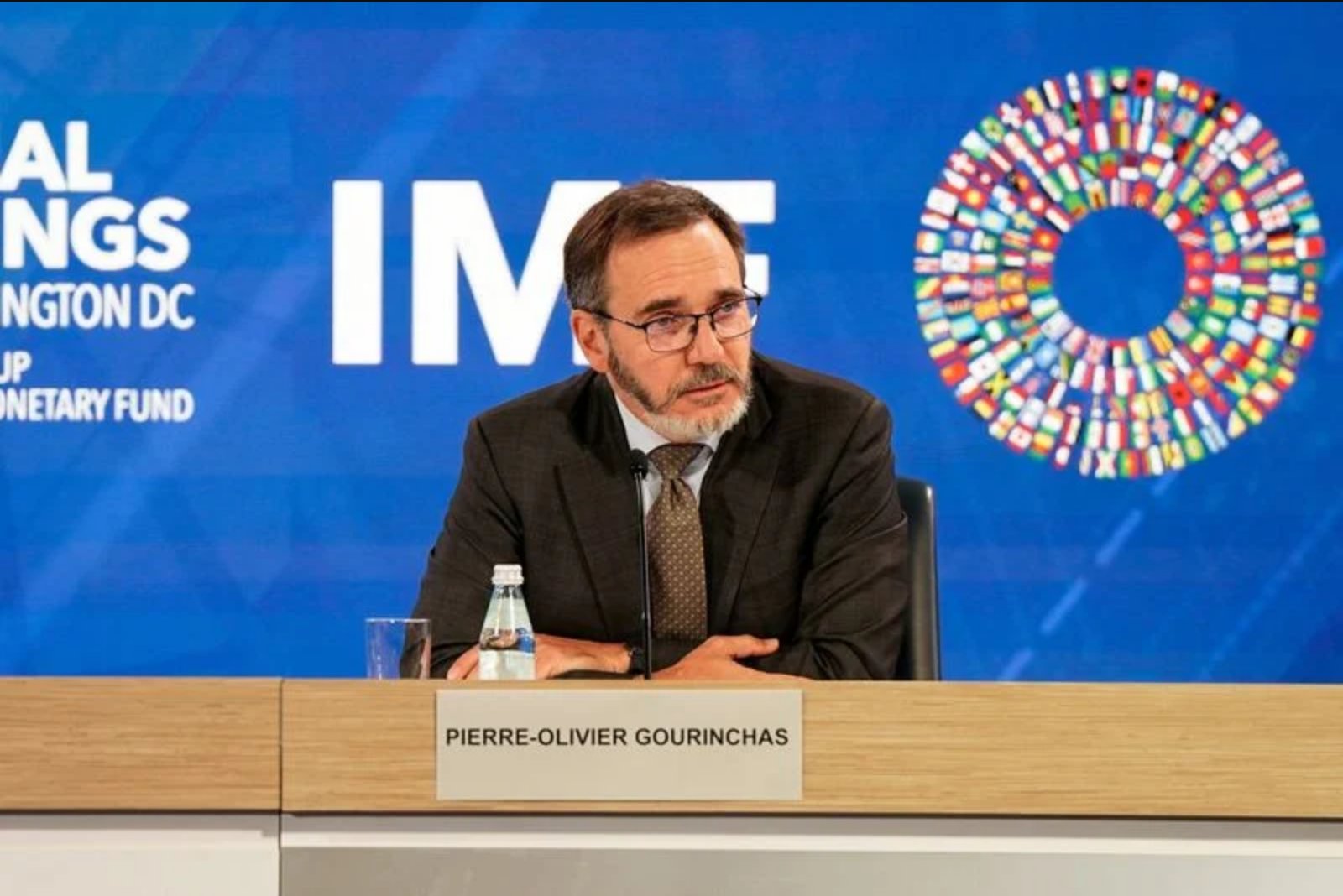
Pierre-Olivier Gourinchas, the International Monetary Fund’s chief economist who is set to leave his post next week to return to academic life, said Federal Reserve Chair Kevin Warsh’s decision to scale back explicit forward guidance on monetary policy was "entirely appropriate." In an interview, Gourinchas described the move as a correction to a form of central bank communication that had become untenable when it locked policy promises to a specific future course regardless of economic developments.
Gourinchas said strong forward guidance had received "really bad press" because it tied central banks to future actions that might prove inappropriate as conditions changed. He pointed to the period when U.S. inflation surged in 2021 and 2022, saying the earlier commitments to hold rates steady made rapid policy adjustment costly. "That is something that is not tenable, of course," he said.
While endorsing a retreat from rigid, prescriptive guidance, Gourinchas emphasized that some degree of guidance is unavoidable. "So I think moving away from these strong forms of forward guidance is entirely appropriate. Saying there is no forward guidance, I don’t think that is actually the case ever. You do it explicitly, or implicitly, the market is going to form a view," he said.
The comments came as Warsh, who took over as Fed chair last month, initiated a broad review of how the central bank makes decisions and communicates with the public. In his first policy meeting as chair, Warsh secured a unanimous consensus for a simplified policy statement that removed any explicit forward guidance about near-term policy actions.
Gourinchas’ remarks are the first substantive commentary from a senior IMF official on the Fed’s new communication stance. They follow longstanding IMF recommendations that central banks be transparent about their policy intentions to help anchor inflation expectations. He noted the IMF had observed other central banks moving toward similar approaches, even as many remain within inflation-targeting frameworks designed to manage inflation one to two years into the future.
Gourinchas stressed the practical limits of eliminating guidance entirely. Markets, businesses and banks continuously seek signals to set long-term borrowing costs, make investment decisions and price mortgages. That demand for information extends beyond the Federal Open Market Committee’s periodic rate decisions. "You need to provide some amount of guidance, so that the market will form some views about what the long-term rates are going to be, and that actually is what’s going to have an influence on the conditions," he said.
Even when central bankers refrain from explicit projections, Gourinchas argued they will act to correct market expectations that drift too far from their intended stance. "If that view somehow is not the one that you want to communicate, central banks will communicate differently, and they will try to guide where they want it to be," he said.
His comments underline a balancing act for policymakers: reducing commitment to fixed future actions in order to preserve flexibility, while still supplying enough information for markets to form sensible expectations about long-term rates. That balance, Gourinchas suggested, is central to how policy influences financial conditions without creating unwanted constraints on future responses.