
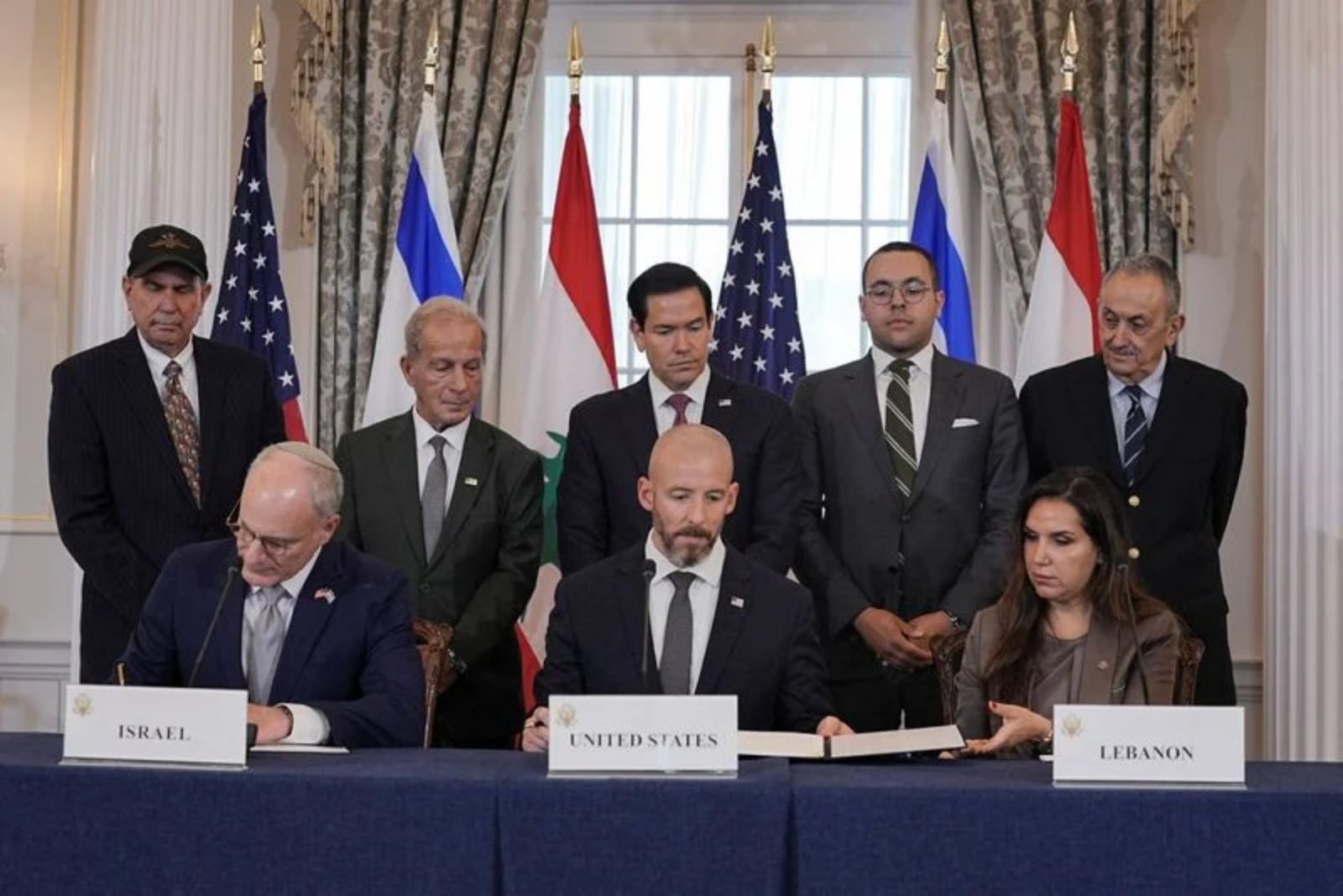
Israeli and Lebanese officials on Friday said they expect to sign a framework agreement in Washington following several days of negotiations aimed at securing an end to fighting between Israel and Iran-backed Hezbollah militants. Officials did not disclose the text of the framework or explain how it would vary from an April 16 ceasefire accord that came before a series of U.S.-facilitated talks.
There was no immediate statement from the U.S. State Department on the expected Washington signing. The present talks have focused in part on arrangements for territory in southern Lebanon that Israeli forces occupy, including a proposal for Israeli troops to hand some of that land to Lebanon's military.
The wider confrontation began after Hezbollah fired on Israel on March 2, in the days following U.S. and Israeli strikes on Iran, according to the timeline described in the officials' accounts. Hezbollah's attacks prompted Israeli air and ground operations that have, according to Lebanese figures supplied in the talks, resulted in more than 4,000 deaths in Lebanon and the internal displacement of over a million people. Israel's casualties in this round of hostilities include at least 32 soldiers and four civilians. Hezbollah has not published its casualty figures, and a May 4 report said that several thousand Hezbollah fighters had been killed in the war.
Officials involved in the Washington sessions said discussions touched on a pullback by Israeli forces from some of southern Lebanon that they currently occupy. A State Department official was quoted by participants as saying Israel had agreed to withdraw from parts of that territory; that account was contested by other Israeli and Lebanese officials involved in the talks.
Before the Washington meetings resumed this week, Israel and Hezbollah had agreed to halt shooting, while Israeli forces remained in parts of southern Lebanon that Israel describes as a "buffer zone" intended to prevent further Hezbollah attacks on northern Israel. Violence, however, has continued intermittently. On Friday, the Israeli military said its forces had struck and killed seven people it described as Hezbollah members operating near territory Israel occupies; Reuters was unable to independently confirm that account.
Mansouri and civilian warnings
Lebanese state media reported that Israeli forces dropped leaflets over the southern town of Mansouri on Friday ordering residents to leave. Officials described this as the first such evacuation order issued since the most recent ceasefire took effect. A senior Lebanese military official said Israel had recently designated Mansouri as part of its occupation zone. That official also said Lebanese farmers have continued to travel into and out of the town but have not been residing there full time.
An Israeli military spokesperson described the leaflets as a reminder that the area is within a security zone where Israeli soldiers operate, and said the reminder was intended to keep civilians from being harmed. Lebanese officials said Israeli troops have enforced the zone's northern boundary by firing on people who approach it, including civilians and Lebanese soldiers.
Status and uncertainties
Officials from both sides have signaled an expectation that an agreement will be formalized in Washington, yet they have not released the framework's terms or clarified how it would change the arrangements contained in the April 16 ceasefire. The talks have converged on contested ground in southern Lebanon, but differences remain over what withdrawals or handovers of territory would look like and how they would be policed.
The ongoing presence of Israeli forces in occupied southern Lebanese territory, the issuance of civilian evacuation leaflets, and reports of continued strikes near the occupation zone indicate that hostilities and tensions persist even as diplomats negotiate a framework intended to stabilize the situation.