
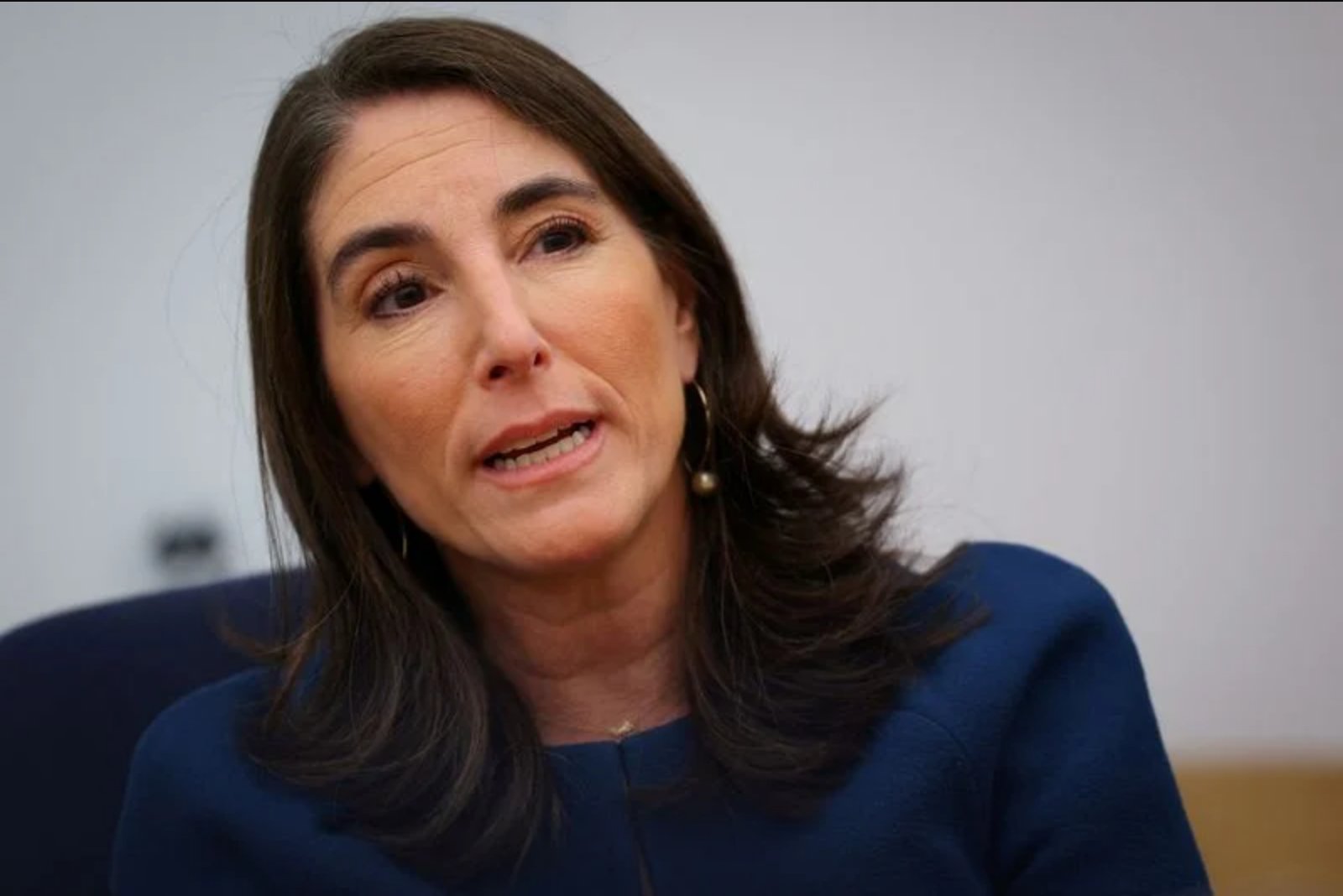
Federal Reserve Bank of Cleveland President Beth Hammack said on June 30 that she may press for higher interest rates if inflation pressures fail to moderate. In a television interview on CNBC, Hammack described current price gains as persistently above desired levels.
"We’ve got inflation that’s too high and it’s been too high for the past five years," Hammack said, adding: "When I look at policy, if that continues, it may mean that we need higher interest rates to bring inflation back down to target."
Hammack is a voting member of the Federal Open Market Committee this year. She declined to identify a specific data trigger or timing for when she would support a rate increase, saying she maintains a flexible stance as policy decisions approach.
"I keep an open mind walking into every meeting. I think every meeting is a live meeting, and it’s important to look at the data and see where that’s taking us," Hammack said.
While she stopped short of offering precise guidance on the future path of interest rates, Hammack underscored the value of communicating her own "reaction function" so the public can better frame expectations about monetary policy.
These remarks were Hammack’s first public comments since the FOMC gathering earlier this month. That meeting - the first held under new Fed Chairman Kevin Warsh - left the central bank’s target federal funds rate range unchanged at 3.5% to 3.75%.
Projections released by the Fed alongside the policy decision indicated officials foresee additional rate hikes this year, even as the policy statement itself omitted conventional forward guidance. Warsh explained the rationale for removing such guidance at his press conference following the meeting, emphasizing the role of incoming data in market pricing.
"Financial markets perform best when they react to incoming data," Warsh said. "The financial markets work less efficiently when they ask a question: How will the Federal Reserve react to that incoming information?"
Other Fed officials have also commented publicly in recent days. New York Fed President John Williams said last Thursday that inflation remains too high and that the current stance of monetary policy is appropriate to bring inflation back to the 2% target, indicating he does not see an immediate reason to move rates up or down.
On the domestic economy, Hammack characterized conditions as broadly healthy. She said the labor market is consistent with full employment and noted that households have been absorbing a recent rise in gas prices linked to the Middle East conflict without widespread strain to date.
"I’m not seeing a lot of restraint in the economy, I’m not hearing from these businesses that interest rates or credit spreads are a reason why they’re holding back from investment and growth," Hammack said.
Hammack reiterated that she is not committing to a fixed policy path, but wants market participants and the public to understand how she would respond to a range of economic outcomes. Her comments add to a string of public statements from Fed officials that highlight a data-dependent approach to monetary policy while acknowledging persistent inflation concerns.
Context and implications
- The Fed left the target rate range unchanged at 3.5% to 3.75% at its most recent meeting.
- Projections by Fed officials indicate the possibility of rate hikes later in the year, even though the official statement removed forward guidance.
- Fed leadership under Chairman Kevin Warsh has emphasized letting markets respond to incoming data rather than providing explicit forward guidance.