
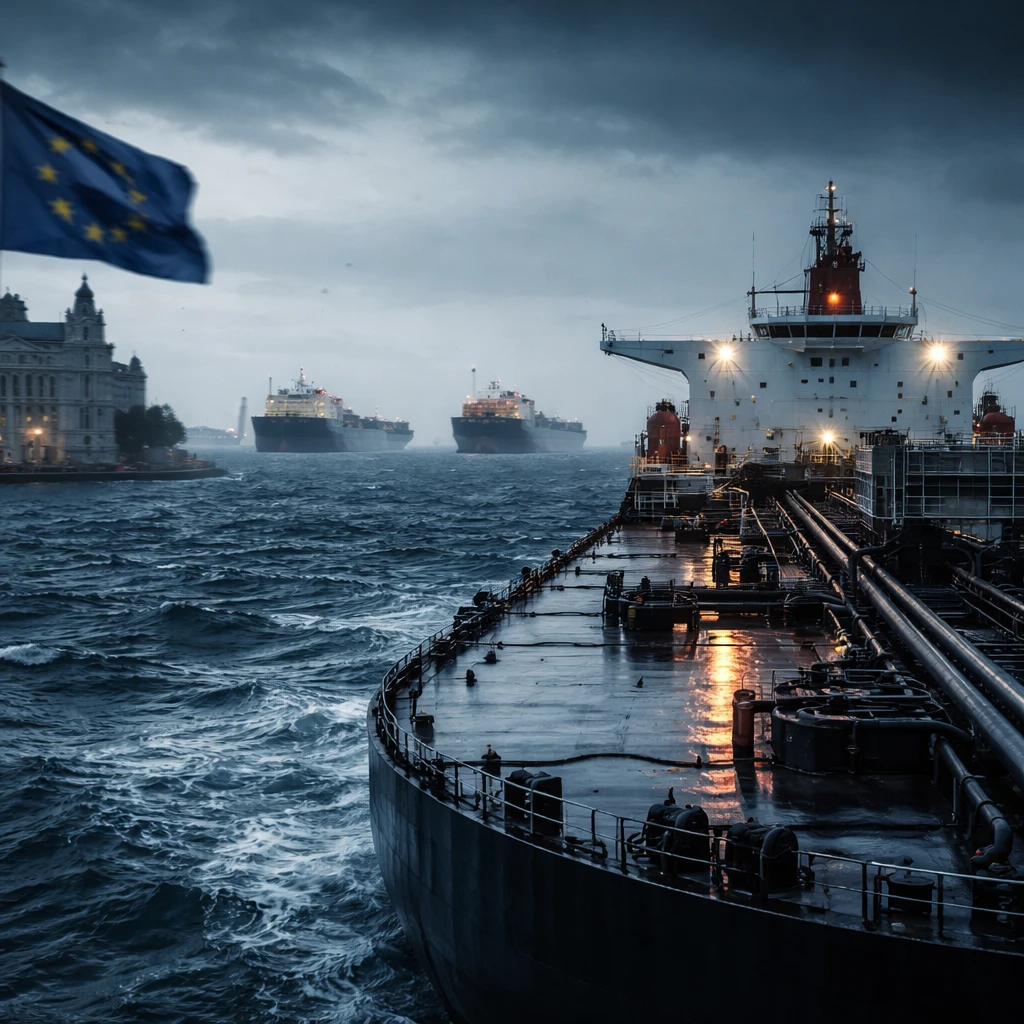
EU member states were unable to finalize a 21st package of sanctions against Russia on Monday, leaving uncertainty over measures intended to curb Moscow's oil revenues.
Negotiations broke down chiefly over two areas. Delegates remained at odds about proposed restrictions on the carriage of Russian liquefied natural gas (LNG) to non-EU countries, and about measures tied to Austria's Raiffeisen Bank International AG, according to people close to the closed-door discussions.
Ministers also failed to reach agreement on whether to freeze the bloc's floating oil price cap, a central element of the draft package. If no decision is taken by Wednesday's deadline, the cap is expected to move materially above its present $44.10 level because of high global fuel prices.
EU ambassadors have the option to revisit the dossier at a scheduled meeting on Wednesday, giving capitals another opportunity to bridge their differences.
"We really need to take this short-term pain for long-term gain," EU foreign policy chief Kaja Kallas said after Monday's talks. Foreign ministers had targeted a Monday decision but were unable to resolve outstanding points during negotiations held over the weekend.
Although the comprehensive 21st package stalled, ministers did agree outside of that framework to add 250 new listings to the EU's consolidated measures. The additions target banks, crypto operators and tankers that the bloc says have been involved in helping Russia circumvent existing sanctions. These listings are being updated on a rolling basis and sit apart from the main package discussions.
The floating oil price cap was introduced by the EU last year with the design to keep the ceiling 15% below the average market rate for Russian Urals crude, and it is scheduled to reset every six months. Companies based in the EU are barred from providing services such as insurance and transportation for oil sold above that threshold.
That mechanism had been operating until market conditions tightened after US and Israeli strikes on Iran, which pushed oil prices higher and complicated efforts to maintain the cap at previous levels.
Certain member states with sizable maritime industries expressed concerns about changes proposed to rules on shipping Russian LNG to third countries. The debate over those shipping rules was among the key sticking points in the talks.
The proposed 21st package also contains a contested element that would restrict entry to the EU for Russian combatants. Kallas said work on that measure would continue even as ministers failed to finalize the broader package.
Context and next steps
EU foreign ministers had aimed to complete the sanctions package on Monday but left unresolved differences. Ambassadors can revisit the unresolved measures on Wednesday, and talks over specific items such as the oil price cap and LNG shipping rules are expected to continue.