
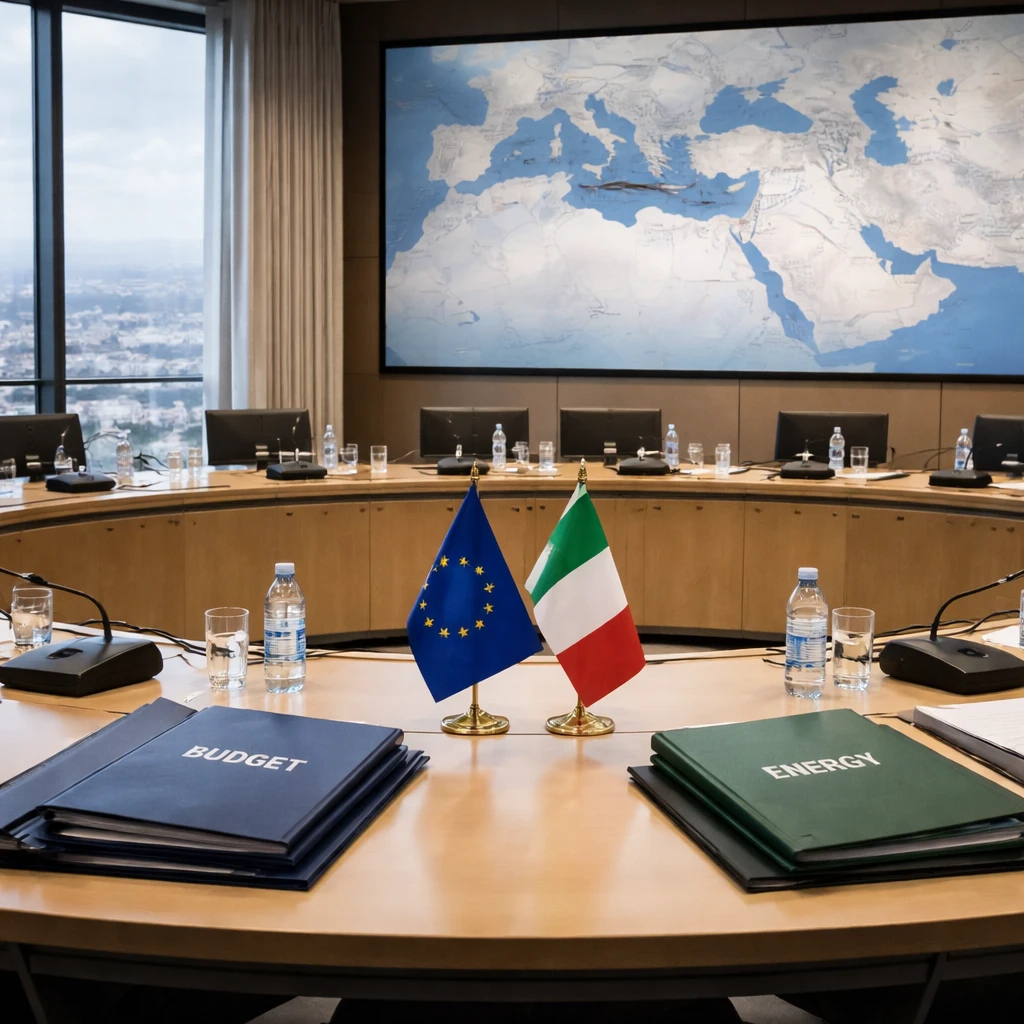
The European Union is assessing a request from Italy for greater flexibility under the bloc's fiscal framework as the conflict in Iran drives up costs for households and businesses across member states.
"We are evaluating various options," EU economy chief Valdis Dombrovskis said on Friday following a meeting of euro-area finance chiefs in Nicosia. He added: "There seems to be agreement on a need to have a focused fiscal policy response without doing some broad based fiscal stimulus."
Italian and Spanish authorities have urged the European Commission to relax spending limits in response to the disruption of global supply lines for key commodities, notably fuel. The article points to the Strait of Hormuz - a critical commercial route - as remaining closed, amplifying the economic fallout from the Middle East conflict.
Italian Prime Minister Giorgia Meloni formally requested that Brussels ease EU budget constraints for measures aimed at tackling rising energy costs. In a letter to European Commission President Ursula von der Leyen, Meloni sought to classify those measures under the EU's safeguard clause. That provision - typically invoked for defense spending - permits temporary deviations from the bloc's fiscal rules in exceptional situations.
Dombrovskis said the EU is examining options in response to Meloni's letter and related appeals from Italian Finance Minister Giancarlo Giorgetti.
EU officials have been clear that any assistance should be temporary and directed at the most vulnerable groups. As Dombrovskis put it: "We must remain vigilant in safeguarding sound public finances."
Across the European Union, governments have introduced policies intended to blunt the effect of rising prices on consumers and companies. Meloni has argued that member states differ in their ability to absorb higher energy costs, highlighting uneven fiscal capacity within the bloc.
Rome is seeking extra funds to continue reduced levies on petrol. Those cuts cost roughly 1 billion per month - approximately $1.16 billion - and the government is likely to renew the measure on Friday, according to the information provided.
In sum, Brussels is weighing narrowly tailored, temporary fiscal accommodations for Italy amid a regional security shock that has raised energy-related expenses and strained national budgets, while insisting that any deviation from standard fiscal discipline be limited in scope and duration.