
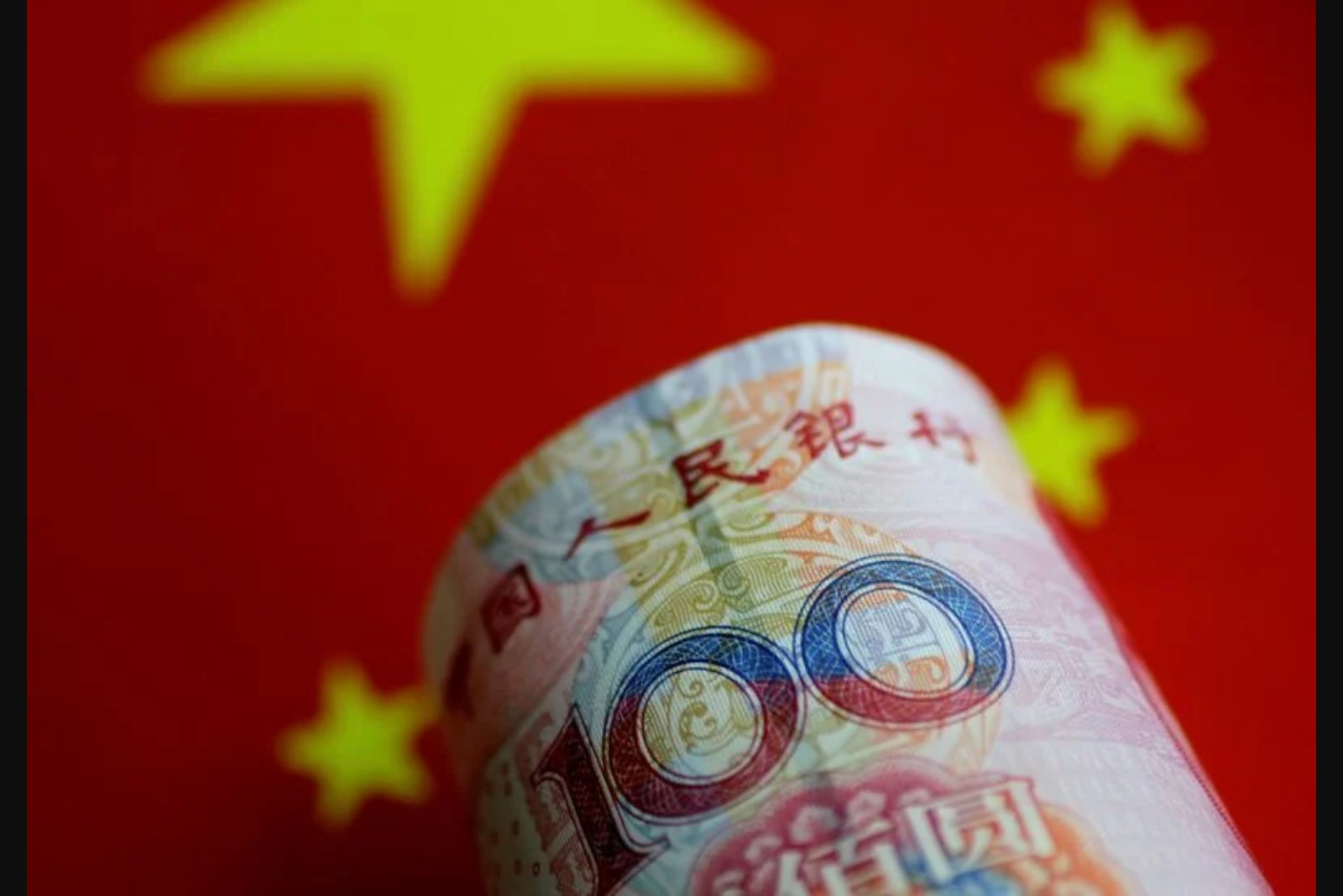
Global portfolio managers have been buying Chinese government bonds in the wake of the Iran war, attracted less by absolute returns than by the bonds' unusually low correlation with Western interest-rate markets. Since March, a broad sell-off in sovereign debt pushed benchmark yields higher by between 35 and 60 basis points in the U.S., Britain, Europe and Japan; by contrast, yields on equivalent Chinese government bonds slipped about 8 basis points.
That divergence has drawn the attention of "real money" investors - including sovereign wealth funds, central banks and insurers - and has prompted a reassessment of how to balance capital preservation with diversification, according to market participants. The flow of demand has driven Chinese sovereign yields down to levels cited as the lowest outside Switzerland.
Preservation and low volatility
Investors with mandates focused on preserving capital have been particularly receptive, viewing Chinese government bonds as a low-volatility complement to higher-yielding, higher-risk assets across the region. "Attractiveness is judged on a risk-adjusted footing. China delivers exceptional price stability," said Wei Li, head of multi-asset investments at BNP Paribas Securities.
The appeal of low correlation has been highlighted by portfolio managers comparing Chinese government bonds with other asset classes. "If you look at correlations between CGBs and European rates, it's close to zero. That has its attractiveness," said Matthias Dettwiler, head of active fixed income at UBS Asset Management.
Performance data through the year illustrates the point: the Guotai 10-Year China Treasury ETF has returned 1.26% so far this year, while the U.S.-focused iShares 7-10 Year Treasury Bond ETF fell 2.57% and Invesco’s comparable Euro bond ETF declined 1.23%.
Why China’s bond market has been insulated
Several structural and policy factors are helping shield China’s bond market from the recent global turbulence. Market participants point to the country's energy reserves, a relatively dovish central bank stance and muted domestic price pressures linked to sluggish consumption. A substantial pool of household savings, which Chinese banks increasingly channel into the bond market, is also cited as a force keeping yields capped.
"Liquidity plays a big part in driving the CGB markets, and liquidity conditions have remained extremely abundant," said Jerome Tay, senior investment manager of fixed income at Aberdeen in Singapore.
Chinese 10-year yields are reported at about 1.75%, roughly a percentage point lower than Japan’s, a reversal of the dynamic in place until late 2025 when Japan represented the low point of global yields. Unlike Japan, however, China maintains strict capital controls that restrict the outflow of funds, a factor that has helped retain domestic capital within its borders.
Policy divergence also matters: where some major economies have seen upward pressure on yields, China’s central bank has leaned toward dovish settings amid restrained inflation, reinforcing relative stability in Chinese government bond markets.
"This divergence in macro conditions and policy stance helps explain why China’s bond market has remained relatively stable within a more volatile global rates environment," said Stephen Chang, PIMCO portfolio manager for Asia. "We continue to maintain overall exposure to China bonds, focusing on relative value opportunities."
Traditional havens under pressure
China's re-emergence as a portfolio refuge has been underscored by weakness in other customary safe-haven assets. Physical bullion, for instance, is reported to be down roughly 25% from January highs. That disappointing performance for gold, coupled with the outperformance of Chinese government bonds, has led some investors to reposition allocations toward CGBs.
Implications for investors
For investors prioritizing capital preservation and diversification, the relative stability and near-zero correlation of Chinese government bonds with key Western sovereign markets have become compelling attributes. As one portfolio manager put it, in these circumstances "the absolute yield doesn’t matter so much," when low correlation can meaningfully reduce portfolio volatility.
Currency rate cited in market materials: $1 = 6.7631 Chinese yuan.
Summary
- Since the Iran war began, global asset managers have increased allocations to Chinese government bonds because of their near-zero correlation with Western markets rather than higher yields.
- While benchmark sovereign yields in the U.S., U.K., Europe and Japan rose between 35 and 60 basis points since March, equivalent Chinese government bond yields fell by about 8 basis points.
- Real money investors such as sovereign funds, central banks and insurers are reassessing portfolio construction, driving Chinese yields to the lowest outside Switzerland.
Key points
- Correlation: Chinese government bonds show near-zero correlation with European and other Western sovereign rates, offering diversification benefits for regional portfolios.
- Investor base: Sovereign wealth funds, central banks and insurers are among the main buyers seeking capital preservation and low volatility.
- Market drivers: Ample liquidity, household savings channeled into bonds, dovish central bank policy and limited capital outflows under strict capital controls underpin yield stability.
Risks and uncertainties
- Geopolitical volatility - The Iran war and associated Middle East oil shock have driven global sovereign market turbulence; further escalation could change global flows into or out of CGBs, affecting fixed-income markets.
- Traditional safe-haven volatility - With bullion down about 25% from January highs, shifts in the performance of other havens could prompt rapid portfolio rebalancing, influencing bond demand across regions and affecting insurers and sovereign funds.
- Policy and macro divergence - Changes in monetary policy or unexpected shifts in domestic inflation or liquidity conditions in China could alter the relative attractiveness of CGBs for global investors.