
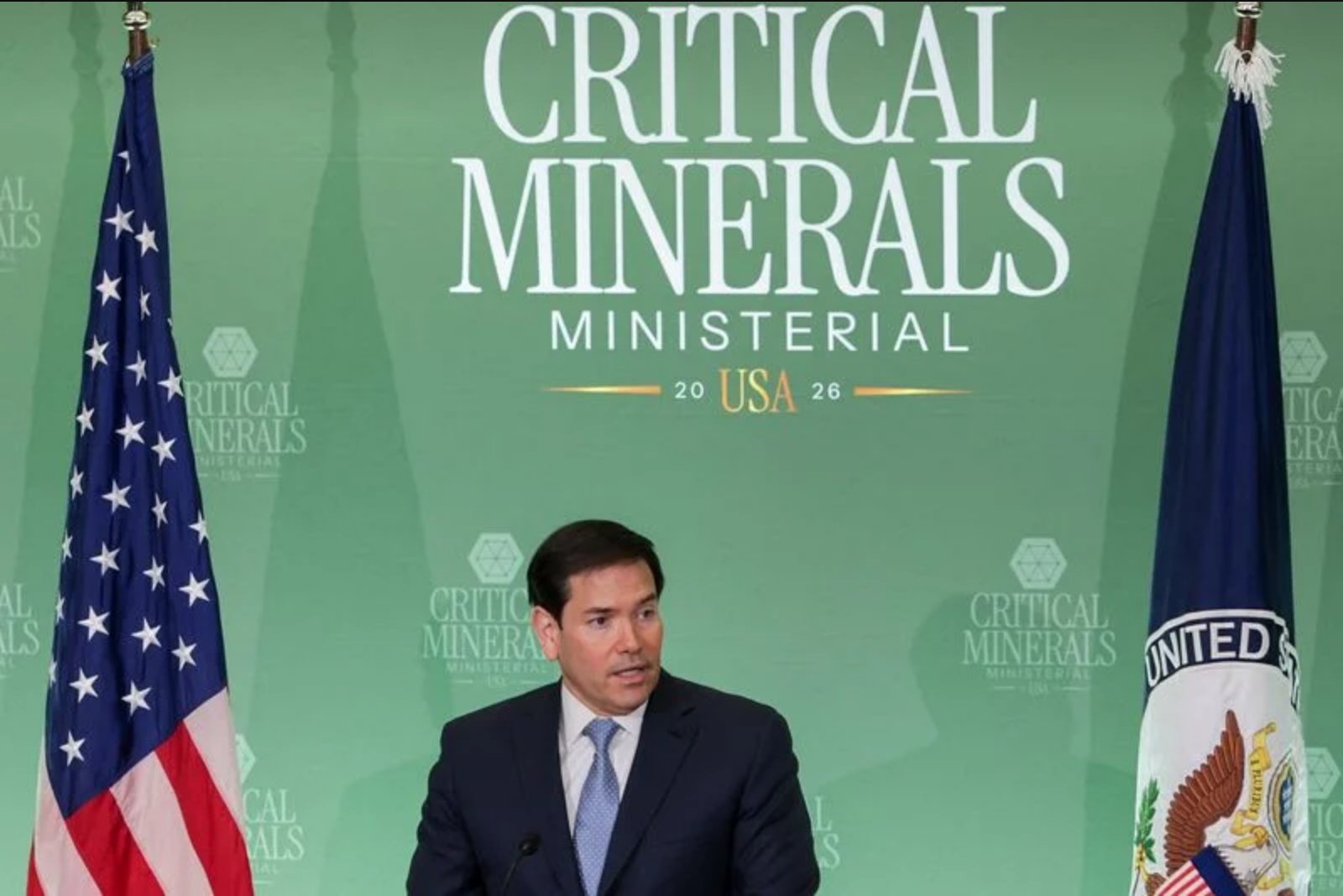
The Trump administration's effort to spur critical minerals production outside of China by shaping prices and market rules has run into resistance from G7 partners and fractured opinion across the mining industry. Officials and corporate submissions reviewed by Reuters show that negotiations to assemble a Western trading bloc have stalled over questions of cost allocation, governance and the advisability of using an AI-derived price mechanism developed for the Pentagon.
First advanced publicly by U.S. Vice President JD Vance in February, the concept aims to reduce Western dependence on China for minerals used in semiconductors, servers, military hardware and many other products. The U.S. pitch rests on the view that China became the world's largest minerals producer in part by operating at a loss, thereby suppressing prices for cobalt, lithium, nickel and other inputs and making it difficult for Western competitors to develop new supply.
Under the approach being discussed, participating countries would explore a mix of tools - including price supports, market standards, subsidies and guaranteed purchases - to incentivize and financially underpin production across multiple jurisdictions. Adjustable tariffs to protect pricing integrity were cited as one enforcement option when the idea was first outlined, and supporters argue that interventions could shore up upstream production while downstream industries scale.
But many of the minerals at issue are traded in opaque, over-the-counter markets that currently follow prices set in practice by China, due to its dominant production. Several European officials and industry participants told Reuters they are uneasy about a pricing regime that would be anchored to a U.S.-built AI model. In private negotiations, G7 members have pushed back against U.S. Trade Representative Jamieson Greer and cooled on relying on a Pentagon AI-derived price signal to underwrite an allied trading bloc, according to diplomatic sources and corporate feedback.
Key governance questions include who would be expected to pay a premium to support production, how far down the supply chain subsidies or guarantees should apply, and what institutional framework would oversee compliance and adjustments. European officials stressed the need to examine medium- and long-term impacts before committing to speedy, binding arrangements - a stance that contrasts with the preference among some U.S. officials for quicker bilateral pacts, according to sources involved in the talks.
Industry feedback to the U.S. government underscores the complexity of remaking minerals markets. More than 230 public submissions from miners, refiners and industrial customers were sent to Greer's office; those responses show broad agreement that any coordinated effort should concentrate on niche minerals rather than bulk commodities such as copper, and that downstream products including cell phones and laptops should be part of the conversation. Beyond that, however, submissions reveal sharp disagreements on mechanisms and the role that price interventions should play.
"It is a very hard thing to do, and I’m happy I’m not the one doing it," said Ashley Zumwalt-Forbes, a minerals investor who previously ran the U.S. Department of Energy’s batteries and critical minerals portfolio.
The draft U.S. proposal was prepared using an AI pricing program called the Open Price Exploration for National Security, or OPEN, which was developed by the Defense Advanced Research Projects Agency, and the paper has been delivered to the White House and the National Security Council. U.S. representatives plan to brief G7 allies on the proposal in the upcoming meeting in France, according to a U.S. official.
European and industry officials want to avoid quick commitments and would prefer to study the potential medium- and long-term market effects of price supports and similar tools before endorsing them. That cautious posture is at odds with elements of the U.S. approach, which favors time-limited measures and bilateral agreements that could be extended to additional partners later.
On governance, France - which holds the G7 presidency - and Canada have pushed for a G7-led trading bloc and have proposed creating a permanent administrative secretariat within existing multilateral bodies such as the International Energy Agency or the OECD to ensure continuity as presidencies rotate. The Trump administration, by contrast, has been hesitant to endorse a permanent secretariat, preferring more flexible, bilateral arrangements, according to sources close to the discussions.
U.S. Trade Representative Jamieson Greer has described the goal as translating approaches into concrete agreements. "What we’re trying to do is take some of these approaches and turn them into an agreement," Greer told reporters in early June at the OECD ministerial meeting in Paris. He added that price supports could be used "to protect production of critical minerals and derivative products. ... We want to phase it in. ... If other countries want to join us in that, they’re welcome to do that."
Washington aims to present a proposal for binding bilateral agreements to Japan and the European Union before the end of June, two sources familiar with the matter said. Those accords would build upon earlier action plans and could mark the first tangible step toward coordinated Western intervention in critical minerals markets.
Officials said the initial binding agreement could cover between five and 10 minerals. Heavy rare earths, antimony, graphite and tungsten are among the minerals under active consideration - each cited as subject to Chinese export bans or other restrictions.
Price-setting is a central flashpoint. The U.S. proposal envisions using the Pentagon-created OPEN AI metals program to calculate a fair price for metals by accounting for labor, processing and other costs while stripping out alleged Chinese market manipulation. But European allies are wary of adopting a U.S. AI-derived price benchmark that they fear would give Washington outsized influence over allied pricing decisions.
One European official said allies prefer a broader set of policy tools and "agile governance" to tailor interventions to specific minerals and segments of the value chain. Nicola Beer, who oversees minerals financing at the European Investment Bank, told Reuters that Europeans would favor "a price index based on real deals in the European market." She added: "The question is whether we can make these opaque pricing mechanisms more transparent, more market-driven, and less prone to manipulation." Beer noted that different parts of supply chains and sectors are governed by divergent pricing mechanisms, compounding complexity.
As an alternative to the OPEN program, an EU-funded agency, EIT RawMaterials, is working with the digital trading platform Metalshub to create pricing indexes outside of Chinese government-led pricing structures. Those indexes could extend beyond Europe to include the United States, Australia, Canada or Britain, and are designed to provide investors clearer signals on profitability without defaulting to a U.S.-generated AI price floor.
Enforcement of any trading bloc measures faces structural obstacles. Many Western economies import relatively little in the form of raw or lightly processed minerals; instead, those countries frequently import finished goods that contain minerals. Lithium carbonate, for example, is not routinely imported into the United States in bulk, even though devices such as cell phones and laptops that contain lithium-derived components are widely imported and used.
"There’s a very mixed message coming out of the U.S. right now on battery metals," said James Willoughby, a metals analyst at the WoodMac consultancy, reflecting the difficulty of aligning upstream incentives with downstream manufacturing realities.
Corporate submissions to the U.S. trade office highlight the range of views held by market participants. Greer said he was using the submissions to "help guide policy for continued negotiations" with allies. Many respondents supported focusing on niche minerals and on downstream products, but they diverged sharply on price regulation. Several prominent companies and trade groups urged caution on price-setting mechanisms.
"There’s nervousness from all sides about what to do and how different actions could affect different parts of the supply chain," said Blake Harden, a managing director focused on trade policy at the EY consultancy.
Responses to Greer’s request for input included proposals and positions from a wide variety of firms and trade associations. These ranged from General Motors - which is building what it describes as North America’s largest lithium mine with Lithium Americas - to battery-material recycler Umicore, platinum miner Sibanye Stillwater, the U.S. Chamber of Commerce, and rare earths producer MP Materials. MP Materials is noted in the submissions as the only company to have received a U.S. government price floor last July.
The National Mining Association, representing U.S. industry, advised Greer to avoid excessive price-fixing and to prioritize tax credits and other incentive-based measures. Rich Nolan, CEO of the association, said that while pricing interventions "may play a role in certain circumstances, incentive-based approaches ... are better suited to addressing challenges facing the domestic mining industry."
The debate underscores the difficulty of simultaneously aligning policy objectives across mining, refining and manufacturing sectors while navigating allied sensitivities about governance and market influence. Officials and analysts warned that any misstep could produce unintended market distortions or political blowback, while supporters contend that coordinated measures may be necessary to rebuild diversified supply chains that are no longer dependent on a single dominant producer.
As G7 ministers meet in France, the critical minerals agenda is high on the docket. The outcome of those discussions - whether allies coalesce around a U.S.-led, AI-informed price framework, favor a European-style index and secretariat, or pursue a hybrid set of bilateral and multilateral measures - will likely determine how Western governments and companies approach sourcing, processing and manufacturing decisions in the years ahead.
Impacted sectors
- Mining and mineral processing
- Semiconductor and server manufacturers
- Consumer electronics and downstream manufacturing
- Defense and related equipment supply chains