
Economy June 15, 2026 09:02 AM

Brazil Vows Strong Response to Proposed 25% U.S. Tariff

Finance minister signals diplomatic outreach and domestic policy priorities as Brasília readies its defense

By Priya Menon
Share
Twitter Reddit Facebook LinkedIn

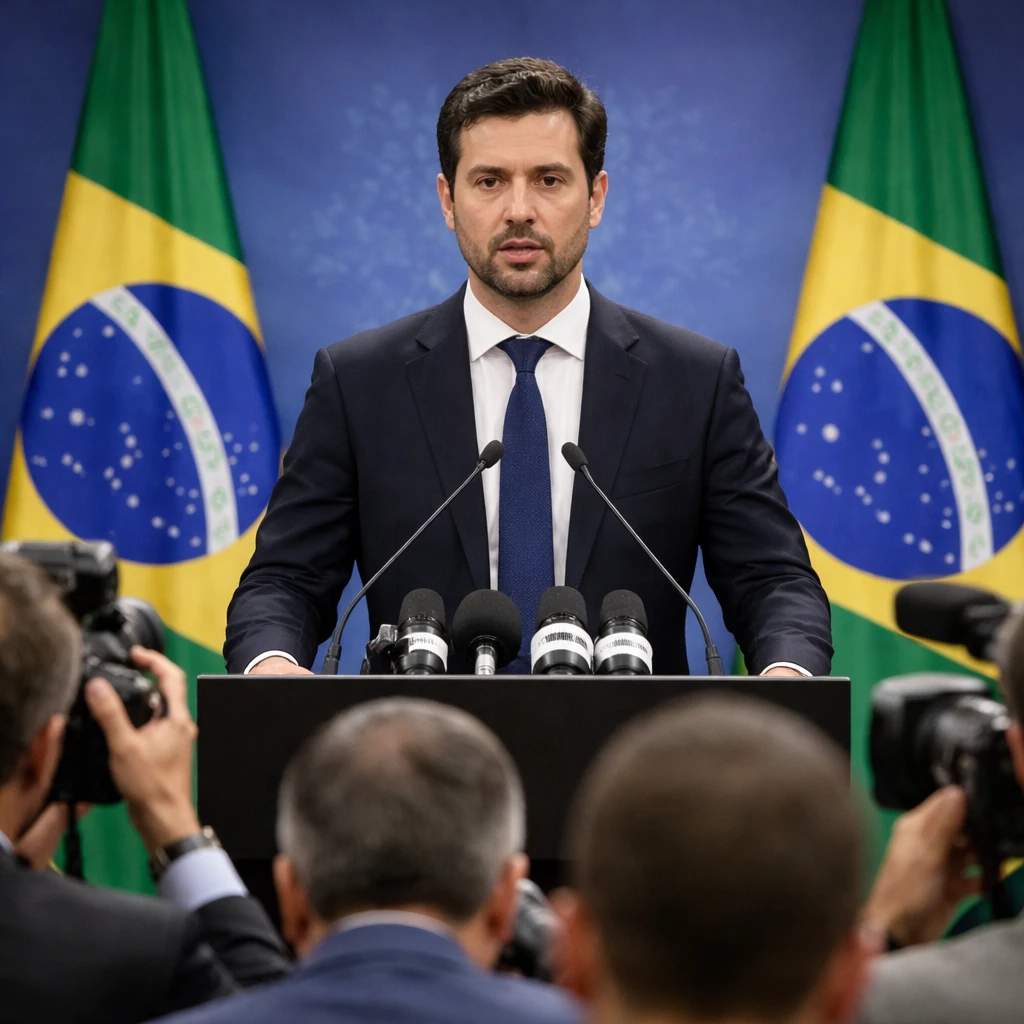
Brazil's Finance Minister Dario Durigan said the government will press its strongest legal and diplomatic arguments against a U.S. proposal to impose a 25% tariff on a broad range of Brazilian imports, and expressed hope the measure will not be enacted. Durigan described potential direct engagement between Presidents Lula and Trump and confirmed contacts between Brazilian ministers and U.S. counterparts. He also highlighted domestic issues shaping policy, including low savings, exchange rate swings, and the need to limit mandatory spending growth to free resources for investment.

Brazil Vows Strong Response to Proposed 25% U.S. Tariff
Summarize with
ChatGPT Perplexity Claude Grok Gemini

Key Points

  • Brazil will use its strongest legal and diplomatic arguments to oppose a proposed 25% U.S. tariff on many Brazilian imports - impacts trade and exporters.
  • President Lula may contact President Trump directly, and Brazilian ministers are engaging with U.S. counterparts to address the tariff proposal - affects diplomatic and trade channels.
  • Domestically, low savings and exchange-rate volatility are influencing monetary policy, and the government aims to limit the growth of mandatory spending to free funds for investment - relevant to fiscal policy and financial markets.

Brazil will mount a vigorous defense against a proposed U.S. tariff that would impose a 25% levy on many Brazilian imports, Finance Minister Dario Durigan said Monday. The minister said Brasília will present its most persuasive arguments to oppose the measure and voiced hope that it will ultimately not be put into effect.

Durigan said President Lula may reach out directly to President Trump, either through a letter or a phone call, to address the tariff matter. He also said he is available to hold talks with U.S. Treasury Secretary Scott Bessent, and noted that Trade Minister Marcio Rosa is maintaining contact with U.S. Trade Representative Jamieson Greer.

"We will defend the country to the end," Durigan said.

The finance minister used the same appearance to comment on several domestic economic concerns that are influencing policy decisions. He pointed to low household savings and volatility in the exchange rate as among the factors affecting Brazil's monetary policy stance.

Durigan emphasized the fiscal dimension of creating space for investment, saying it is important to rein in the growth of mandatory expenditures so resources can be freed for investment priorities. He reiterated that the government does not intend to alter the existing inflation target, while observing that there is scope for better coordination between the economic team and the central bank on a number of issues.


Context and government actions

The minister outlined a multi-pronged approach: legal and diplomatic challenges to the tariff proposal, potential direct presidential communication with the U.S. president, and bilateral ministerial engagement with U.S. economic officials. Durigan framed these steps as part of a concerted defense of Brazil's economic interests.

Domestic policy priorities

  • Addressing low savings levels and exchange-rate volatility as factors influencing monetary policy.
  • Containing growth in mandatory spending to create fiscal room for investment.
  • Maintaining the current inflation target while seeking improved coordination with the central bank.

Durigan's comments outlined both the external challenge posed by the proposed U.S. tariff and internal constraints shaping Brazil's economic policy choices.

Risks

  • The proposed 25% tariff could be implemented, creating direct trade costs for exporters and increasing uncertainty for markets linked to Brazilian trade flows.
  • Exchange rate volatility cited by the finance minister poses a risk to monetary stability and may complicate inflation management and corporate planning.
  • Persistently low savings levels could constrain domestic investment funding and limit policy options, affecting capital markets and long-term growth prospects.

More from Economy

IMF says global growth has held up so far, but elevated risks remain Jun 15, 2026 Builder Confidence Slips in June as Rates and Material Costs Bite Jun 15, 2026 Merz Says U.S.-Iran Peace Deal Could Help Steady Global Economy, Stresses Lebanon Clause Jun 15, 2026 Poland’s Monetary Council Seen Holding Rates Into Next Year as Geopolitical Risks Linger Jun 15, 2026 India Posts April Balance of Payments Deficit as Reporting Moves to Monthly Schedule Jun 15, 2026