
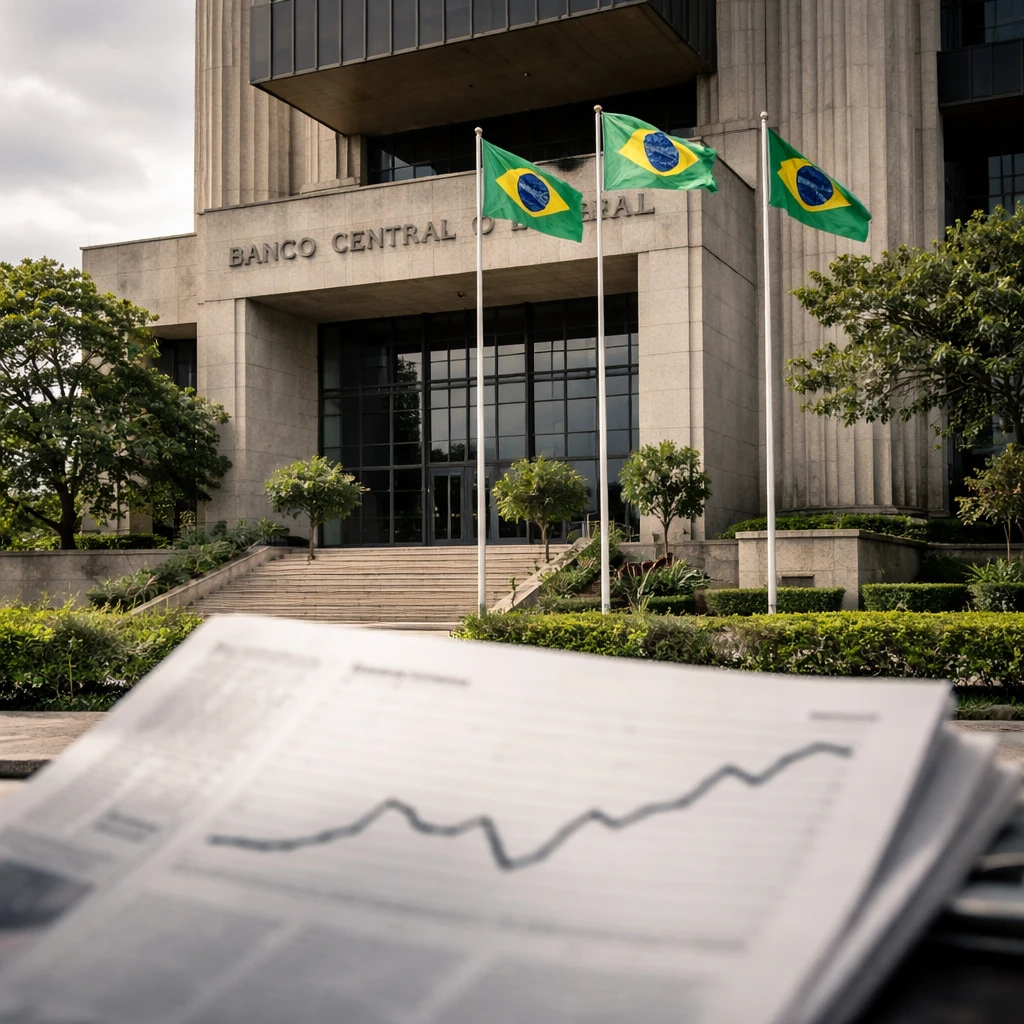
Bank of America economists now judge that Brazil's central bank has probably completed its cycle of interest-rate reductions and will maintain the Selic rate at 14.25% for an extended period, according to a research note released on Thursday.
The bank says the probability distribution for future policy moves has shifted. Where reductions were once the more likely next step, a move toward higher rates in 2027 - while not the base case - has gained non-negligible probability. The firm signals that the most recent Copom decision to cut the Selic was accompanied by a noticeably more restrictive communications stance from policymakers.
Part of the recalibration reflects Bank of America's revised U.S. policy outlook. The firm's economists now expect the Federal Reserve to deliver three 25-basis-point increases in 2026, taking the federal funds rate into a 4.25% to 4.50% range, and then hold that stance through 2027. That projected tightening in the U.S. reduces the external policy space that previously helped Brazil contemplate further easing.
Bank of America warns that this combination - a firmer global rate backdrop and a more cautious tone from Brazil's own policy committee - materially compresses the scope for renewed Selic cuts. The note also highlights that, should Brazil's inflation convergence stall, the central bank may face higher odds of needing to retighten policy rather than loosen it further.
For context within the note, Banco Central do Brasil had lowered its benchmark Selic rate to 14.25% at its most recent policy meeting.
Key takeaways
- Bank of America views the Selic as likely to remain at 14.25% for an extended period (impacts: fixed income, banking).
- The probability of a policy reversal toward a hike in 2027 has risen, reflecting a tighter external backdrop and a more restrictive domestic message (impacts: FX markets, sovereign bonds).
- Revisions to the Fed outlook - now expecting three 25bp hikes in 2026 to 4.25%-4.50% and then a hold through 2027 - reduce headroom for further easing in Brazil (impacts: cross-border capital flows, interest-rate sensitive sectors).
Risks and uncertainties
- If inflation convergence in Brazil stalls, the central bank may need to retighten monetary policy rather than pursue additional easing (risk to: consumer credit, interest-rate sensitive sectors).
- The less supportive external environment created by a firmer U.S. rate path could constrain Brazil's ability to ease, increasing volatility in FX and fixed-income markets (risk to: exporters and importers hedging costs).
This assessment is drawn from Bank of America's research note and the central bank's most recent rate decision, which set the Selic at 14.25%.