
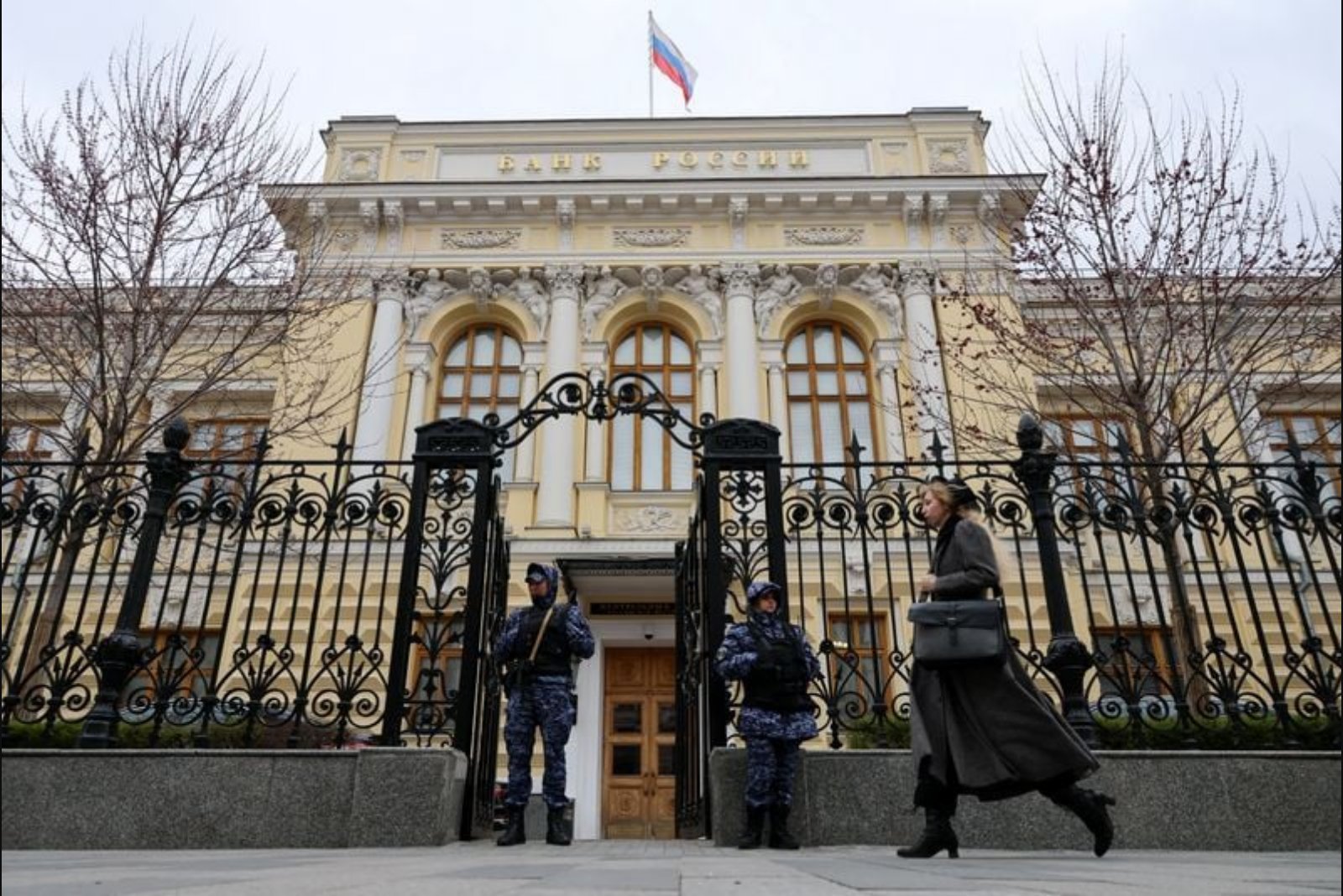
Russia's central bank signalled on June 26 that it will not introduce additional measures to shore up the banking system despite a noticeable uptick in cash withdrawals. Authorities say banks are being supplied with adequate liquidity to meet the heightened demand for physical cash, even as the amount of cash held outside the banking system has grown sharply this year.
Central bank figures show currency held outside deposit institutions has risen by 17.5% year-on-year to exceed 19 trillion roubles so far in the current year - equivalent to around $243.14 billion using the exchange rate reported alongside the data. That expansion in cash holdings is placing pressure on the banking sector, which depends on customer deposits as a core funding source.
Data from June indicate a widening liquidity deficit that reached 2 trillion roubles during the month. The central bank commented that "The current liquidity deficit level does not require additional measures. The Bank of Russia is providing the necessary volume of liquidity to banks, including taking into account demand for cash." The institution did not explicitly reference recent internet outages in its statement.
Officials have acknowledged that demand for liquidity has recently exceeded supply at market operations. After the central bank lowered its key policy rate by a cautious 25 basis points on June 19, demand at this week's repo auction outstripped the amount offered by more than one third, underscoring the immediate pressure on short-term funding.
Growth in demand for cash this year has outpaced the expansion of bank deposits. That matters because deposits have supplied much of the sector's liquidity while the central bank maintained a high key rate in its campaign to rein in inflation. With deposit growth lagging, the banking system is increasingly reliant on official liquidity provision to balance daily funding needs.
Several economists, both inside and outside Russia, have highlighted vulnerabilities they see in the banking sector. These concerns stem from a rising share of non-performing loans combined with slowing economic growth and weaker credit activity while interest rates remain elevated.
Executives within the banking industry point to policy changes and behavioural shifts that are boosting cash demand. Sberbank's First Deputy CEO, Alexander Vedyakhin, said that tax increases introduced at the start of the year to balance the budget have helped drive demand for cash, since companies - notably small firms - often make cash payments to avoid taxes. Vedyakhin warned that the spike in physical cash usage is undoing years of progress in expanding digital payments across the banking system.
Despite the pressures, the central bank noted that money market rates have stayed close to its key rate, which it interprets as evidence that overall liquidity volumes are aligned with banks' needs. Still, the regulator's own projections foresee the liquidity deficit potentially widening to 3.6 trillion roubles by year-end if current trends persist.
In a recent report accompanying those assessments, the central bank said that major banks were complying with regulatory requirements and maintained a comfortable buffer. Analysts at brokerage firms also see available collateral and assets that banks could draw on to obtain central bank funding.
As one market analyst observed: "Banks have enough assets they can use to obtain funding from the central bank. Moreover, the situation could reverse if macroeconomic conditions improve and the payments infrastructure stabilises," underscoring the conditional nature of the outlook.
The exchange rate used in reporting the rouble value of cash outside banks was $1 = 78.1455 roubles.
Contextual notes - The central bank's stance is to meet demand for liquidity as it arises rather than to deploy new stabilising measures at this time. The interplay of higher cash holdings, deposit dynamics and the outlook for bad loans will be key variables for banking-sector stability going forward.