
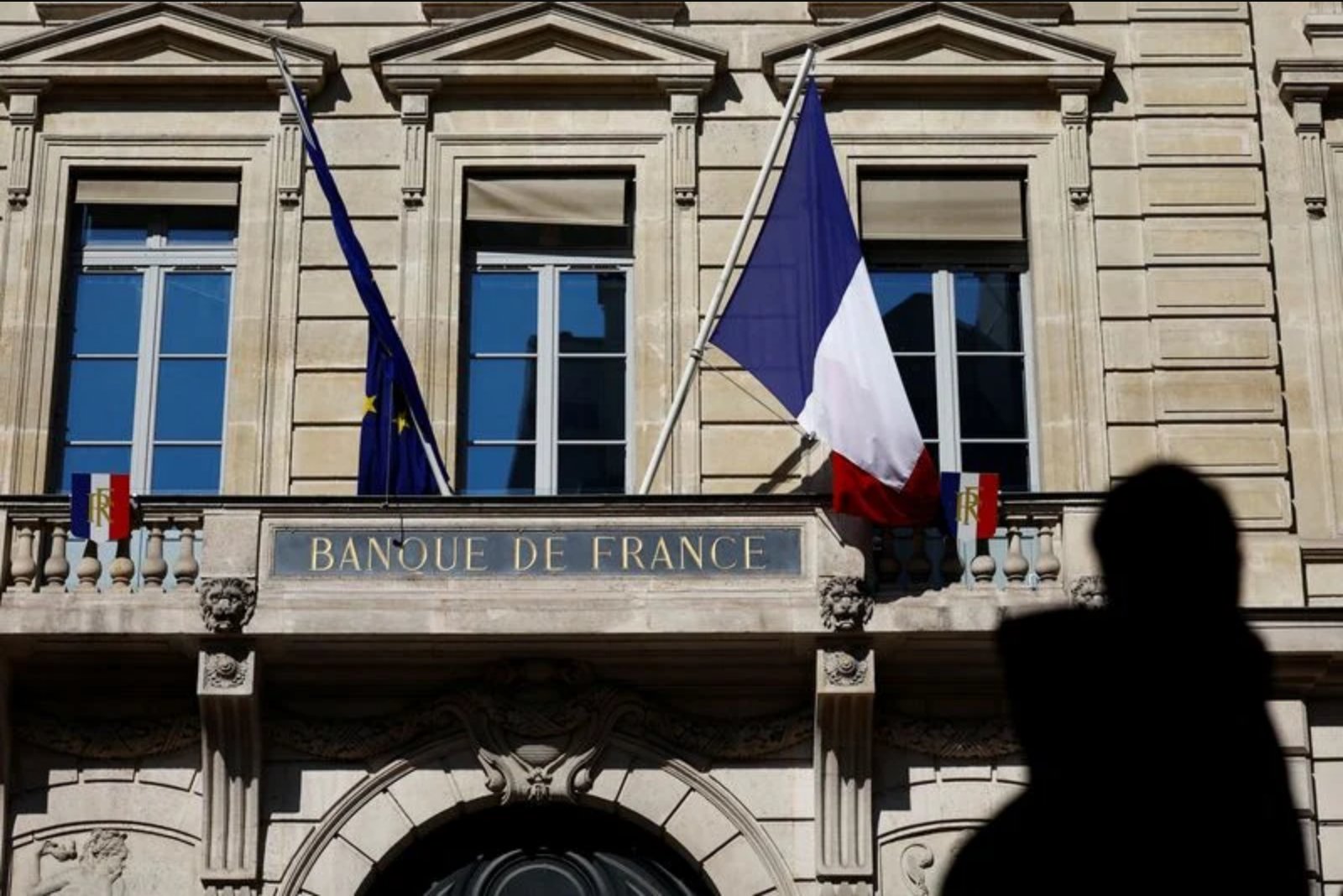
France's recovery is weaker than previously anticipated after a sluggish start to the year, the Bank of France said on Tuesday, attributing the downgrade in part to the economic effects of rising energy costs tied to the Middle East conflict. In its quarterly outlook the central bank cut its growth projection for 2026 to 0.5%, down from an earlier forecast of 0.9%.
The revision reflects two core developments: a surprise 0.1% contraction in GDP in the first quarter and a marked increase in global energy prices since the outbreak of the Iran war at the end of February. The central bank emphasized that its baseline projections were constructed using oil futures prices as of May 21 and therefore do not incorporate subsequent moves in the Middle East, including a deal to halt the conflict that helped push oil prices down to three-month lows.
Following the first-quarter pullback, the Bank of France expects growth to be flat in the current quarter. That said, its monthly business sentiment survey, which covered 8,500 firms, reported that executives saw signs of a pickup in June relative to May, offering some tentative signs of stabilisation.
Looking further ahead, the central bank now anticipates growth will pick up to 0.9% in 2027 - a modest upward revision from a previous forecast of 0.8% - and then to 1.2% in 2028, as consumer spending and business investment rebound. Those medium-term gains are conditioned on price pressures abating.
On inflation, the Bank of France raised its near-term projection. It now expects average inflation of 2.5% in 2026 before easing to 1.7% in both 2027 and 2028, on the assumption that energy prices normalise. By comparison, in March the bank had forecast inflation at 1.7% for 2026, 1.4% for 2027 and 1.6% for 2028.
High inflation is eroding household purchasing power this year and is weighing on consumption, the bank said, with expectations that consumption will recover next year as price pressures subside. Given the heightened geopolitical uncertainty, the central bank also presented alternative, less favourable scenarios that pointed to weaker growth and higher inflation than the baseline forecast.
Context and caveats
The bank stressed that its outlook remains hostage to geopolitical developments in the Middle East. Because the baseline uses market-based oil futures as of May 21, more recent diplomatic or market developments that affect energy prices are not reflected in the figures presented. The alternative scenarios included in the report illustrate how further shocks to energy prices or prolonged geopolitical tension could generate weaker growth coupled with higher inflation.
Overall, the Bank of France forewarns of a fragile near-term path for the economy with a gradual recovery projected in the medium term contingent on stabilising energy markets and easing price pressures.