
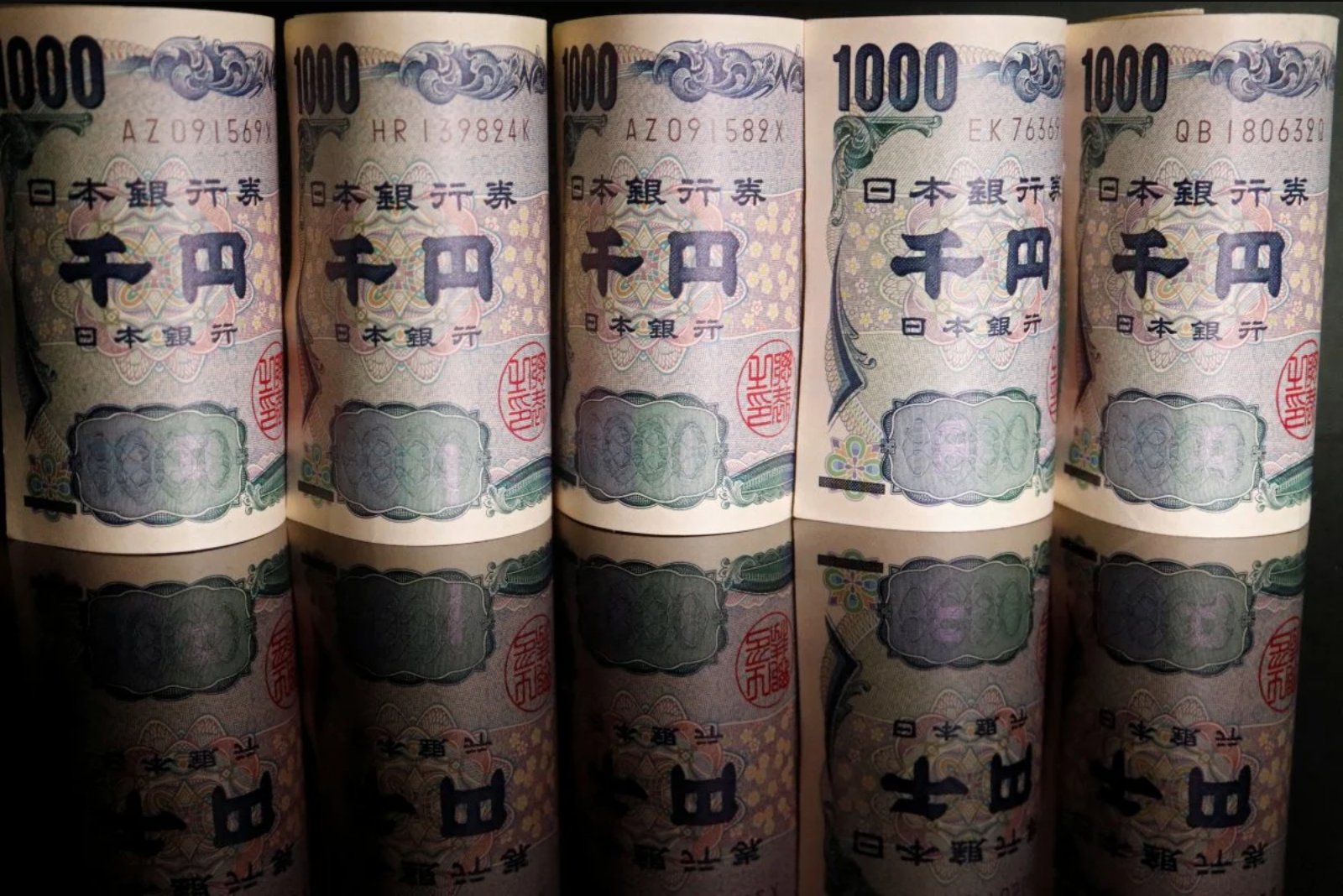
Asian foreign-exchange markets closed the week with broad strength in regional currencies, led by a notable rally in the Japanese yen. The dollar came under fresh selling pressure after comments from Federal Reserve Governor Christopher Waller that he could back keeping policy rates unchanged should inflation data continue to show easing.
In Tokyo trading, the USD/JPY pair was quoted at 156.36, up 0.3% on the day, though the yen had earlier firmed to 155.25 per dollar - a level close to the 155.2 area seen last month following July's joint intervention by Japan and the United States. The U.S. Dollar Index was essentially flat at 99.06, yet remained positioned for a roughly 0.7% decline over the week.
Measured over the week, the yen was set to rise about 2.5%, marking its largest weekly advance since late July when authorities carried out rare coordinated action to support the currency. Market participants have watched the move closely, noting that the recent appreciation has not been linked to any clear, confirmed instances of fresh official intervention.
Instead, analysts and traders have pointed to shifting expectations around Bank of Japan policy as a key driver. The BOJ boosted its policy rate to 1% in June, and market pricing has increasingly reflected a meaningful chance of another rate increase at the BOJ's September 17-18 policy meeting. Board member Hajime Takata this week argued that the central bank should decide rates meeting by meeting rather than adhere to a fixed semiannual pace.
Japan's top currency diplomat, Atsushi Mimura, reiterated on Friday that he was alert to exchange-rate moves and maintained regular contact with U.S. authorities, comments that kept the prospect of further yen-buying intervention in market attention. The recent gains have brought the currency close to levels last seen immediately after the July action.
On the U.S. side, the dollar's slide accelerated after Governor Christopher Waller described incoming data as showing signs of disinflation and said he would favor holding rates steady this month if upcoming reports reinforced that trend. That shift in commentary trimmed the implied probability of a September rate increase to around 50% from roughly 63% one day earlier.
The market reaction unfolded even after earlier, more hawkish signals from Fed Chair Kevin Warsh and a rise in expectations for a September move. Traders are now awaiting Friday's U.S. payrolls report for further guidance. Economists are modeling a modest recovery in job creation, forecasting 56,000 new positions in August after July's 23,000 decline, with the unemployment rate projected to remain at 4.1%.
A weaker-than-expected payrolls print would likely further reduce the odds of additional Fed tightening, while a stronger reading would afford the Federal Reserve more latitude to consider further rate increases.
Other major Asian currency pairs were mixed but broadly influenced by the softer dollar and domestic central-bank moves. The USD/CNH and USD/CNY traded largely flat, with the yuan receiving some support from the weaker dollar even as investors weighed more granular private-sector services data against a softer official economic backdrop.
In the Antipodes, the USD/NZD fell about 0.3% to near 1.70, implying a New Zealand dollar close to $0.59. The kiwi has recovered after the Reserve Bank of New Zealand's midweek 25-basis-point rate increase to 2.75%, a decision whose accompanying guidance was interpreted as less hawkish than some investors had anticipated.
The Australian dollar also strengthened modestly against the greenback; the USD/AUD dipped toward 1.39, leaving the Australian dollar trading around $0.72. Australia reported quarterly GDP growth of 0.4% in the June quarter and annual growth of 2.1%, while July's trade surplus was little changed from June.
Bank Negara Malaysia held its Overnight Policy Rate at 2.75% this week, citing an easing of inflation that is nonetheless likely to remain elevated as energy cost pass-through continues to affect consumer prices. Following the decision, the USD/MYR pair gained about 0.16% to 4.04.
Elsewhere, the USD/KRW fell roughly 0.05% to 1,355.65, and the USD/SGD ticked up about 0.06% to 1.27. The USD/INR posted marginal gains, extending the rupee's weekly rally.
With policy calendars in Japan and the United States in focus, market participants head into next week watching central-bank developments and the U.S. employment report for fresh impetus. The combination of central-bank speeches, meetings and economic releases leaves a range of potential near-term outcomes for currency markets.