
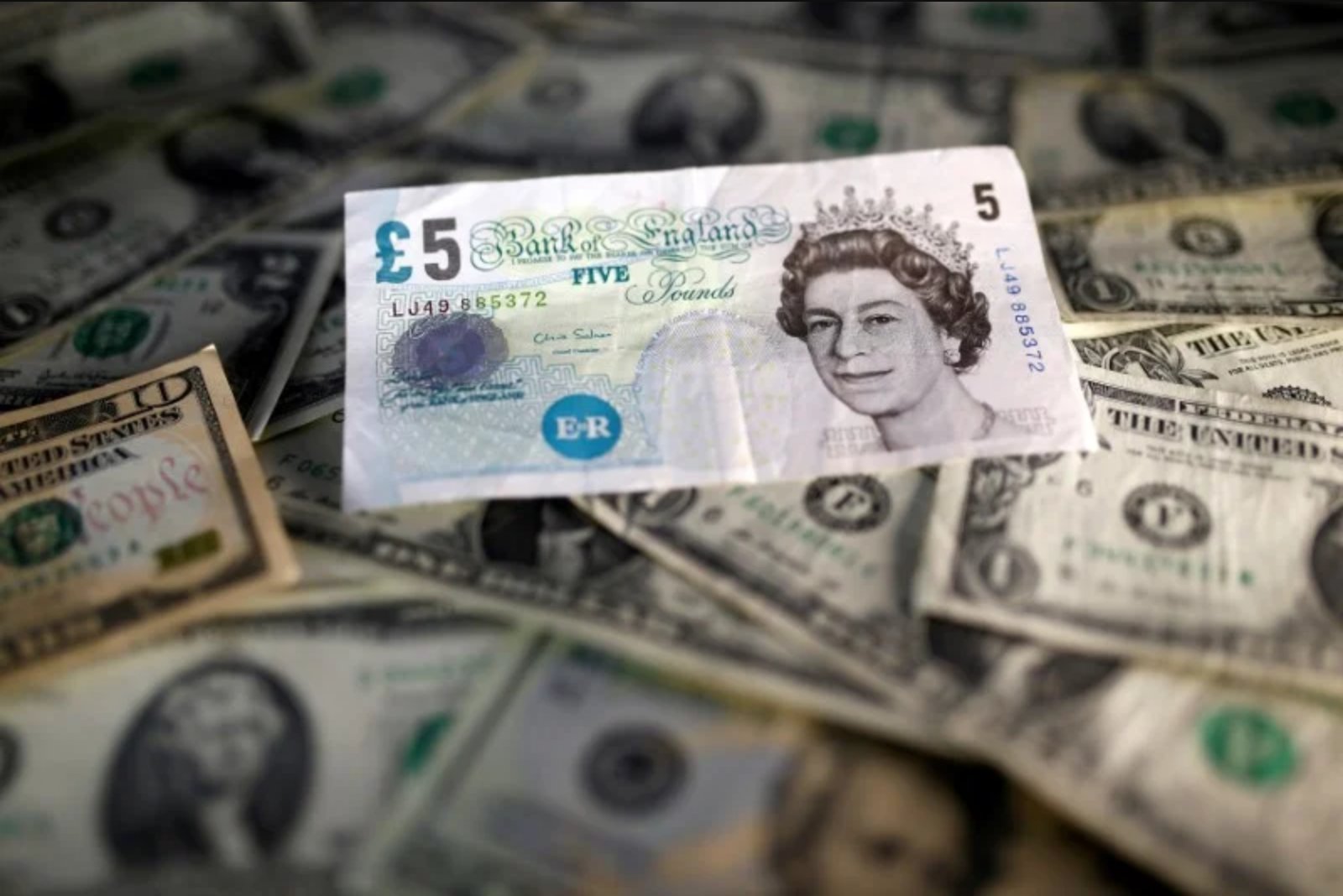
Sterling moved higher on Friday while the euro also posted gains, as investors pared back expectations for imminent US rate tightening after dovish comments from Federal Reserve Governor Christopher Waller. The softer dollar provided a tailwind to G10 pro-growth currencies even as worries about UK gilts and public finances lingered.
On currency screens, GBP/USD traded up at 1.3545, a rise of 0.15%, while EUR/USD was quoted at 1.1628, up 0.02%, at 03:48 ET (07:48 GMT). Those moves came alongside a 5 basis-point decline in short-dated US yields, and market-implied odds of a September Fed hike moved to 50%.
Chris Turner, Global Head of Markets and Regional Head of Research for UK & CEE at ING, said market participants are increasingly treating any future Fed tightening as likely to be modest. "Given the hot debate over whether the Fed raises rates at all, it looks like investors are concluding that any Fed tightening cycle will be very modest and not enough to derail a relatively benign investment backdrop," he said, adding that this view creates "a mildly negative backdrop for the dollar in the short term." Turner also noted that "barring a very strong NFP number today... we could see the dollar drifting a little lower."
Waller’s comments on Thursday were read as more dovish than market participants had anticipated, shifting the onus onto a hot August inflation print to justify a hike rather than reinforcing what the article described as Fed Chair Kevin Warsh’s hawkish tone from a week earlier. With futures pricing now reflecting a 50% chance of a September move, the focus for markets is the US non-farm payrolls report, where consensus sits at +55,000, a so-called "whisper" figure is nearer +30,000, and unemployment is expected to remain at 4.1%.
ING argued that the longer-lasting market reaction is likely to be driven by inflation readings rather than labour data, and the bank’s base case remains a 25 basis-point Fed hike over time, leaving the dollar "relatively stable into year-end."
Despite sterling’s advance, ING and market commentary suggested that the move is not underpinned by UK economic fundamentals. EUR/GBP has been consolidating after moving above 0.86 in the prior session, a shift the bank associated with the recent gilt sell-off and concerns about strained UK public finances. The political calendar could add to focus on fiscal policy: new Chancellor John Healey is expected to deliver his first major political speech early next week, and he is widely expected to emphasise fiscal responsibility.
Monetary-policy related developments in the UK are also in focus on Friday, with the Bank of England’s Decision Maker Panel survey due and Governor Andrew Bailey scheduled to speak at 10:50am CET. ING cautioned that it remains "too early to get the all-clear on inflation," noting that up to 60 basis points of further BoE tightening were still priced into UK money markets.
The euro has been retracing last week’s sell-off that followed a hawkish speech by Kevin Warsh, drifting back toward the roughly 1.1650 level it traded at before that talk, helped by broad dollar weakness against pro-growth G10 currencies. ING flagged a potential political upside risk in Germany: Sunday’s Saxony-Anhalt regional elections were described as a "left-field risk," where strong gains for the AfD could raise questions about Chancellor Friedrich Merz’s government stability.
Looking ahead, ING forecast EUR/GBP to trade in a 0.8550-0.8600 band before eventually breaking higher toward 0.87 in the fourth quarter, a path the bank said was conditional on the Bank of England’s tightening cycle stalling further.
Market context
- Dollar weakness followed dovish Fed commentary from Governor Christopher Waller.
- Short-dated US yields fell 5 basis points and September Fed hike odds stood at 50%.
- US non-farm payrolls are the next major data release, with consensus and whisper estimates at +55,000 and +30,000 respectively, and unemployment seen at 4.1%.
Near-term watchlist
- UK political events including Chancellor John Healey’s anticipated speech and the BoE Decision Maker Panel survey and Andrew Bailey’s remarks.
- German regional elections in Saxony-Anhalt as a potential political risk for euro sentiment.