
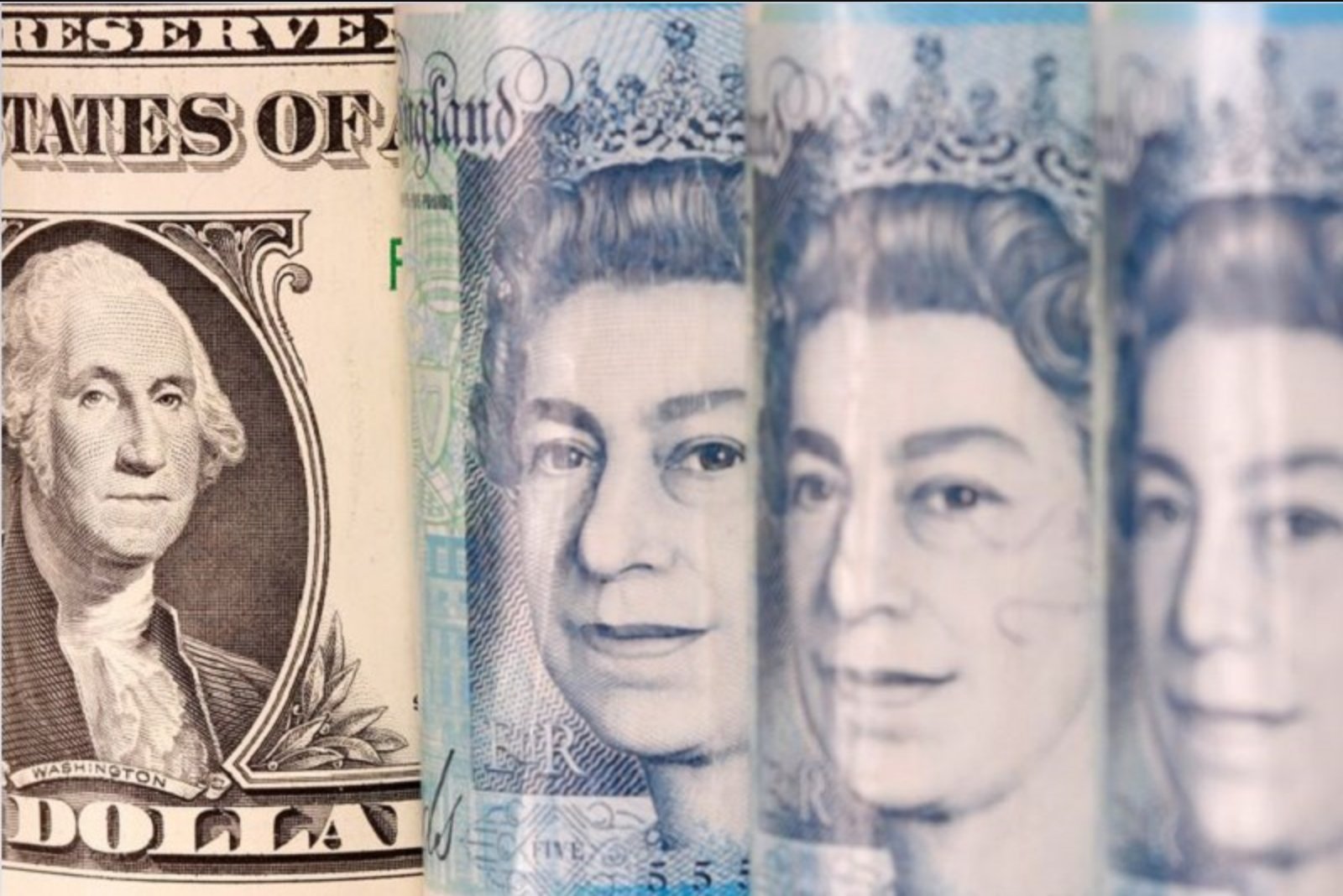
Sterling traded lower against the U.S. dollar on Tuesday as the greenback's broad strength more than offset reduced political uncertainty after Keir Starmer announced his resignation as prime minister.
After a rally in the prior session on hopes of an orderly and rapid leadership handover, the pound surrendered ground as the dollar firmed and the latest UK flash PMI reading disappointed market expectations.
At 08:33 ET (12:33 GMT), GBP/USD was down 0.26% at 1.3219. EUR/USD also moved lower, trading 0.33% weaker at 1.1390.
Economic indicators pointed to a continued malaise in the private sector. The flash Composite Purchasing Managers Index for June slipped to 49.4 from 49.7 in May, marking a 14-month low and falling below the 50 threshold that distinguishes expansion from contraction. The report signaled the UK private sector contracted for a second consecutive month.
The deterioration was concentrated in services activity. The Services Business Activity Index declined to 48.7 from 49.3, its weakest reading in 41 months. New business volumes decreased at the fastest pace in 14 months and firms cut staff for the 21st month in a row, underscoring ongoing weakness in consumer-facing areas of the economy.
Manufacturing offered a mixed picture. Output rose to 53.6 in June from 52.2 in May, a 21-month high driven in part by customers bringing orders forward ahead of anticipated price increases. However, the overall Manufacturing PMI eased to a three-month low of 53.1 from 53.9, while the pace of new order growth slowed to a six-month low - a pattern that suggests the inventory-led boost to production may be fading.
Commenting on the PMI release, Chris Williamson, chief business economist at S&P Global Market Intelligence, said the economy had "contracted for a second successive month, albeit at only a 0.1% rate," and pointed to rising input cost pressures tied to the Middle East conflict alongside a squeeze on consumer-facing services as headwinds on activity. He added that the UK's "unstable political environment" was weighing on business confidence and delaying spending decisions.
The political landscape shifted this week when Keir Starmer announced his resignation as Labour leader and prime minister, saying he had accepted his parliamentary party's verdict "with good grace." He will remain in office as a caretaker prime minister while a leadership contest is conducted. Nominations are scheduled to open on 9 July, and a successor is expected to be chosen before MPs return from the summer recess in September.
Greater Manchester mayor Andy Burnham has emerged as the front-runner to succeed Starmer. His position was strengthened by an endorsement from former health secretary Wes Streeting, who confirmed he would back Burnham's bid rather than run himself. That development reduced the likelihood of an extended, market-disrupting contest.
ING strategists highlighted Streeting's endorsement as a principal reason markets are pricing in a quicker and less disruptive transition than initially feared. Some market participants are now flagging the possibility of a new prime minister being in place by mid-July. ING also noted growing speculation that Streeting could be offered the chancellorship in a Burnham administration, a pairing the broker views as relatively more market-friendly than alternatives such as Ed Miliband.
Despite this political easing, ING cautioned that sterling's relief rally may have limited potential to continue. The strategists flagged downside risks for the pound given the Bank of England's dovish policy lean, suggesting that political clarity alone may not be sufficient to sustain gains if monetary policy remains accommodative.
For currency markets, the interplay of persistent U.S. dollar strength and mixed UK macrodata has proved decisive in pushing sterling lower on the session. The PMI readouts point to ongoing stress in services and a potential fading of manufacturing's recent momentum, while the political transition, though trending toward a quicker resolution, leaves open questions about the pace of policy and confidence recovery in the near term.