
The Islamic Revolutionary Guard Corps (IRGC) said on Tuesday that Iranian ballistic missiles targeted a U.S. air base located in Jordan and called on the Jordanian government to dismantle American military installations on its soil.
In a statement carried by Fars News, the IRGC addressed Jordanians directly, saying the group bore no enmity toward the kingdom and expressing admiration for "the noble people" of Jordan, whom it described as sympathetic to the plight of the Palestinian people. The statement included an explicit call for the removal of U.S. bases from Jordan.
Separately, Jordan’s armed forces reported that they had intercepted and shot down four missiles after those projectiles entered Jordanian airspace from Iranian territory, according to the Jordanian state news agency.
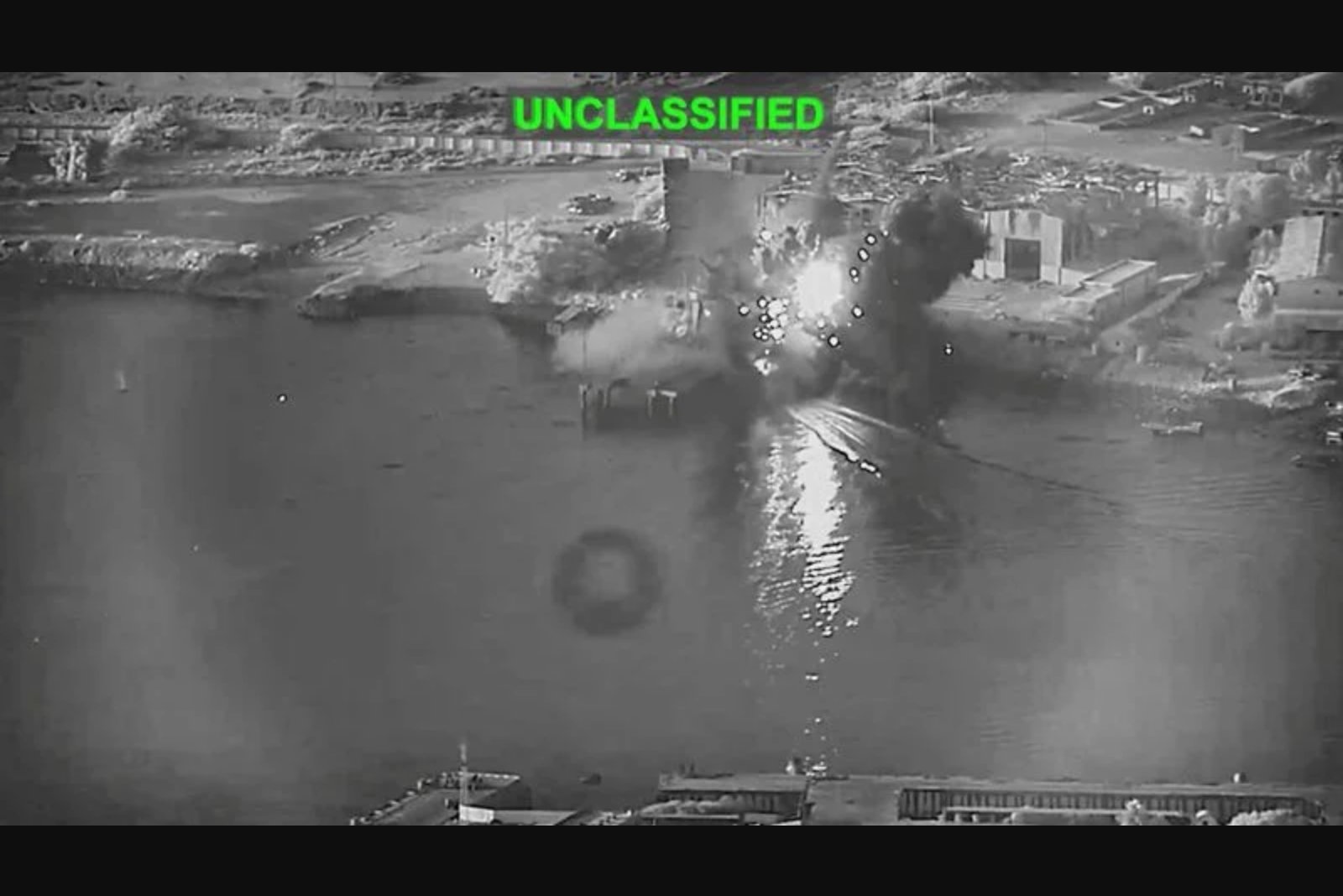
U.S. Central Command said that U.S. forces had completed a wave of strikes on Iran that began earlier in the day under orders from President Donald Trump. The series of strikes lasted five hours and represented the third consecutive night of U.S. attacks on Iranian targets since operations resumed. The announcement characterized the action as the latest of multiple days of hostilities.
Iranian media reported that strikes struck a number of cities and said four people had been wounded, with rescue operations underway in the affected areas. The IRGC statement and the Iranian media reports did not provide additional detail about the specific locations hit or the nature of the targets.
The military exchanges follow a broader escalation of measures and rhetoric tied to the Strait of Hormuz. Iran had said over the weekend that it was closing the strait, and U.S. President Donald Trump announced a reinstated naval blockade of Iranian shipping while proposing a 20% fee to be charged for guarding passage through the strait.
On the social platform Truth Social earlier on Monday, President Trump said: "The Hormuz Strait is OPEN, and will remain OPEN, with or without Iran. We are reinstating THE IRANIAN BLOCKADE." He added that the United States would be known as "THE GUARDIAN OF THE HORMUZ STRAIT" and that, as a matter of fairness, the U.S. would be reimbursed at a rate of 20% on all cargo shipped.
Iran’s top joint military command rejected the notion that the U.S. could determine the future status of the waterway. Iranian Foreign Minister Abbas Araqchi wrote on X that Tehran considered itself the guardian of the strait and would remain so "forever," and responded to the proposed fee by saying: "20% is of course too much. We will be fair."
Before the current conflict began in February, roughly one-fifth of global oil and gas traffic transited the Strait of Hormuz daily, delivering more than 15 million barrels of fuel to world markets valued at least $1.2 billion. The figures cited in reports note that, if a 20% surcharge were applied by the United States on all cargo, it could generate approximately $240 million per day in additional revenue.
The U.N. shipping agency has pushed back against the concept of mandatory fees for strait transit, saying it opposes any charge for straits used in international navigation and that there is no legal basis for imposing such tolls on vessels exercising passage rights.
Market reaction to the latest hostilities was immediate. Oil prices rose nearly 3% on Tuesday to reach their highest levels in about four weeks, responding to intensified uncertainty around shipping in the Strait of Hormuz and to the U.S. decision to reimpose its naval blockade of Iran.
Reports also emerged of attacks on shipping in and near the strait. The United Arab Emirates Ministry of Defense said on Monday that Iranian cruise missiles struck two Emirati oil tankers while they were transiting the southern lane of the strait in Omani territorial waters. In a related message, the United Kingdom Maritime Trade Operations (UKMTO) agency reported that a tanker had been struck by an unknown projectile roughly 40 nautical miles northeast of Oman’s Qalhat. Available accounts did not confirm whether the UKMTO incident referred to the same event the UAE Ministry of Defense described.
The IRGC asserted that two "offending" supertankers had been hit and disabled in the strait after allegedly ignoring repeated warnings and switching off their navigation systems, according to Iranian media. That statement did not identify the vessels or indicate whether they matched the tankers cited by the UAE. The IRGC also accused the U.S. of inciting vessels to use what it described as an illegal route and warned that cooperating with what it called the "aggressor enemy" would cause damage, delays in reopening the waterway and a global energy crisis.
On the same topic, the U.S. Navy-led Joint Maritime Information Center announced that a blockade of Iran would take effect at 2000 GMT on Tuesday. The center said the blockade would apply to all vessel traffic off the Iranian coast regardless of flag and would cover the entire Iranian coastline, including ports and oil terminals. It added that the measure would not impede neutral transit passage through the strait to or from non-Iranian destinations and that humanitarian shipments would be allowed subject to inspection.
The current flare-up follows a pattern of exchanges earlier in the conflict timeline. The U.S. and Israel launched strikes on Iran on February 28, after which Iran responded with strikes on Israel and Gulf states that host U.S. bases. Reports attribute thousands of deaths and the displacement of millions to the broader set of U.S.-Israeli strikes on Iran and Israeli military actions in Lebanon occurring during the war.
At present, specific operational details about the Iranian missile strikes on the U.S. base in Jordan, the precise targets hit during the U.S. five-hour strikes, and the full extent of damage to vessels in the Strait of Hormuz remain limited in official public statements. Rescue operations in Iran were reported ongoing where injuries were cited.