
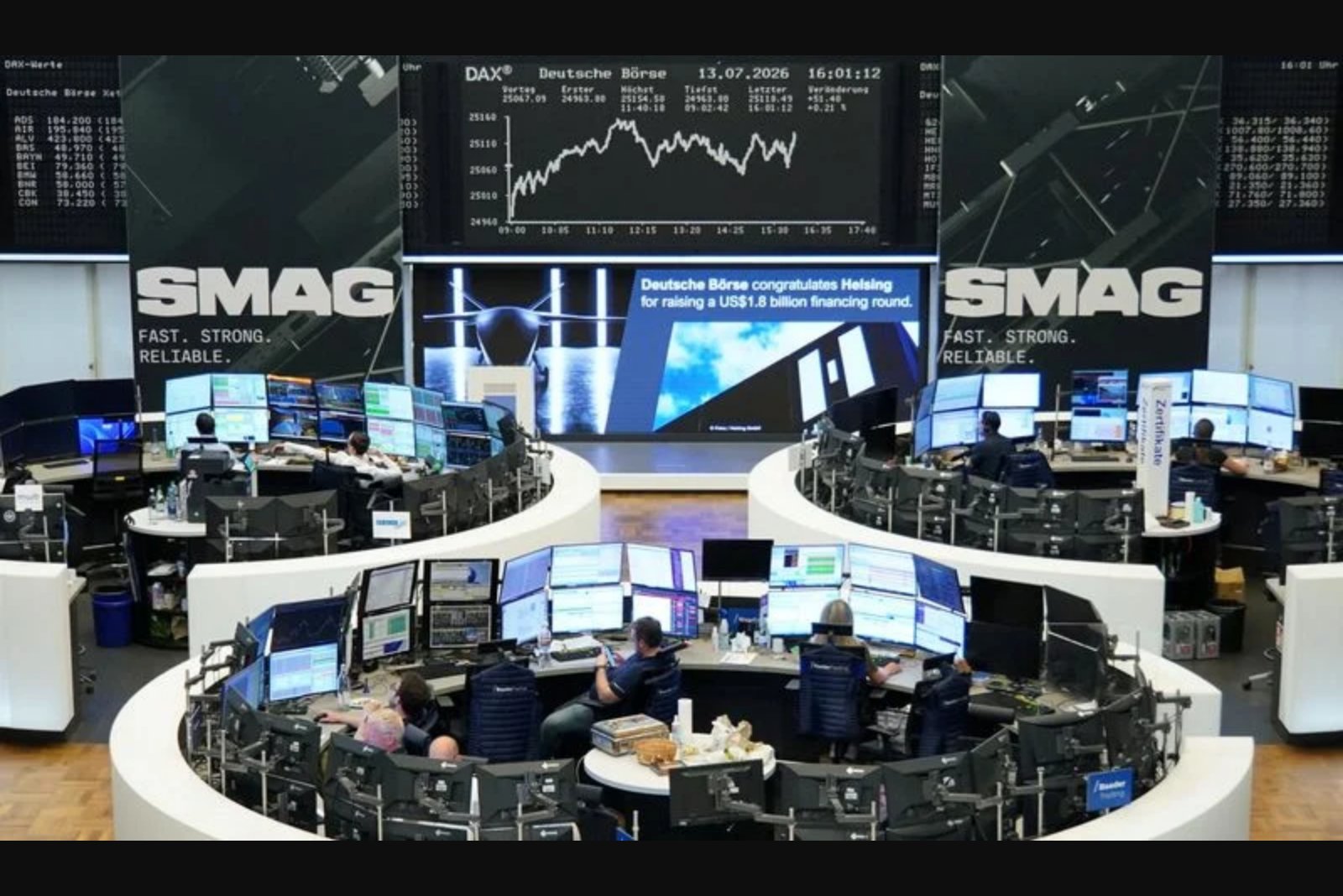
Summary: European equities opened in the red on July 14 as escalating U.S.-Iran tensions unsettled investors. The pan-European STOXX 600 slipped 0.4% to 638.17 points by 0810 GMT, while a jump in oil prices supported energy stocks even as travel and leisure names led declines. Market attention was focused on quarterly reports from firms such as BP and Ericsson to assess possible corporate impacts from the renewed conflict.
Markets reacted to a fresh round of U.S. military action and policy announcements affecting regional shipping. Brent crude prices rose sharply, climbing 2.6% to $85 a barrel after reports that the U.S. carried out a third straight night of strikes against Iran and that President Donald Trump announced a blockade of Iranian shipping together with a 20% fee on cargo transiting the Strait of Hormuz.
The rise in oil weighed into travel-related stocks and supported energy names. Travel and leisure was the weakest sector, falling about 2%, with fuel-sensitive carriers Air France and Lufthansa each down roughly 2%. By contrast, energy stocks were the top-performing sector, up 1.4% as higher crude buoyed the group.
Investors also scrutinized corporate quarterly results for signals about resilience in the face of the geopolitical shock. Ericsson tumbled 8% after the Swedish telecom equipment manufacturer reported quarterly sales that slightly missed estimates and issued a warning about rising component costs. The stock move reflected investor concern over margin pressure from cost inflation.
London-listed BP moved higher, gaining 3% after the oil major said its oil trading results are expected to be slightly higher in the second quarter versus the prior quarter. Earlier in the year BP had benefited from a previous surge in oil prices during the conflict with Iran.
Some equity moves were more extreme: Evotec plunged around 30% after the German drug discovery firm cut its 2026 outlook, citing delays to large strategic partnerships now expected to begin contributing in 2027.
For reference, intraday ticker moves included: BP+2.97% LHAG-2.26% AIRF-2.75% ERICb-6.96% LCO+3.51% EVTG-32.94% STOXX-0.65%.
The geopolitical developments were noted as an additional complication for companies and investors to factor into assessments of economic and corporate prospects for the remainder of the year, particularly because they come just weeks after a Middle East agreement had appeared to end hostilities.
Market context and investor focus
With oil prices higher and certain corporates reporting weaker-than-expected results or revised guidance, market participants were balancing the supportive effect of energy gains against pressure on travel firms and cost-sensitive manufacturers. Quarterly updates from major firms were treated as near-term indicators of corporate health amid the renewed tensions.