
Commodities November 21, 2026 06:42 PM

COP31 negotiators unveil revised deal text as summit moves toward approval

Late-night package presented in Antalya aims to reconcile fossil fuel concerns and adaptation finance ahead of early-morning approval session

By Ajmal Hussain
Share
Twitter Reddit Facebook LinkedIn

Delegates at COP31 in Antalya, Turkey, moved closer to finalizing a climate agreement after the COP presidents put forward a revised negotiating text late on Sunday. The package, the product of intensive consultations led by Australia and Turkey with nearly 200 delegations, refines an earlier draft that drew criticism for omitting references to ending fossil fuel use. Delegates were given a short deadline to raise objections before a scheduled approval session.

COP31 negotiators unveil revised deal text as summit moves toward approval
Summarize with
ChatGPT Perplexity Claude Grok Gemini

Key Points

  • A revised COP31 negotiating text was presented late on Sunday in Antalya; COP31 President Murat Kurum stated the text is one that all parties can accept.
  • The updated package refines an earlier draft that had been criticised for lacking ambition, particularly because it did not reference ending fossil fuel use; organisers say those concerns have been addressed.
  • Negotiators extended talks past a Friday deadline into Saturday and early Sunday; nearly 200 delegations participated in intensive consultations led by Australia (as lead) and Turkey (as host).

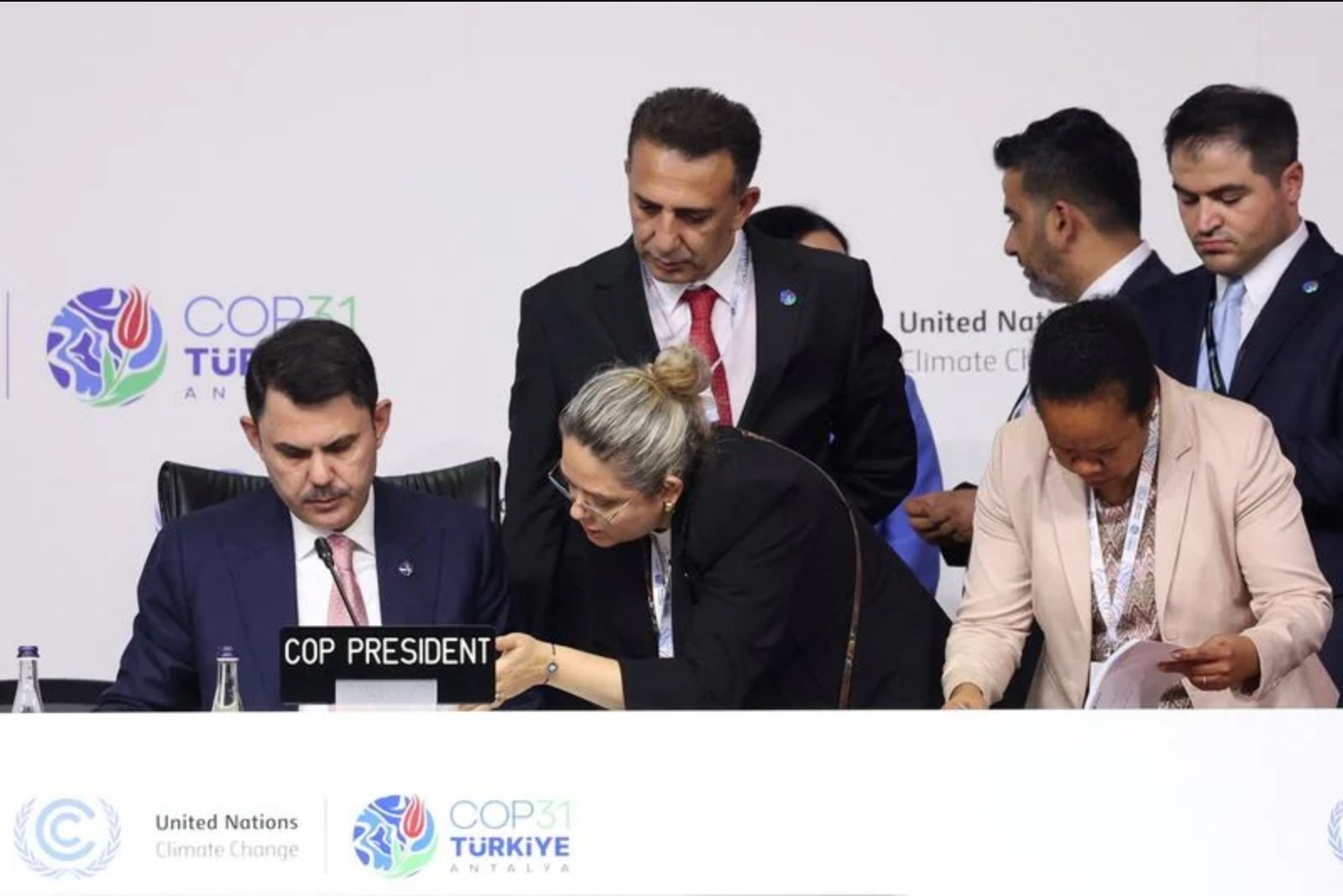
Negotiators at the COP31 climate summit in Antalya, Turkey, presented a new negotiated text late on Sunday as organisers sought consensus on next steps to tackle global warming.

COP31 President Murat Kurum addressed a late-night plenary and said the updated package was one that "all the parties can agree upon." He told the assembly the conference would reconvene the following morning to proceed with approval of the deal.

Talks had already extended well beyond an initial Friday deadline, continuing through Saturday and into the early hours of Sunday as delegations worked to resolve outstanding disagreements. The revised text is a refinement of an earlier draft that faced criticism from some parties for what they described as a lack of ambition, notably because it did not include any explicit call to end the use of fossil fuels.

Kurum said the new version addressed concerns linked to fossil fuels and also tackled issues related to financing adaptations for developing countries. The updated package emerged after intensive consultations involving Australia - which has led the negotiations - Turkey - the host country - and nearly 200 delegations representing a wide range of nations.

Under the timetable set at the close of that late-night session, delegations were given until 0300 GMT to register any objections to the proposed text. A plenary was scheduled at 0600 GMT to begin the formal approval process.

Australia's role in steering the talks, backed by Turkey, involved attempting to strike a balance between the needs of countries most vulnerable to climate impacts and the concerns of countries whose economies are reliant on producing or consuming fossil fuels. That balancing act formed a central part of the diplomatic task described by organisers.

The summit takes place at a critical moment: it is the first COP since the UN's environmental body confirmed that global temperature rise was set to pass the 1.5 degrees Celsius (2.7 degrees Fahrenheit) threshold that countries had previously sought to avoid. The prospect of exceeding that limit is a central backdrop to the negotiations and underlines the stakes delegates say they face.


Procedural timeline and next steps

  • Revised text presented late on Sunday in a plenary setting.
  • Delegations allotted until 0300 GMT to raise objections.
  • Approval session scheduled for 0600 GMT to begin confirming the deal.

Risks

  • Objections from delegations before the 0300 GMT cutoff could delay or alter approval - this uncertainty affects international climate policy and the energy sector.
  • Balancing the interests of climate-vulnerable nations with those dependent on fossil fuel production or consumption could result in compromises that some parties view as insufficient - an outcome with implications for climate-focused investment decisions in energy and infrastructure.
  • The confirmation that global temperatures are set to surpass 1.5 degrees Celsius raises uncertainty over the adequacy of measures in the deal, which may affect market expectations for emissions regulation and adaptation financing.

More from Commodities

UBS Sees Gold Under Pressure Into Early 2027 Before Fed Rate-cut Outlook Returns Nov 21, 2026 Gold Seen Outpacing Silver as Central Bank Buying Propels Prices, Goldman Says Nov 21, 2026 US Central Command Rejects Iranian Claim That F-16 Was Struck Over Gulf Nov 21, 2026 COP31 Enters Overtime as Negotiators Wrestle with Fossil Fuels and Finance Nov 21, 2026 Goldman Projects Brent to Average $88 in 2027, Eases to $78 by Year-End Nov 21, 2026