
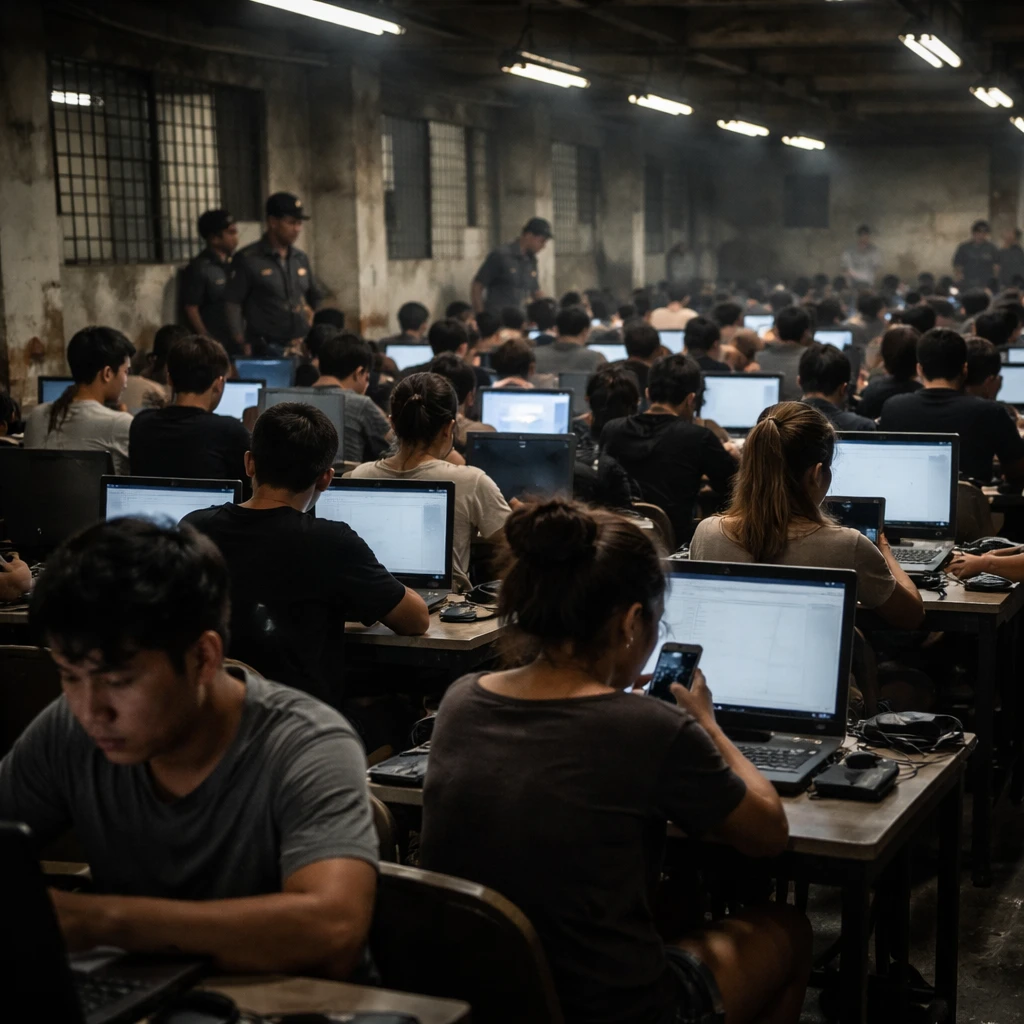
The U.N. migration agency has issued a warning about a significant uptick in people being forced into work at so-called scam compounds across parts of Asia, describing a pattern of recruitment that now spans more than 80 countries.
According to the International Organization for Migration (IOM), the phenomenon has grown into a network of very large operations in Myanmar, Cambodia and Laos. These centres - which IOM says in some instances employ as many as 300,000 people - run online schemes designed to defraud often older individuals in Western countries.
IOM officials emphasised that a large share of those staffing the compounds were not complicit recruiters but rather victims themselves. The agency outlined a recruitment model based on deceptive job advertisements. Those ads frequently target candidates who speak strong English and hold a college degree, offering apparently attractive contracts and overseas work.
Once individuals accept these offers and travel to the compounds, IOM reports they commonly have their identity documents taken from them and are compelled to operate scam campaigns online under threat. The agency said violence and coercion are used to make victims participate in criminal activity.
Some victims have endured sexual abuse, prolonged isolation in solitary confinement and lasting psychological harm. "Many suffer stigma and debt as well as trauma after sexual abuse or bouts of solitary confinement," Amy Pope, director general of the IOM, said, describing the range of harms survivors endure.
On the scale of the problem, IOM estimated that the number of people trafficked into these operations is in the tens of thousands. The agency also said it has assisted victims from about 30 countries who were recruited under false pretences.
Pope provided further detail about how modern communications tools have amplified traffickers' reach. "The significant networks are based within Asia, but because of social media, because of the ability to now reach people in many, many countries, their reach has expanded quite significantly," she said, noting that victims have been drawn from more than 80 countries.
Even when victims manage to escape or are liberated in government raids, IOM officials warned that they can face additional threats, including intimidation and the risk of being prosecuted for crimes committed under coercion.
The IOM singled out a need for greater identification and action against centres operating in remote areas of Asia where law enforcement capacity is limited, while praising countries such as Thailand for increasing engagement on the issue.
In a public statement, IOM urged continued support for victims through protection measures, safe return and reintegration programs, and called for scaling up awareness campaigns so people can spot traffickers' tactics and know where to seek help.