
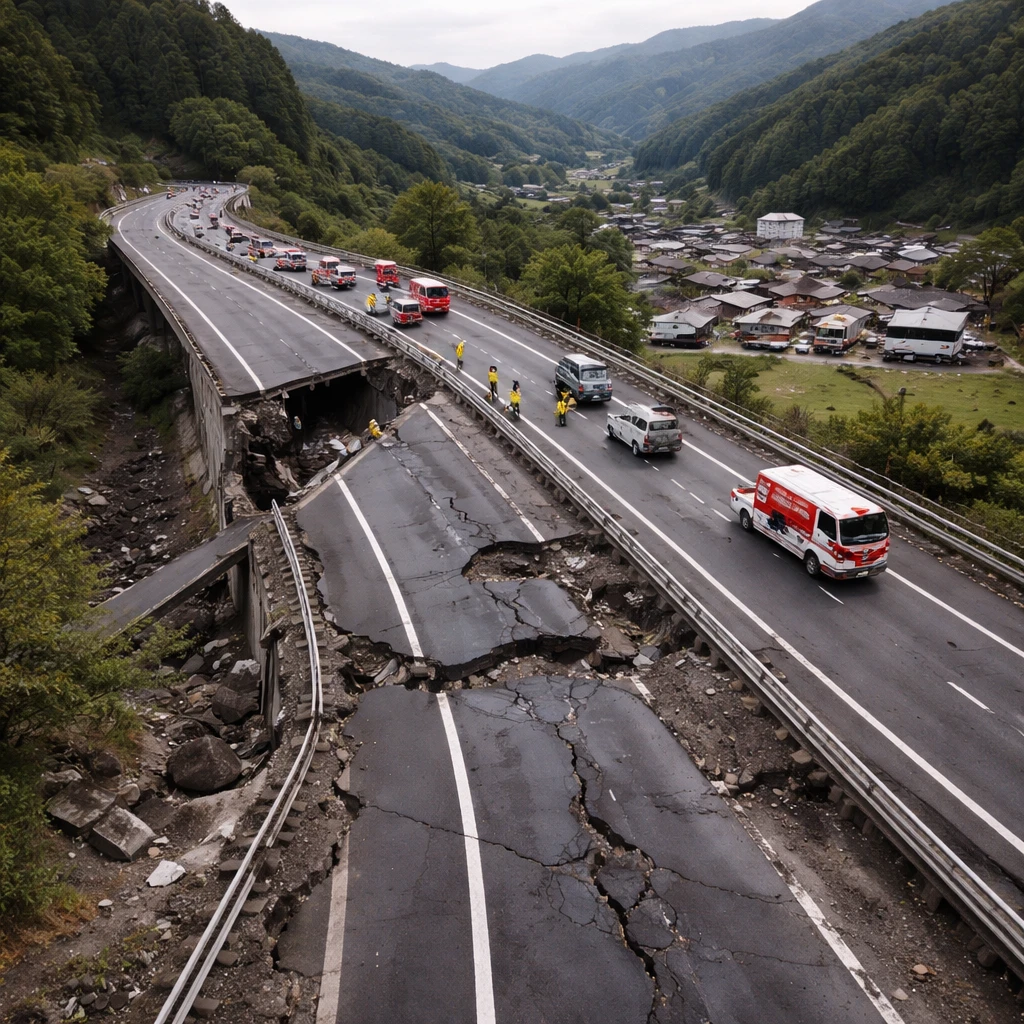
An earthquake registering magnitude 7.1 and reaching a maximum intensity of 7 on the Japanese seismic intensity scale struck Kumamoto Prefecture on Tuesday. By 6:00 p.m. local time, damage to highways had been reported and closure measures were in effect to safeguard travel and recovery operations.
Officials have not publicly detailed the full scope of infrastructure damage beyond the reported highway impacts as of the early evening assessment. The immediate closures aim to prevent additional incidents while inspections are carried out.
Kumamoto is no stranger to powerful quakes. In 2016 the prefecture experienced earthquakes of the same maximum intensity - recorded on April 14 and April 16 - that affected production activities across several industries, notably semiconductor and automotive manufacturing.
Market commentary referenced the prior experience: Citi stated that the apparent effects of the current event look to be less severe than those seen in 2016. That assessment is preliminary and reflects early reports rather than a comprehensive damage survey.
Corporate disclosures published in the aftermath of the 2016 quakes offer a frame for potential disruptions. At that time, partial resumptions of production by affected facilities generally took around 2-4 weeks. Returning to full, normal operations varied by company and by the extent of damage, with timelines ranging from about one month up to four months.
Specific recovery examples from 2016 are instructive. The Renesas Kawashiri Plant and Fujifilm Kyushu regained production capacity in roughly a month. Several other manufacturers - including Mitsubishi Electric's Kumamoto Plant, Mitsui High-tec, Horiba Stec, and Tokyo Electron Kyushu - restored operations within approximately one to two months. Sony Kumamoto TEC required a longer interval and did not achieve full recovery until the end of July of that year.
At this stage, authorities and companies are conducting assessments to determine the immediate damage and any impacts on supply chains or production schedules. Given the history of the region, past recovery patterns provide a reference, but officials caution that current conditions and the full scale of disruption will determine the timelines for restoration.
Data points and timeline reminders
- Earthquake magnitude: 7.1
- Maximum intensity on Japanese scale: 7
- Location: Kumamoto Prefecture
- Highway damage reported and closures implemented as of 6:00 p.m. local time on Tuesday
- 2016 comparable events: maximum intensity 7 on April 14 and April 16
- 2016 production recovery examples: partial resumptions in ~2-4 weeks; full recovery in ~1-4 months depending on damage
Further updates will depend on official damage assessments and company reports as inspections progress.