
World April 28, 2026 09:18 AM

Three Palestinians Killed in Gaza Strikes, Including 9-Year-Old Boy

Medics say a drone strike and an airstrike killed three people amid continued exchanges since an October 2025 ceasefire

By Caleb Monroe
Three Palestinians Killed in Gaza Strikes, Including 9-Year-Old Boy

Israeli strikes in the Gaza Strip on Tuesday killed three Palestinians, according to local health officials. Medics reported a 9-year-old boy died after an Israeli drone strike in eastern Khan Younis, while an Israeli airstrike hit a vehicle in Gaza City, killing two others and injuring several. Relatives at Nasser Hospital described the boy as collecting cardboard used by his family for cooking amid persistent shortages of electricity and cooking gas.

Key Points

  • Three Palestinians were killed in Gaza on Tuesday; medics said a 9-year-old boy, Adel Al-Najjar, died after an Israeli drone strike in eastern Khan Younis, and an Israeli airstrike on a vehicle in Gaza City killed two and wounded several others.
  • Gaza has had no electricity since the war began in October 2023 and residents have reported restrictions on the entry of cooking gas, prompting practices such as collecting cardboard for baking.
  • Violence has persisted despite an October 2025 ceasefire; local medics report at least 800 Palestinians killed since the ceasefire, while Israel says militants have killed four of its soldiers in the same period. Broader reported tolls list more than 72,500 Palestinians killed since October 2023.

Israeli attacks in the Gaza Strip on Tuesday resulted in the deaths of three Palestinians, local health officials and medics said. Among the dead was a 9-year-old boy who medics reported was killed by an Israeli drone in eastern Khan Younis, in the southern part of the enclave.

Officials also said an Israeli airstrike struck a vehicle in Gaza City, killing two people and wounding several others. The Israeli military had not issued an immediate comment on either incident.

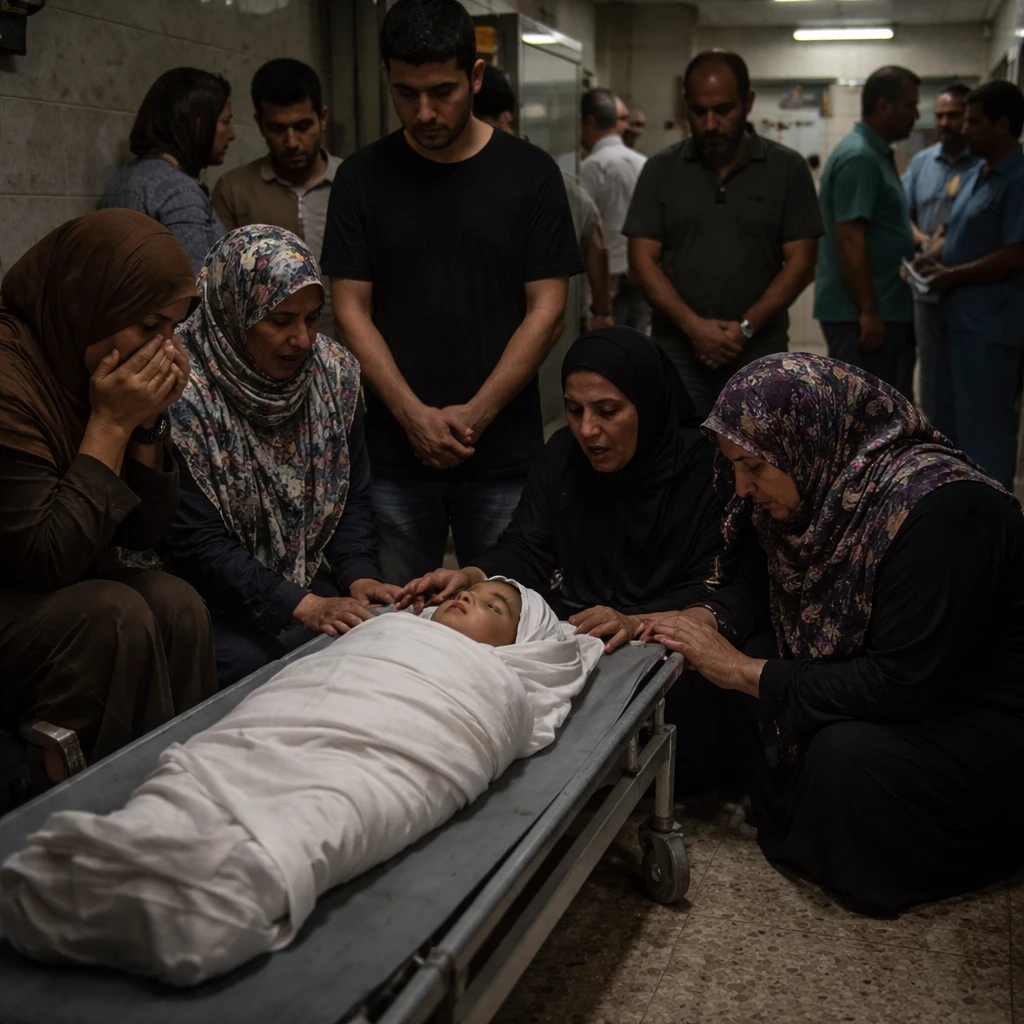
At the morgue of Nasser Hospital, relatives gathered around the small, white-shrouded body of the boy, identified as Adel Al-Najjar. Women wept beside the body, which lay on a medical stretcher on the floor, while men performed a special prayer before carrying him to the cemetery for burial.

Relatives said the boy had been collecting cardboard that the family uses for cooking. They described this practice in the context of acute shortages and restrictions affecting daily life. "We don’t have gas. We collect cardboard to bake, they want to eat; they want to drink," said Sabreen Al-Najjar, a family member.

Medics and relatives also noted that Gaza has had no electricity since the war began in October 2023, and that Palestinians have complained about Israeli limitations on the entry of cooking gas into the territory.

Violence in Gaza has continued despite a ceasefire that took effect in October 2025, with Israel conducting attacks on Palestinians almost daily, according to the reporting. Local medics say at least 800 Palestinians have been killed since that ceasefire began. Israel reports that militants have killed four of its soldiers over the same period.

"Isn’t it shameful what is happening to us? Isn’t it shameful that we bury our children every day, right in front of us? Isn’t it shameful? I swear to God, our hearts are breaking for these children," said Suhaib Al-Najjar at the morgue.

Both Israel and Hamas have accused the other of violating the ceasefire.

Health authorities in Gaza report that more than 72,500 Palestinians have been killed since the Gaza war began in October 2023, and they say most of the dead were civilians. Israeli tallies state that Hamas' attacks on Israel on October 7, 2023, resulted in 1,200 deaths.


Scene accounts from the hospital morgue and the family statements highlight the immediate human toll of the strikes and the broader disruption to basic services such as electricity and fuel supplies for cooking. The reported incidents add to the casualty figures documented by local health officials and underscore continuing exchanges of fire and mutual accusations of ceasefire violations.

Risks

  • Ongoing hostilities despite a formal ceasefire create continued humanitarian risks and further civilian casualties - this affects humanitarian aid delivery and civil infrastructure sectors.
  • Prolonged loss of electricity and restrictions on cooking gas increase public health and welfare risks, straining basic services and consumer supply chains for household energy and cooking supplies.
  • Persistent mutual accusations of ceasefire violations increase uncertainty and the possibility of renewed escalations, which could disrupt regional stability and impact markets sensitive to geopolitical risk.

More from World

Wartime Command Consolidates in Iran as Guards Supplant Clerical Primacy Apr 28, 2026 Drone Diplomacy: Ukraine Converts Battlefield Innovations into Strategic Partnerships — Now the Hard Work Begins Apr 28, 2026 Trump Says Iran Asked U.S. to Reopen Strait of Hormuz as It Sorts Leadership Apr 28, 2026 Russian Superyacht 'Nord' Crossed Strait of Hormuz with No Objection from Iran or U.S., Source Says Apr 28, 2026 UNICEF issues emergency 'Child Alert' as five million children in Darfur face extreme deprivation Apr 28, 2026