
Overview
Bashar al-Assad, who led Syria for 24 years, was driven from power as insurgent forces seized the initiative in December 2024. His exit to Moscow followed a swift rebel campaign that struck while the Iranian and Russian supporters who had propped up his rule were preoccupied by conflicts elsewhere. The departure marked the end of a political dynasty that had governed Syria with an iron hand for more than five decades.
In the weeks after his flight from the capital, a Damascus court sentenced Assad to death in absentia, finding him guilty of a range of crimes during his time in office, including killings, arbitrary arrests and torture. The sentence underscored the severity of accusations that have shadowed his government since mass unrest erupted more than a decade earlier.
From succession to a brutal civil war
Assad assumed the presidency in 2000 after the death of his father, Hafez al-Assad, continuing a family hold on power that had its origins decades earlier. Early in his presidency there was cautious talk of reform, but the structure of the state remained dominated by the security apparatus established by his father.
The country's trajectory shifted dramatically in 2011 when protests tied to the Arab Spring morphed into an armed uprising. As demonstrators pressed for greater political freedom, the state responded with force. Assad deployed the Syrian military against opponents in an effort to quash the movement that toppled leaders in other countries in the region.
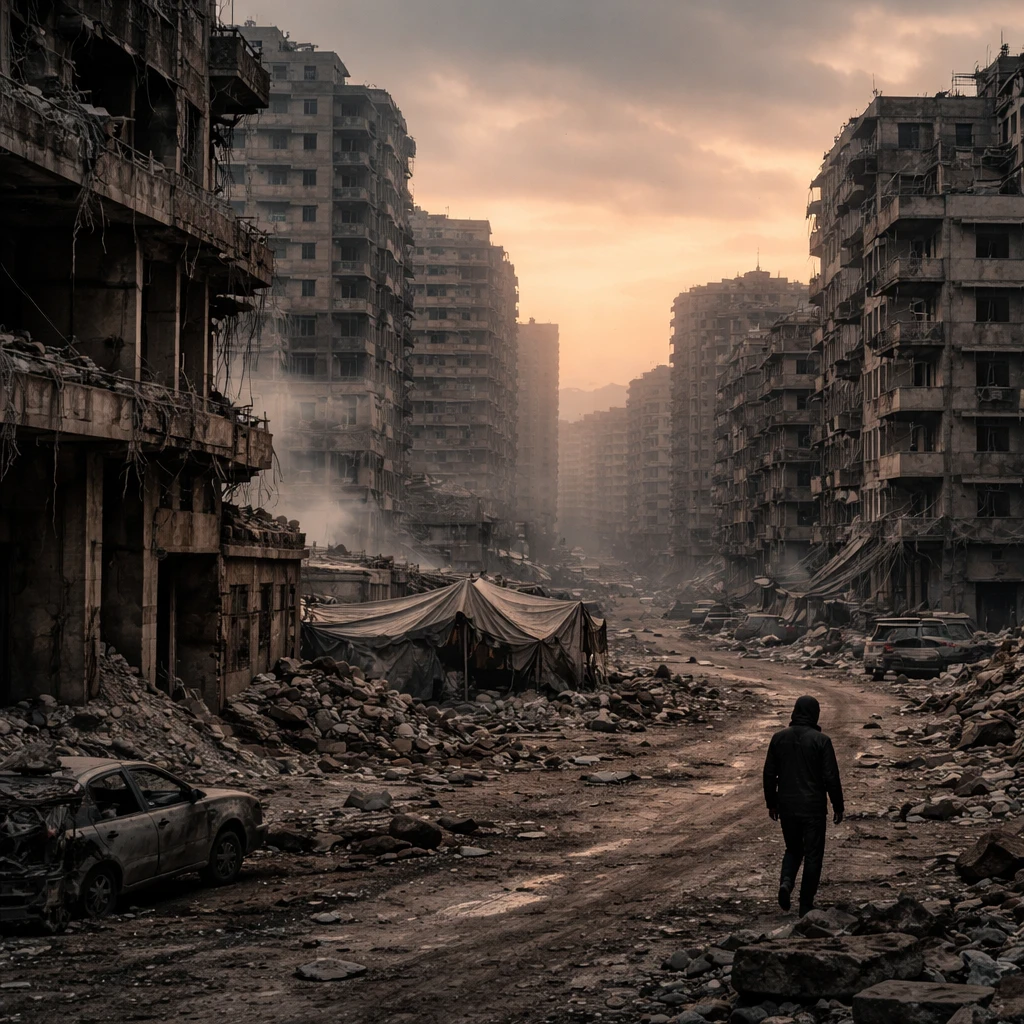
What began as mass street protests hardened into a full-scale civil war. The conflict drew in a range of domestic and foreign actors and became the defining feature of Assad's presidency. Large numbers of Syrians were killed, cities were devastated and more than a quarter of the population sought refuge abroad.
Military balance and foreign support
In the early stages of the war, Assad's hold on power appeared fragile as insurgents captured large parts of the country, including areas supported by foreign governments. Starting in 2012, militias with Shiite affiliations, backed by Iran, began to arrive to fight alongside regime forces and help secure Damascus. The intervention of Russia's air force in 2015 enabled Assad's forces to regain the initiative and reassert control over significant portions of the country.
Even so, his reliance on Moscow and Tehran left his position dependent on external military backing and on the shifting priorities of those allies. That fragility became decisive in late 2024 when rebel leaders moved while Iran's position had been weakened by conflict with Israel and Russia was entangled in its war in Ukraine.
At that moment of strategic distraction, insurgents, led by the Islamist Hayat Tahrir al-Sham group under President Ahmed al-Sharaa, advanced rapidly toward Damascus. Syria's demoralised army collapsed under the assault, permitting rebel forces to reach the capital. Assad left the city, initially relocating to a Russian air base in Latakia, and was evacuated to Moscow on December 8, 2024.
Allegations of atrocities and chemical weapons use
Throughout the civil war, investigators and international monitoring bodies concluded that government forces used chemical agents, including sarin and chlorine, against opposition-held areas. One of the deadliest confirmed attacks took place in Ghouta in 2013, when sarin gas killed hundreds. Such incidents marked some of the most extensive uses of chemical agents since World War One.
Following a later poison gas attack in 2018, then-U.S. President Donald Trump publicly condemned Assad's actions, using strongly worded language. In 2017, after another sarin attack, the United States launched a cruise missile strike on a Syrian air base.
At times, diplomatic arrangements averted additional military responses. A Russian-brokered deal in the aftermath of the 2013 Ghouta attack resulted in a process for destroying declared chemical weapons by the following year. Authorities in Syria repeatedly denied responsibility for chemical attacks, and Assad at times dismissed allegations as fabrications or foreign conspiracies.
After Assad's fall, transitional authorities reported discovering remnants of a clandestine chemical weapons programme, including raw materials and munitions resembling those used in deadly attacks during the conflict. Additional reporting indicated that thousands of bodies had been moved to desert sites east of Damascus, a step some saw as an attempt to conceal evidence of mass killings.
Tactics, repression and testimonies
Government tactics against besieged areas drew widespread condemnation. Siege warfare, blockades and the use of indiscriminate explosive devices were documented by investigators who described the methods as brutal and medieval in character. The army's reported use of barrel bombs - crude, unguided explosive devices packed into metal containers - became a symbol of the conflict's destructive toll on civilians and urban infrastructure.
Former detainees freed from Syria's prisons gave harrowing accounts of torture and abuse. An international war crimes prosecutor, visiting the country after Assad was removed, said that evidence uncovered at mass grave sites pointed to an organised apparatus of killing. The prosecutor compared the scale and systematic nature of the alleged state violence to some of the worst cases of organised mass murder in history.
Photographs smuggled out of Syria showing mutilated and tortured detainees fueled international outrage. Assad dismissed those photos as part of a foreign plot and at times accused global institutions of being influenced by outside powers when they documented abuses.
Political posture and sectarian dynamics
Assad hailed from the Alawite community, a minority group with roots in the coastal region of Syria and religious links to an offshoot of Shiite Islam. He also led the Syrian faction of the Baath Party, an Arab nationalist movement founded in the 1940s. Publicly, he maintained that Syria was a secular state grounded in Arab nationalism, even as the conflict increasingly took on sectarian dimensions.
The war placed an Alawite-led government and its Shiite regional backer Iran in opposition to rebel groups drawn principally from the Sunni majority, with some of those insurgent groups receiving support from Sunni-led states. Assad characterised the uprising as an international conspiracy aimed at dismantling a country that had historically opposed certain external powers and regional actors. He routinely labelled opponents as foreign-backed Islamist extremists and rejected the notion of a moderate armed opposition.
When Ahmed al-Sharaa, a former militant commander, captured power in Damascus, Assad issued a written statement declaring that the state had been overtaken by terrorism.
Personal background and the path to the presidency
Bashar al-Assad was not originally destined to inherit the presidency. His elder brother, Bassel, had been groomed as heir apparent but died in a car accident in 1994. Prior to that event, Bashar was trained as an eye doctor and pursued postgraduate study in London. After Bassel's death, his profile changed and he was positioned to lead the country.
Early in his tenure there were modest hopes that Assad might introduce reforms that would loosen the tight grip of the security services. Those hopes faded. The institutional infrastructure of the police state endured, and political repression and economic practices characterised by nepotism and cronyism persisted. Economic reforms that benefited elements of the elite coincided with rural distress; drought drove many of the poor from the countryside into urban slums, creating conditions that fed social unrest.
Assad is married to Asma Akhras, a British-born former investment banker, and they have three children.
Legal and accountability developments after his departure
After Assad's departure, legal avenues and international actions pursued accountability for wartime conduct. A court in Damascus convicted him in absentia of involvement in killings, arbitrary detentions and torture, handing down a death sentence. Separately, France issued an arrest warrant in 2025 for Assad and other former officials over the 2012 bombing of a press centre in Homs.
The post-regime transitional authorities and international investigators have continued to catalogue evidence of alleged systematic abuses, from mass grave sites to clandestine chemical weapons remnants, framing an extensive record of wartime atrocities that will shape legal and political debates going forward.
Concluding observations
The rapid collapse of Assad's authority in late 2024 was the product of years of conflict and of a momentary alignment of strategic distractions among his key backers. His exile to Moscow and the subsequent death sentence delivered in his absence mark a dramatic end to a period of rule that began at the turn of the century and that was defined by violent suppression of dissent, heavy reliance on foreign military support, and repeated allegations of war crimes. The legacy of destruction, displacement and contested accountability will continue to shape Syria's future even as the immediate political order has been upended.