
Stock Markets August 11, 2026 03:29 PM

Northrop Grumman Introduces Raid Hunter, a 50mm Short-Range Air Defense System

New gun-based platform aims to blunt cruise missiles, drone swarms and other aerial raids with high-rate fire and modular transportability

By Jordan Park
Share
Twitter Reddit Facebook LinkedIn
NOC

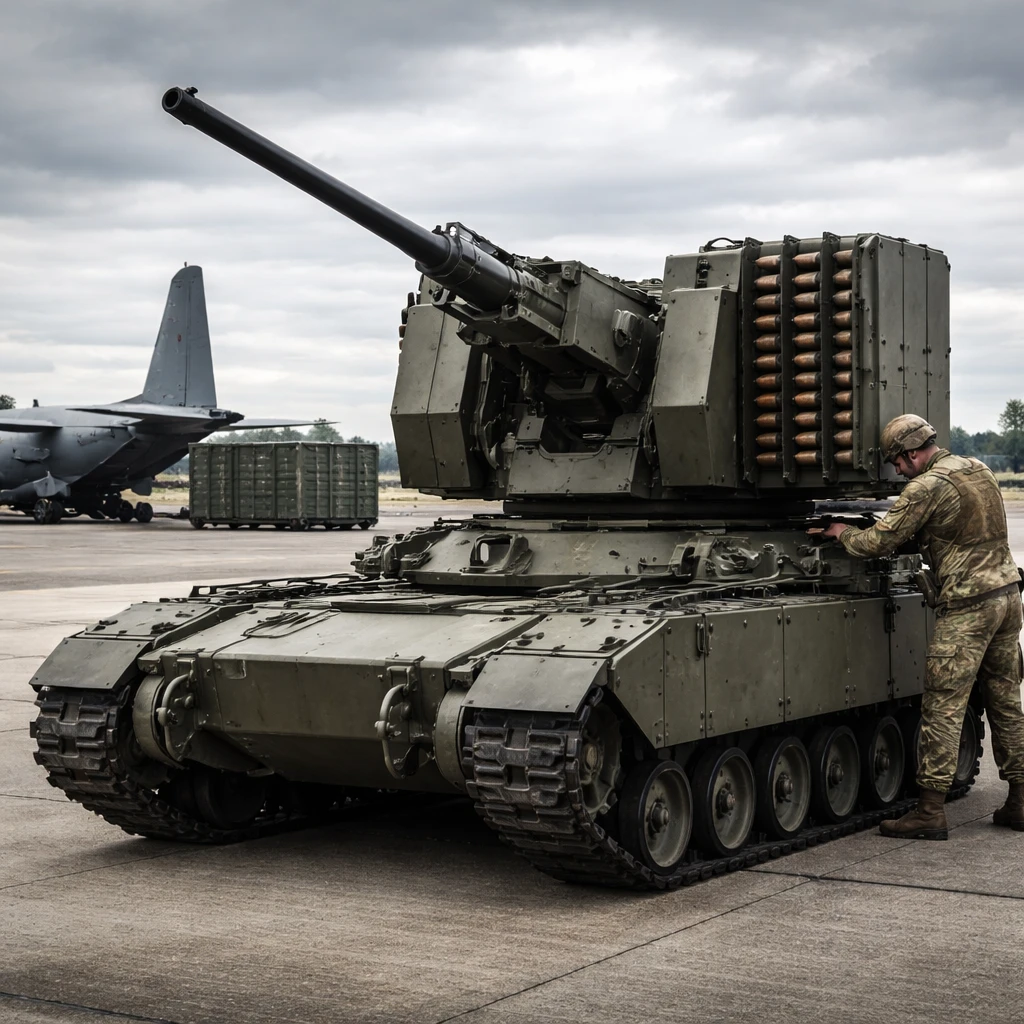
Northrop Grumman has revealed Raid Hunter, a 50mm gun-centered air defense solution built to protect installations from cruise missiles, drone swarms and similar aerial threats. The system pairs Chain Gun mechanics, precision-guided 50mm rounds and a networked controller to deliver sustained, rapid fire from deep magazines. Designed for rapid movement on a C-130, Raid Hunter will undergo testing throughout the year as Northrop Grumman pursues accelerated fielding and plans additional vehicle-mounted and container variants.

Northrop Grumman Introduces Raid Hunter, a 50mm Short-Range Air Defense System
NOC
Summarize with
ChatGPT Perplexity Claude Grok Gemini

Key Points

  • Raid Hunter is a 50mm gun-based air defense system aimed at protecting bases, airfields and critical infrastructure from cruise missiles, drone swarms and other aerial threats.
  • The system integrates Chain Gun technology, precision-guided 50mm ammunition and a networked system controller to counter high-volume, massed aerial raids with high-rate fire, deep magazines and fast reloads.
  • Designed for modularity and rapid transport on a C-130, Northrop Grumman plans future vehicle-mounted and container-based variants and will conduct testing throughout the year to validate performance and support accelerated fielding.

Northrop Grumman announced the Raid Hunter air defense system, a 50mm gun-based solution intended to protect military bases, airfields and other critical infrastructure from cruise missiles, drone swarms and related aerial threats.

The company said the system is meant to fill a short-range layered defense gap by engaging high-volume aerial raids. Raid Hunter combines Chain Gun technology with precision-guided 50mm ammunition and a networked system controller, creating a package aimed at countering massed, coordinated attacks.

According to Northrop Grumman, the platform emphasizes sustained, high-rate-of-fire capability. It incorporates deep magazines and rapid reload mechanisms to sustain engagement against swarming threats, reflecting the system's focus on high-volume aerial raids that can overwhelm single-point defenses.

Modularity is a core design objective for Raid Hunter. The platform is configured for quick transport aboard a C-130 aircraft, allowing operators to relocate the system quickly. Northrop Grumman has also outlined plans for future variants that would be vehicle-mounted or container-based to broaden deployment options.

On the system's role and battlefield context, Kenn Todorov, vice president and general manager of command and control & weapons integration at Northrop Grumman, said: "Raid Hunter addresses a critical short-range defense gap by delivering rapid, high-capacity protection against complex, mass aerial threats like cruise missiles and drone swarms. War has evolved. Air Defenders need the ability to defend against large, complex raids designed to overwhelm traditional defense solutions."

Northrop Grumman plans to conduct testing throughout the year to validate Raid Hunter's performance and to support accelerated fielding of the system. The company identifies Raid Hunter as part of its Raid Defense Solutions portfolio, a grouping of counter-unmanned aerial systems and air defense capabilities.


Context and technical profile

Raid Hunter's technical profile, as described by the company, centers on three main elements: the Chain Gun firing mechanism, precision-guided 50mm ammunition, and an integrated, networked controller for coordinated engagements. Together these elements are intended to allow the system to operate against high-volume, coordinated aerial threats while maintaining mobility and scalable deployment options.

Deployment and testing

Initial configurations emphasize rapid air transportability via the C-130. Planned vehicle-mounted and container-based variants are intended to expand the system's utility for different operational environments. Testing scheduled throughout the year is intended to confirm system performance metrics and to support accelerated fielding decisions.

Risks

  • Performance validation is pending - planned testing throughout the year will be used to confirm system capabilities and inform fielding decisions, creating uncertainty until results are available.
  • Operational deployment options are currently limited to the initial air-transportable configuration - vehicle-mounted and container-based variants are planned but not yet fielded, affecting short-term deployment flexibility.
  • The system is intended to address complex, massed aerial raids, but its ultimate effectiveness against evolving threats will depend on the outcomes of the planned validation activities and subsequent integration into layered defenses.

More from Stock Markets

Quantinuum and Oracle Ink Multi-Year Deal to Put Helios Quantum Computers on Oracle Cloud Aug 11, 2026 Two Mexican Energy Firms Seek Approval for Share Sales at Home and Abroad Aug 11, 2026 Norway’s Sovereign Wealth Fund Lists $1.22 Billion Holding in SpaceX Aug 11, 2026 Hiroshi Okuda, Former Toyota President and Chairman, Dies at 93 Aug 11, 2026 Deutsche Bank Picks Palo Alto Networks as Its Leading Cybersecurity Stock After Black Hat 2026 Aug 11, 2026