
Hook & thesis
Insteel Industries (IIIN) dumped roughly 20% on the 04/16/2026 fiscal Q2 release after management signaled that raw material, energy and freight costs more than offset a healthy jump in average selling prices. Sales rose to $172.7 million, but gross profit slumped to $16.5 million from $24.5 million the prior year. The market reacted hard; the stock is now trading near the 52-week low at roughly $29.00, leaving a potentially attractive entry for a tactical mid-term trade if margins rebound.
My thesis is tactical and conditional: IIIN is a quantitative value-like setup with operational risk. The company’s balance sheet is clean - no debt and a current ratio of 3.58 - and valuation metrics (P/E ~11.7, EV/EBITDA ~7.1) read cheaply versus what you would expect for a cyclical niche industrial with consistent demand from construction. If cost pressures ease and price realization continues, the path to recovery should be visible within a few months. I recommend a disciplined swing trade designed to capture that recovery while protecting capital against further margin-led downdrafts.
Business description - what the company does and why it matters
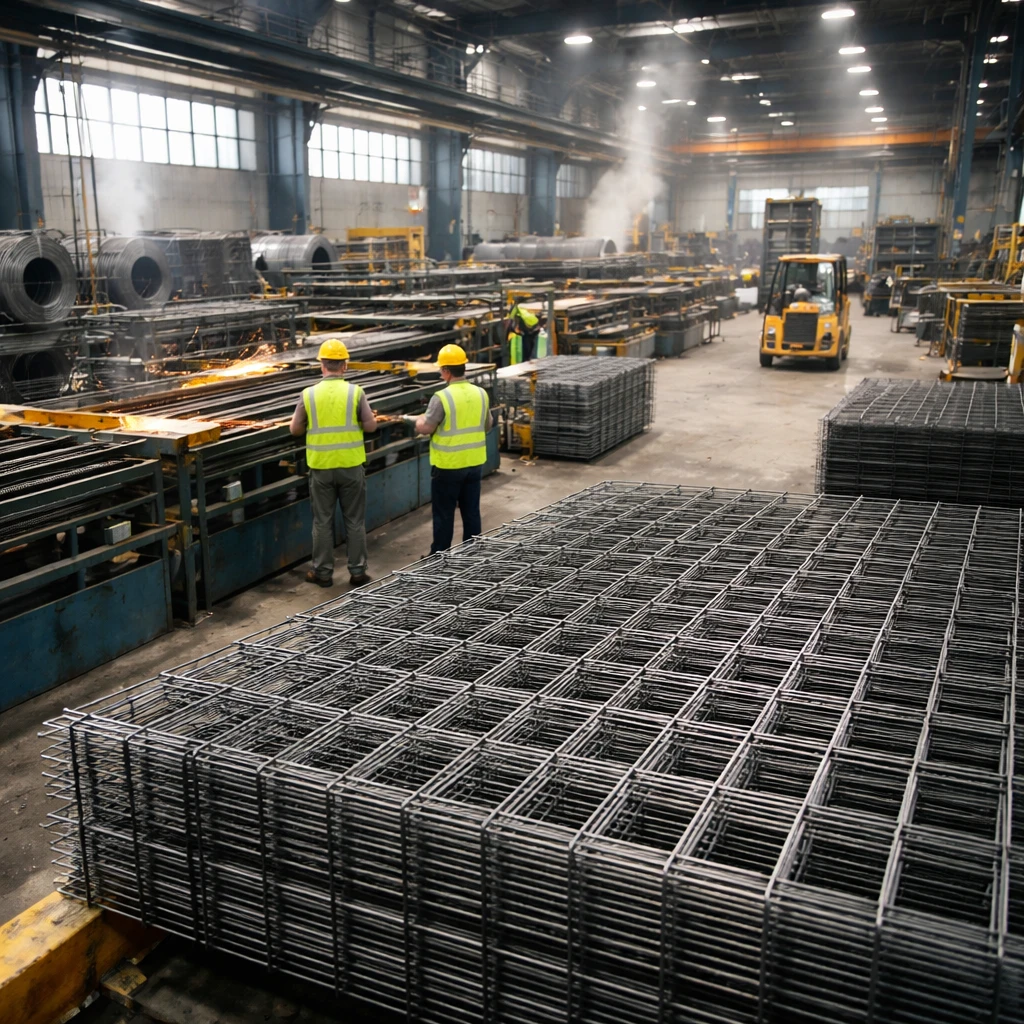
Insteel manufactures steel wire reinforcing products used in concrete construction: welded wire mesh, PC strand, drawn and formed wire. Its items are inputs into residential, commercial and infrastructure concrete work; demand tends to follow construction activity and repair cycles. The key fundamental driver for margins is the spread between raw-material/energy/freight cost and the company’s ability to pass those costs through via average selling prices (ASPs).
Why the market cares now
The recent weakness was primarily operational: management reported a 16.2% increase in average selling prices but still saw gross profit fall to $16.5 million as cost inflation and poor winter weather hurt shipments (shipping volumes down ~5.9%). Investors were focused not on revenue growth - which was modestly positive - but on the margin shock. With shares off sharply and the company carrying no debt, the question becomes whether the margin pressure is transitory (weather + short-term freight spikes + energy passthrough lag) or structural (sustained higher steel/energy costs or weaker construction volumes).
Supporting numbers
| Metric | Value |
|---|---|
| Most recent quarter sales | $172.7M |
| Most recent quarter gross profit | $16.5M (prior: $24.5M) |
| Average selling price change | +16.2% |
| Market cap | $562M |
| P/E | ~11.7 |
| EV/EBITDA | ~7.1 |
| Debt to equity | 0 (no debt) |
| Free cash flow (most recent) | $0.439M |
Valuation framing
On headline multiples IIIN looks inexpensive: market cap approximately $562M against an enterprise value of roughly $537M, EV/EBITDA about 7.1 and a P/E near 11.7. Those numbers are consistent with a cyclical industrial priced for average performance rather than peak margins. The catch is cash generation - free cash flow is small in the most recent reporting - and margin volatility means earnings can swing materially quarter to quarter. In short, valuation is attractive if you believe margins stabilize; it is fair to moderate if you expect persistent contraction.
Catalysts that can re-rate the stock
- Normalization of freight and energy costs following winter disruptions and logistics normalization.
- Further realization of price increases as contracts and resale prices catch up to higher input costs.
- Seasonal recovery in construction shipments as weather improves and backlogs clear.
- Quarterly updates showing gross-margin stabilization or improvement.
Trade plan (actionable)
Trade direction: Long
Entry: $29.00 — current intraday level; this is the tactical buy point for a bounce play that assumes the margin shock is at least partly transitory.
Stop loss: $26.50 — a clear mechanical stop below recent short-term support and below the 52-week low area; protects capital if the reversal accelerates.
Target: $36.00 — an initial profit-taking zone representing ~24% upside from entry. This price sits well below the 52-week high ($41.64 on 07/17/2025) and assumes partial margin recovery plus multiple expansion toward a more normalized EV/EBITDA.
Horizon: mid term (45 trading days). The rationale: price transmission from ASP increases and operational recovery should begin to show up within 1-2 quarters. This trade is not a buy-and-hold value play; it’s a tactical swing to capture a re-rating if costs start to roll over and volumes normalize.
Position sizing & execution notes
- Keep position size limited relative to portfolio (this is a volatility trade). A 2-3% portfolio allocation is appropriate for many retail investors; tighten size if you are uncomfortable with intra-day spikes driven by short-covering.
- Scale in if the stock dips toward $27.00 on continued weakness; do not average down below your stop.
- Use limit orders around $29.00 to avoid taking poor fills on a volatile tape; consider a trailing stop once the trade moves toward the target to protect gains.
Technical context
The short-term technical picture is strained: the 9-day EMA sits well above current prices and RSI is in the low 30s, indicating short-term oversold conditions but also possible continued distribution. Short interest has been meaningful with recent short-volume spikes; that can accelerate moves both ways. Trade with stops and be prepared for noisy intraday action.
Risks & counterarguments
- Persistent input-cost pressure: If steel, energy and freight costs remain elevated or rise further, the company's ability to fully pass through costs could be limited and margins may stay depressed, keeping earnings and the stock under pressure.
- Demand softness in construction: A downturn in residential or non-residential construction activity would reduce shipment volumes and exacerbate margin pressure.
- Execution risk on pricing: Management has been raising prices, but contract timing and competitive dynamics may prevent full realization of the ASP increases, keeping margins compressed.
- Low free cash flow: Recent free cash flow is small ($0.439M), which limits the company’s flexibility to invest or smooth through volatility if margins remain weak.
- Volatility from short interest: elevated short interest and surges in short volume can produce sharp downside moves or erratic bounces; this increases execution risk for both entries and stops.
Counterargument: One could reasonably argue the margin shock is structural. Energy and freight cost baselines could be higher than last cycle, and customers might push back on price increases in a slower construction market. If that plays out, a low P/E is not a safe valuation anchor and multiple compression could continue, making a short or avoiding the stock the safer trade.
What would change my view?
- I would be more bullish if the company’s next quarterly update (or a management commentary) shows sequential gross-margin improvement and shipping volumes rebound materially versus the winter-impacted quarter.
- Conversely, widening gross-margin deterioration or a material drop in backlog/shipments would invalidate this trade and push me toward a bearish stance.
- Large, unexpected capital expenditures or dividend cuts would also change the risk/reward calculus, given the small free cash flow figure reported.
Conclusion
Insteel is a classic operational-risk value setup: balance sheet strength (no debt, current ratio ~3.6) and cheap headline multiples provide a margin of safety, but this margin is only useful if margins and volumes recover. The recommended trade is a disciplined mid-term (45 trading days) long at $29.00 with a stop at $26.50 and a profit target of $36.00. This plan buys the thesis that the recent pressure is largely transitory and that price realization plus seasonal normalization can restore margins. If margin deterioration continues or new demand weakness emerges, cut risk quickly and reassess.
Key catalyst watch: management commentary and next-quarter gross-margin trajectory. A clear sequential improvement in gross profit would validate the entry and warrant adding to winners; further degradation would close out the trade.
Trade checklist
- Entry: $29.00
- Stop: $26.50
- Target: $36.00
- Horizon: mid term (45 trading days)
- Risk level: medium